
Home Blog Page 25

Legless Lizard vs. Snake

Legless Lizard by Rookied

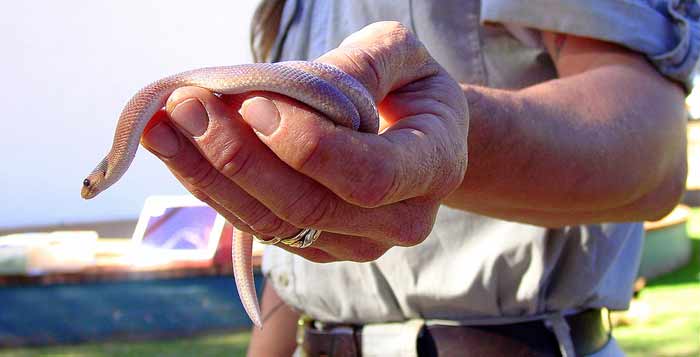
Some call it the Snake Lizard, while others flip the order and say Lizard Snake.

No matter how you choose to call it, the Legless Lizard definitely resembles a Snake, but it’s not.

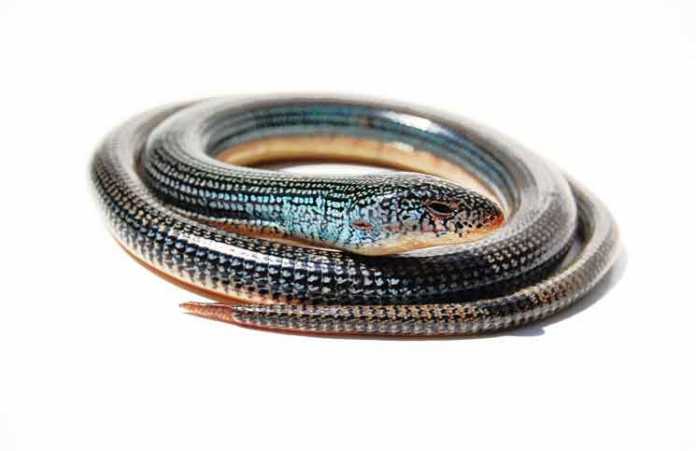
The Legless lizard evolved from the well-known legged lizards that we all know very well. The common name for their family is Pygopodidae – a group Lizard species that by their own will – reduced their limbs over time or even lost them completely. One known breed for example is the Glass Lizards, which have no legs, and are known for their tails that are easily broken into several pieces, like glass.

You may ask yourself why an animal would choose to reduce its limbs. Are they crazy? Well, it turns out that for these lizards—the limbs were presumably non-functional in their mobility, so they lost them, and by that they became closer to their fellow reptile brothers. The Snakes.

Snakes and Lizards look very much alike, no doubt about it. Both have slim long bodies, and crawl their way without legs. However, there are some critical differences between Legless Lizards and Snakes, which can be summarized in these six characteristics:

¤ Eyelids: Most species of lizards possess moveable eyelids, while Snakes have fixed scales which cover their eyes.

¤ Ears: All known species of Legless Lizards possess ear openings, while Snakes do not possess ears and are practically deaf.

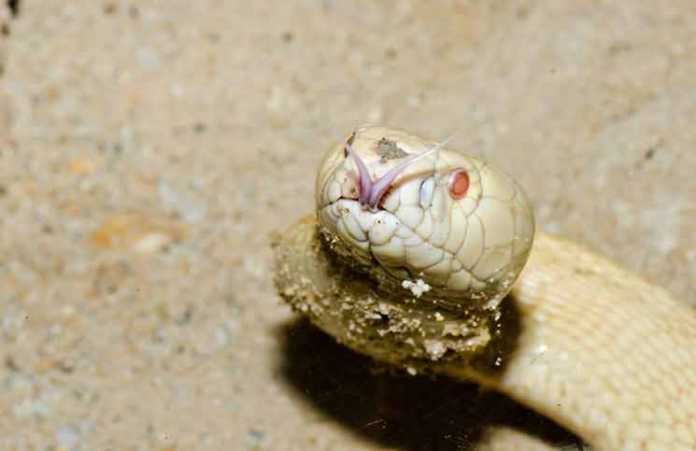
¤ Tongue: All known species of Legless Lizards possess a fleshy tongue, where as Snakes possess a forked tongue with which they actually taste and measure the air for food odors.
Legless lizard
Legless Lizard by F. Delventha

¤ Belly scales: The Legless Lizard lacks the broad belly scales which cover the skin of a Snake.

¤ Long Tail: While the Snake has a long body and a short tail, the Legless Lizard usually possess a very long tail, worth watching.

¤ Tiny Limbs: There are no Snakes that possess limbs, but there are some Legless Lizards that actually still do possess tiny limbs.

Legless Lizards are scattered all over our planet, on each and every continent, except Antarctica. They can live in almost all types of climates, and surprisingly—many new species of Legless Lizards that have been living here for millions of years, have only been discovered in the past few years. In 2008 several scientists in central Brazil discovered 14 new species, while in 2013 a few American scientists in California discovered four new species of Legless Lizards, in surprising places like the L.A International Airport.

Have any questions on the Legless Lizard? Don’t hesitate to contact us!
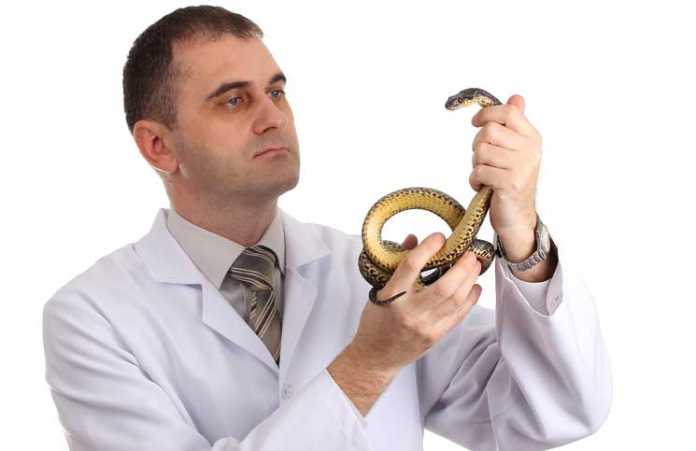
8 Rules For Snake Handling

Snake Handling
Snake Handling by Vitalisg

For all you first-time Snake keepers, believe me when I tell you – that this is one of the most important posts you’ll want to read, and remember. Handling a snake properly, or improperly – can mean the difference between life – and death. So even if you already have that cute pet snake, and have been handling it without any issues, and you feel confident – please do read this post to the end. Each member of our team here at Cobras.org contributed a few of his own Snake Handling tips and experience to this post, so I can assure you, that you will definitely learn, at least one new tip.

So let’s start with…

1. Be Modest, Not a Hero.

It’s totally normal, fine and even important to be afraid and cautious when approaching your snake. Handling a snake with too much confidence can be extremely dangerous. Don’t be overconfident and think that “I don’t need safety tools” or forget to keep a safe distance from your snake, of at least one snake-length of space. Use long tools to extend your reach. Using professional safety equipment like tongs and hooks is definitely not a requirement for handling a pet snake. You can use a broom or a mop. However, professional equipment can definitely do wonders in making your life much easier when handling your snake.

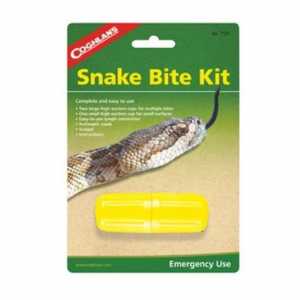
First of all – always have a First Aid Kit, with relevant tools against Snakebites. One example is

Coghlan’S Snake Bite Kit. 
Snakebite Kit
CLICK HERE TO GET IT!
2. Be Slow, Not Fast.

It’s crucial that you move cautiously and slowly when approaching and handling your snake. Quick surprising moves can startle and scare a snake, bringing about unwanted snaky reactions, which can of course lead to unfortunate accidents. This is especially relevant to younger snakes, which are more active and twitchy, and tend to escape more frequently from your hands. If the Snake recoils into attack mode in an “S” shape – stop immediately any attempts, and wait for it to calm down. Remember—If you move slow and stay calm, then your snake will stay calm.

3. Be Clean.

You do not want to contaminate or endanger your snake with dirt or bacteria, so be sure to wash your hands before handling your snake. Some snakes might release strong odors when touched, plus – you do not want to endanger yourself as well, so wash your hands also after you finish handling or playing with your snake. You don’t need any equipment for this, just some good old soap.

4. Be Gentle.

Your snake will be much happier and even thankful, if you handle it carefully, gently and securely.

A Snake can detect if someone is touching and handling him aggressively or without any proper care, and believe me—the snake will react accordingly. So when you hold your snake – think of his safety. Use both your hands and arms and give the snake as much care and support as possible, preferably at its mid-body area, and never ever grab it by its head or hang it around your head! Also don’t grab it by its tail alone, as it might instantly spin and bite you.

5. Be Protected

No matter how gently you treat your snake, there’s always that tiny little chance of something going wrong, so protect your body with some basic equipment. Wear gloves when handling your snake, even if he’s not venomous. One tiny bite can make you bleed all over the place and even cause a bacterial infection. Protect your feet and legs as well, by wearing boots. And of course, wear glasses when confronting a Spitting Cobra that accidentally infiltrated your garden, since this unique Cobra loves to aim for the eyes. This basic equipment gear is crucial for your protection.

6. Be Smart.

As mentioned, keeping a safe distance from your snake is pivotal – even when handling or transporting your snake. When transported—put it in a snake bag and connect it to a stick or pole – so a fare distance is still kept. Most vipers can sense your heat and attack even through the bag, so be smart at all times!

If you really want to play it safe – buy a snake trap, which prevents any strike at all.

7. Be Respectful.

Don’t force yourself on your snake at any time. Similarly to humans, Snakes need some time alone, specially during their feeding time, but also while they’re shedding their skin. Don’t handle your snake when it’s deep asleep. The best times for handling your snake are when he is sluggish and inactive. So remember, be considerate and respectful towards your snake’s schedule. If you do, he will respect you in return, and eventually become your mate.

8. Be Learning.

Always try to learn more about your snake type, it’s common behavior and characteristics. Read blogs of fellow snake owners who share their experience of handling their snakes. As they say, “Knowledge is Power”, and there’s no doubt you need it when facing a Snake. So educate yourself constantly, and I promise it will definitely help you in your mission.

Good luck!

From your friends at Cobras.Org!


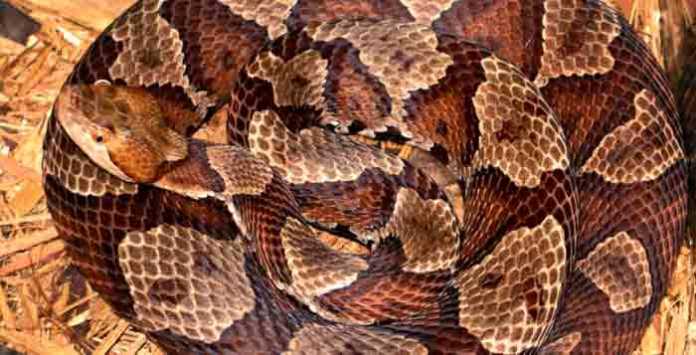
First Hand: Bitten By A Northern Copperhead

Northern Copperhead
Northern Copperhead. Photo by Edward J.-Wozniak D.V.M PhD

Here is a “first hand” (sorry for the bad pun) of being bitten by a Northern Copperhead and the ensuing envonmation treatment & therapy from M. Christie Kroll [email protected]:

John –

The bite happened while relocating the snake from a neighbor’s yard, where it was not wanted. The snake was released in a less populated area.

A 16″ neonate Northern Copperhead, Agkistrodon contortrix, bit the inside of the tip of my right thumb. The immediate sensation was of hitting my thumb with a hammer. There was a small blood blister and a waxy spot and sharp local pain. Throbbing began in less than 15 minutes,as did swelling.

Within 1 hour the hand was 3 inches thick, fingers did not bend and thumb had lost feeling. Within 2 hours I was at the ER receiving anti-venom and swelling was past the elbow. The whole hand had a deep gnawing pain like being caught in a leg hold trap. I would gladly have chewed my own hand off at the wrist.

After initial treatment I was airlifted to Jacobi Medial Center where I got more anti-venom and painkillers…. which did absolutely NOTHING for the pain. In two days I was released. Pain extended up to the armpit, as did bruising.

The entire thumb blistered and had partial thickness destruction, with a thumb nail sized area having full thickness tissue loss requiring a skin graft. 6 weeks later it is almost healed. I have 50% to 75%, range of motion back in the thumb. While rough motor skills are fine, I may not recover the ability to write legibly with that hand and have in essence, become left handed.

The billed expenses will be in the range of 12,000 to 15,000 dollars for two days of treatment and follow-up surgery.

I handle snakes in order to save lives.. the snakes’ lives. It is enough to know my woods is full of them. I cannot imagine wanting to keep one in the house.

If you want pics, send e-mail with your snail mail address.

– Christie

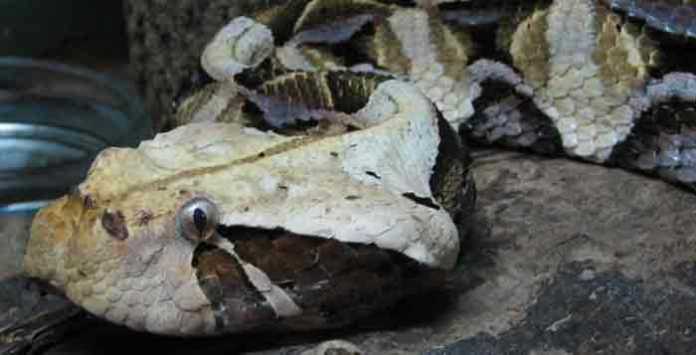
Case Study: Gaboon Viper Bite

Gaboon Viper
Gaboon Viper. Photo by Ltshears
  • This post was written by Cobra Master John Klein in 1997.

Here’s a copy of an article sent to me by Steve Granard: (notes follow)

Zoo assists snake bite victim

PHILADELPHIA, Sept. 6 (UPI) A 23 year-old man bitten by a deadly venomous snake from Africa, was treated today at the Hospital of the University of Pennsylvania with an anti-venom provided by the chief veterinarian of the Philadelphia Zoo.

The highly toxic venom of the Gaboon viper, which can grow to a length of 5 feet, and has fangs up to 2 inches long, destroys the blood’s ability to clot, and causes severe muscle and nerve damage.

Zoo officials say Dr. Keith Hinshaw received an emergency call from the hospital at at approximately 9 a.m. EDT, requesting anti-venom to treat the bite of the deadly African snake. Hinshaw transported the German manufactured antivenom to counteract the effects of Gaboon Viper venom to the hospital.

Authorities escorted a zookeeper to the victim’s home to capture the snake. There, along with the Gaboon viper, authorities found other animals, including a Canebrake rattlesnake, and a Diamondback rattlesnake, both venomous. It is illegal to own venomous reptiles in Philadelphia County, therefore the snakes were remanded into the custody of the Philadelphia Zoo.

The authorities have not revealed the condition of the man.

  • Copyright 1997 by United Press International.
Cobra Master John Klein’s notes:

1. I have talked personally to one of the EMT-A’s that treated this person. They relayed to me that this guy had NO provisions of any kind in his home where he kept the venomous snakes to treat himself in case of bites. They also told me that he seemed to know very little regarding the venom of the animal, or it’s effects on a human.

2. This guy gets “Idiot of the Year” award in the categories of:

  • Keeping venomous snakes where it is illegal to do so,
  • Keeping venomous snakes without knowing what he was doing,
  • Keeping venomous snakes and NOT keeping proper provisions.

3. This guy payed for his foolishness threefold. The medical bills, I can only guess, were probably huge. The average cost for enveomation treatment/therapy is around $15,000. In addition, the City of Philadelphia fined him for keeping venomous reptiles in contradiction to the law. On top of that, the zoo took the snakes that he probably paid quite a bit for. He may also suffer long-term disability as a result of the bite.

4. Every one of these news stories makes it worse for responsible keepers and herpetologists. It is because of irresponsible people like this that more and more jurisdictions are enacting stricter laws with regard to the keeping of venomous reptiles. Very few have provisions for bona fide research, some even if the animals are kept within the confines of a university or research center, which makes it harder for those with legitimate research needs.

5. Bottom line – It’s not “cool” to have a venomous snake just to show off to your friends, or becuase your enjoy the danger of it. Venomous snakes kill people, and that’s not ‘cool”. Don’t do it unless you have a legitimate reason to, AND have the provisions, environment, experience and knowledge to handle them.

For more fast facts about Cobras click here.

For further discussion on snakes, scientific classifications, venom research and much more, check the resources available in “The New Encyclopedia of Snakes”, available on Amazon.com.

069113295X
Click here to take a glimpse at 
“The New Encyclopedia of Snakes” 

1. If you feel like a having a real Book on Snake Bites, then get this book:Snakes and Snakebite‘ by Visser, J. & Chapman D.S.

2. And if you love African Hot snakes, this is THE Book for you:  ‘Dangerous Snakes of Africa’ by Spawls, S. and Branch, B.

Cobras: Homework Help

Cobra Homework
Need help in your Cobra Homework?

* This was written many years ago, by Master Cobra, John Klein, who founded Cobras.org in 1994.

Homework Help on Cobras

Doing your homework? Writing a report on cobras? Well you’re in good company. I’ve had thousands of visitors to my site doing the same thing. I’ve learned a lot from them, so here’s some tips:

¤ I have a special page on my site just for you! Cobra Fast Facts has everything you need to know to write a great report on cobras!

1. You don’t need to ask permission to use my information or pictures for your report. One of the main reasons my site exists is to help people learn more about cobras. I receive hundreds of e-mails from kids that have done their reports on cobras using my site, and I’m always happy to hear about that great grade you got. Please don’t e-mail me asking if you can use my pictures though, because the answer is yes! 🙂 Of course, if you want to use my info or pictures for something else, you do need to ask first. (Teachers, this applies to you too… feel free to use or duplicate any portion of my site for use in the classroom, printed, online or otherwise. The only restriction is that my material can not be included on compilation media such as CD-ROMs without my permission, which will undoubtedly be granted if asked.)

2. Go all the way through the Cobra Information Site before you start. There’s 18 pages of information on Cobras. It’s a good idea to check them all out before you start doing your report so you can see what things you might want to include. Be careful though, you might actually learn something doing this. (eek!)

3. Can’t find something specific that you’re looking for? Odds are I’ve covered just about everything you’ll need for a school report, since my site is used by researchers too. Try my Search Engine first, then, if you have a specific question that isn’t answered by my site, feel free to write and ask. If I know, I’ll try to get back to you within a day or so. Keep in mind that I’m pretty busy running my businesses, so if you’re like me and do things at the last minute, better get on over to the library and look it up just in case I can’t get to you quick enough.

4. If things are moving a bit too slow or you want to print some pages, try the Low-bandwidth version of the Cobra Information Series. No snazzy backgrounds, sounds or other enhancements to slow you down here. Just the facts ma’am. Perfect for text browsers like Lynx or Screen readers for the handicapped, this is an exact duplicate of the full version trimmed for speed. There’s also Quick-Jump links directly to every page of the Series, so it’s great for fast lookups.

5. How to credit the information properly. Many students are required to do a bibliography showing where they got their information. Here’s the proper way to credit this site for it’s information:

* Cobra Master, Cobra Information Site, http://www.cobras.org, Electronic text, Published 1994-2015.

6. Where to get more information. Sometimes teachers require you to have more than one source of information. This can be tough since my site is the only one on the internet dedicated to cobra information. Some libraries don’t even have a single book on the subject (ours here in town doesn’t)! Well, I wish I had better news for you, but there’s really only one other site that I know of with anything more than what’s here, the National Geographic King Cobra Feature site (which I helped on). Also try surfing around my Linkssss page for general snake info.

7. OK, my homework’s done, now what? Once that report’s done, don’t leave! There’s over 100 pages on our site for you to surf around, learn, have fun and follow links. You’re sure to discover something interesting (can you find the secret pages?). Most importantly you have to sign our guestbook before you go!

___________________

Good luck!

Have any other tips that should be here? Drop us a note and let me know. 🙂

Cobra Pictures and Other Stuff

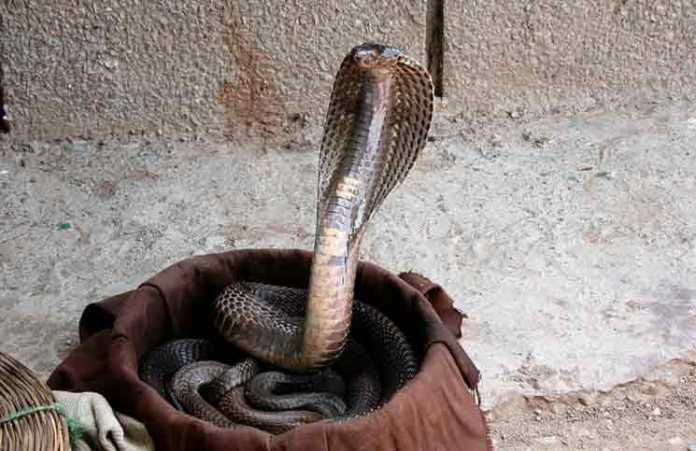
Indian Cobra
Indian cobra raised and spreading its hood. Photo by Renaud d'Avout d'Auerstaedt (http://renaud.davout.org/)

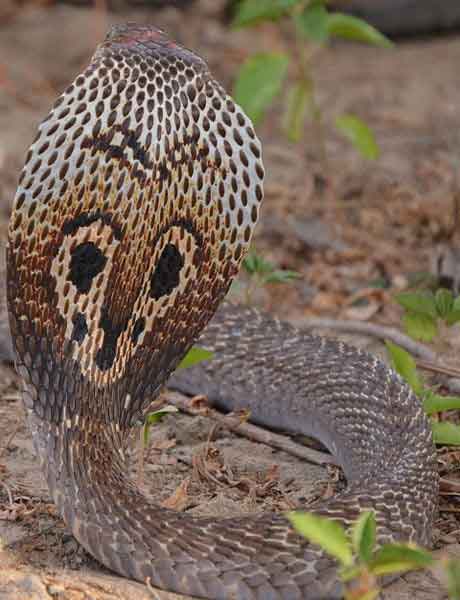
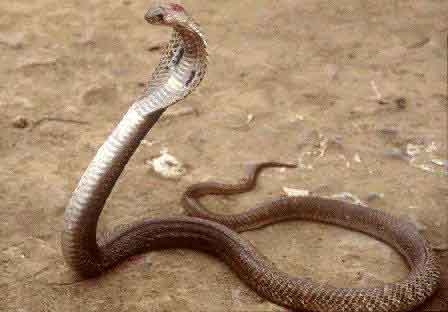
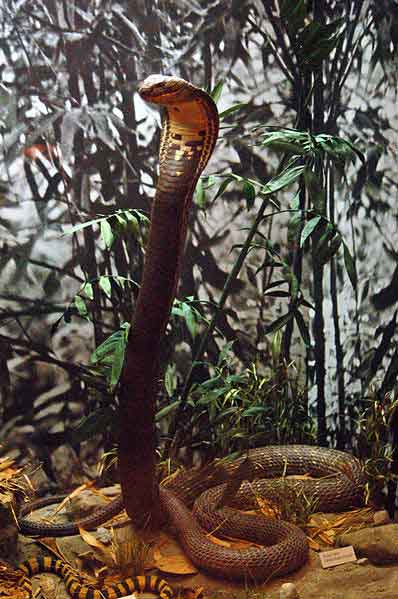
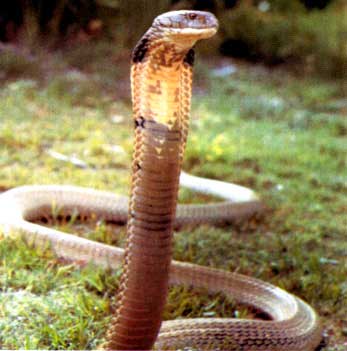
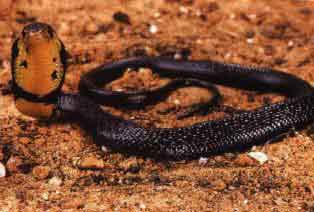
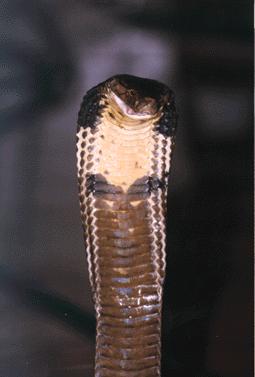
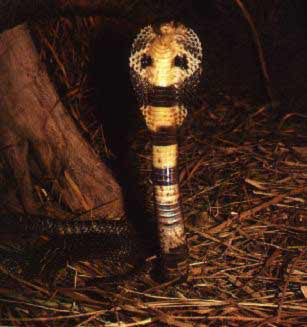
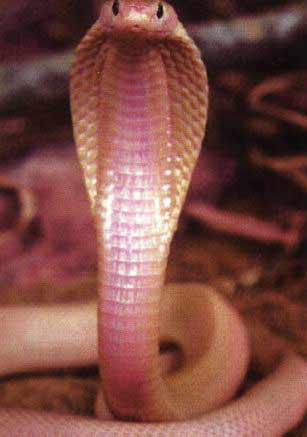
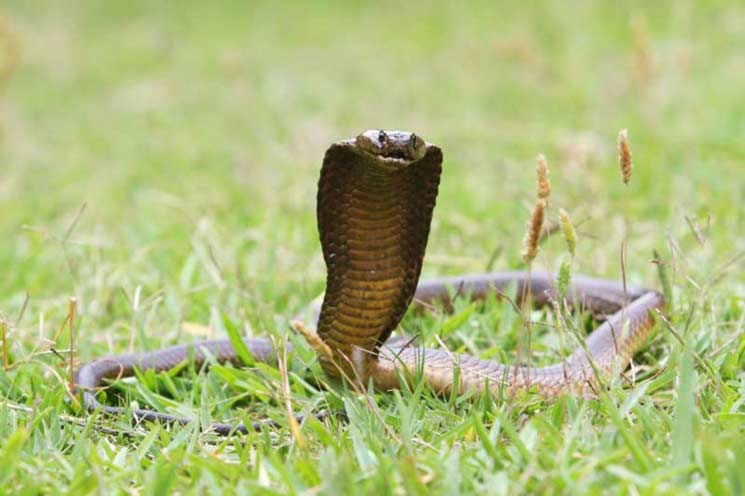
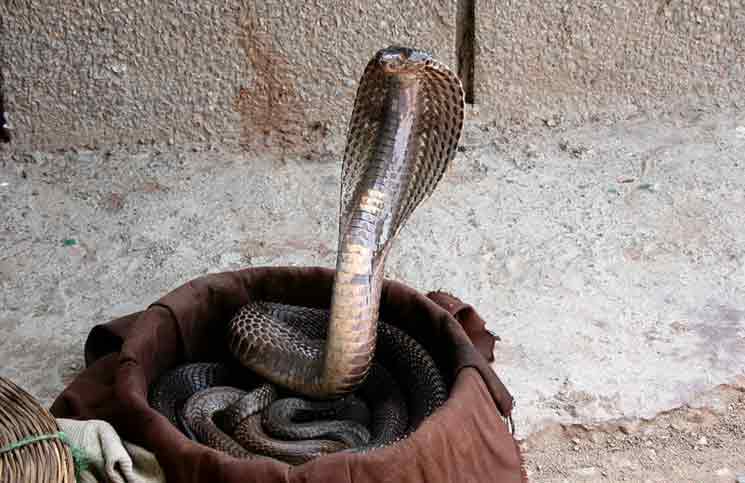
As the No. 1 Resource on Cobras since 1994, we get lots of emails and pictures from Cobra owners or snake catchers in Asia who made some beautiful pictures of the most revered snakes on the planet. We’ll try from now on to showcase some collections from time to time, so you guys can also enjoy the beauty of Cobras. Here below is our sample selection of Cobra Pictures, from various sources.

So do you have any Cobra Pictures? Other Snake pictures maybe? Send ’em to us pleeeeease! You won’t regret it. We’ll feature your pictures with your deserved credit of course.

Too small? Click on the thumbnails to view full size Cobra Picture.

 Other stuff…

For more fast facts about Cobras click here.

For further discussion on snakes, scientific classifications, venom research and much more, check the resources available in “The New Encyclopedia of Snakes”, available on Amazon.com.

069113295X
Click here to take a glimpse at 
“The New Encyclopedia of Snakes” 

1. If you feel like a having a real Book on Snake Bites, then get this book:Snakes and Snakebite‘ by Visser, J. & Chapman D.S.

2. And if you love African Hot snakes, this is THE Book for you:  ‘Dangerous Snakes of Africa’ by Spawls, S. and Branch, B.

Emergency Treatment of Snakebite

Case Study

PROBLEM or PURPOSE:

To present a case involving a snakebite and consider possible remedies to the lack of effective procedures, training and communications with regard to venomous snakebite treatment.

STUDY TYPE:

Case Report

POPULATION DATA:

TOTAL IN STUDY: 1

SIGNALMENT: 26 year old adult Caucasian male in normal health

DISCLAIMER:

The author is not a medical doctor, primary care provider or other medical professional. Nothing in this Case Study is to be construed as medical advice or the practice of medicine.

SITUATION:

Victim was climbing in remote Rockies, bitten by an unknown snake in patellar region of left leg. I arrived via helicopter approx. 1 Hr. 15 mins. after incident as first-in EMS team. No care of any type had been administered. Two lay-people were attending victim on arrival. One told us that he was “just getting ready to cut they guys leg and suck out the poison”. Victim was multi-symptomatic, with distinct puncture wounds showing tissue swelling, edema, some ecchymosis, and distention at posterior of injury region. Chief complains were dizziness, nausea & pain in bite region as well as tightness in chest. Initial triage indicated extreme shock trauma, trauma related stress, elevated respiration, pulse and BP. Pupils showed uneven dialation and were generally non-responsive to light. IV (lactated Ringer’s) & ECG were started.

Snakebite KitA combination of EMS and herpetological knowledge prompted me to believe that the wound was inflicted by a relatively large, venomous species, and that a neurotoxin (rather than a hemotoxin) was most likely introduced. These conclusions were formed based on puncture wound separation, edema and symptomolgy. I contacted the nearest US Forest Service Field Office via FERN radio and requested that he call for advance prep. at the nearest trauma center (which will remain nameless) approx. 30 mins flight time from incident scene. The USFS Ranger relayed my instruction incorrectly and told them our victim was “poisoned”. Patient became increasingly non-responsive and developed respiratory distress in-flight and was intubated.

On arrival at trauma center (Class 2) we were met by a resident who was the “poison expert” at the facility. He had no experience or practical dealing with snakebite. One of the ER/trauma techs. at the facility who was a member of Rocky Mountain Rescue Group, and had training (though no practical) with snakebite trauma. He had the presence to call the Poison Control Center and request the location of the nearest antivenin storage facility. By this time, the victim was experiencing extreme duress, advanced trauma and was in danger of pulmonary and/or cardiac arrest. The ER team (now 9+ people) diligently addressed the symptoms, but no attention was given to the cause.

Local site necrosis developed, as well as acute pulmonary paralysis. Upon my insistence (with help from the ER Tech.) a helicopter. was started from a (Class 1) trauma center in a major city where the nearest antivenin (Trivalent) was located. At no time did anyone from the storage facility ask what kind of venom was introduced or the snakes identity. The victim suffered total pulmonary arrest approx. 45 mins. post admit, with cardiac arrest following. A “lively” discussion ensued re: the merits of administering the now arrived antivenin serum.

No one, including myself had any clinical experience with administration technique on a respirated post-arrest patient. Following a bout with arrhythmia that prompted the use of electro-cardiac therapy the patients vitals were stabilized enough to address the neurotoxic symptomolgy. I called the facility where the serum was obtained to seek further advice. Following the advice of a researcher (Doctorate of Biochemistry), the serum was introduced via saline IV flow in increasing amounts. Patient showed signs of responding to treatment almost immediately.

Following what appeared to be full stabilization of vitals, patient suffered an acute reaction to the serum and underwent total cardio-pulmonary paralysis. Urticarial reaction was diagnosed. The decision was made by the chief attending physician to treat the patient surgically, where open heart massage was administered prior to patient being placed on heart/lung system. Patient remained in intensive care in comatosis for 168 hours, at which time consciousness was regained following various therapies to which I was not party, including removal from HL system. Patient was released to OPCTF 2 weeks later, exhibiting signs of paralysis, neurological damage as well as complete amnesia. Subsequent queries as to patient’s condition have revealed partial regaining of motor function in upper torso, heightened response to physical therapy, and increased memory of events prior to but not proximate to incident.

OBSERVATIONS & SUMMARY:

Due to the infrequency of this type of casualty in the USA, no real system is in place to deal with this type of incident. Countries such as Singapore, India and most of Africa have detailed and efficient procedures for diagnosis, pre-hospital EMS care and antivenin location communications. Traumas such as these are often treated as routinely as a common laceration. Pre-hospital care providers and M.D.’s in most other countries where elaipdae are not prevalent are often not specifically trained in venom type identification and antivenin administration.

I am working to change this. As an EMS caregiver (EMT-P/IV/MAST with dive, jump, cave, trench, mountain rescue and HazMat training/experience formerly with USAF Pararescue, RMRG, vol. FireMedic) I see a desperate need for better communication & training to pre-hospital care providers & OPCF/medical facilities, since most incidents occur outside the immediate range of a trauma center. Caregivers should be instructed to call the PCC immediately in these cases. The PCC maintains current and detailed data re: antivenin availability, type and administration as well as referring specialists. Taxonomists, venom researchers, neurological specialists and chemists/enzyme researchers often study the same topics without communication between the sciences. Those with useful allegorical data, the herpetologists and hot keepers, are rarely consulted.

The Cobra Information Site, and the “Cobras Who’s Who” have been formed in an attempt to rectify this. My hope is that by providing a means through which all of these diverse factions can communicate, I can facilitate this exchange of information. By providing a central repository for current taxonomic, chemical and herpetological research information, accessible to all, I hope to remove the bottleneck often created by more traditional medical & scientific community communications.

Snake Books: Cobra Reading Room

Reptile and Snake Books
Below you will find some great snake books on various species of snakes and other reptiles, most available through a local University library or research library:

Books on Cobras and General Serpents

Cobras in his Garden” By Harry Kursh
snake books
Best Book On Cobras…

One of the best books on cobras and snakes, from the eyes of the famous Snake Expert, William “Bill” Haast. Published back in 1965, it is sadly out of print and hard to find, but Amazon sometimes has copies, or you can try other auction and book finder sites. Here’s a review by one reader: “William “Bill” Haast takes you farther into sceintific areas, without boring or losing the reader, than any book I have ever read. He will dispell all of the rumours and myths, that most people beleive about snakes. He also takes you on a trip through his own personal triumphs & tragedies and learning experiences, that made him an expert in his field. This is a fascinating book for young or old, and I highly recommed it…”


The New Encyclopedia of Snakes By Chris Mattison
snake books
The New Encyclopedia of Snakes

Comprehensive, up-to-date, and richly illustrated with some 200 color photographs, The New Encyclopedia of Snakes is definitely the best single-volume reference on snakes. 


Venomous Snakes of the World by Mark O’Shea

Venomous Snakes of the World-

In this comprehensive volume, author Mark O’Shea has combined expertly written, in-depth descriptions of the world’s common and exotic venomous snakes, highlighted by previously unpublished gripping accounts of his adventures with snakes, including personal observations and several serious snakebite episodes. This is also one of our favorite snake books.


Good Snakekeeping: A Comprehensive Guide to All Things Serpentine By Phillip Purser

Good SnakekeepingThis comprehensive guide contains entries on more than 35 snake species, from those commonly available to subspecies and related species, desirable rarer species, and even species to avoid altogether. Written by an expert snake keeper, the chapters detail the natural range, habitat, pet suitability, and specific care requirements of different snakes. The book also discusses creating habitats for pet snakes, including cage types, substrates, heating, lighting, humidity, and terrarium fixtures, and provides instructions for setting up the enclosure for desert, forest, rainforest, and semi-aquatic species. Another favorite on our short snake books list.

Breathtaking Pictures…

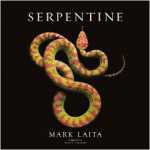
Serpentine by Mark Laita

SerpentinePhotographer Mark Laita unveils a pantheon of spectacular snakes in this electrifying collection. Inciting both allure and alarm, shining pastel pythons and vibrant green vipers slither across the pages. An illuminating essay by William T. Vollmann accompanies the images, delving into the associations with snakes that haunt our collective imagination.

From the iridescent blue Malaysian coral snake to the candy-cane-striped albino Honduran milk snake, the aptly named beautiful pit viper, and the gleaming black mamba, the world’s most dangerous and gorgeous snakes are pictured in Serpentine, showing off their fascinating colors and textures—as well as the sensual forms their movement creates. Through Laita’s lens, there is nothing they can do, no position they can take, that fails to be anything but mesmerizing.

Snakes: The Evolution of Mystery in Nature By Harry W. Greene, Photographers: Michæl Fogden and Patricia Fogden

Snakes-The Evolution of Mystery in NatureThis is a book about some of nature’s most alluring and forbidding creatures, written by a man with an abiding passion for snakes, as well as for science, the fate of the planet, and the wonder of life. Harry Greene presents every facet of the natural history of snakes—their diversity, evolution, and conservation—and at the same time makes a personal statement of why these animals are so compelling.

This book provides an up-to-date summary of the biology of snakes on a global basis. Eight chapters are devoted to general biology topics, including anatomy, feeding, venoms, predation and defense, social behavior, reproduction, evolution, and conservation; eight chapters survey the major snake groups, including blindsnakes, boas, colubrids, stiletto snakes, cobras, sea snakes, and vipers. Details of particular interest, such as coral snake mimicry and the evolution of the0 rattle, are highlighted as special topics. Chapter introductory essays are filled with anecdotes that will tempt nonspecialists to read on, while the book’s wealth of comprehensive information will gratify herpeto-culturalists and professional biologists.

For Kids…

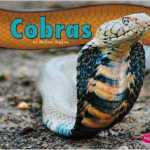
Cobras (Snakes) by Melissa Higgins

CobrasThis is definitely one of the snake books for kids. The “impressive photos and solid information in this book will have a strong appeal to younger readers”, says one reader.

Melissa Higgins has written over 30 fiction and nonfiction books for children and young adults. She especially like writing about animals, even scary ones. She has written three books about snakes. Ms. Higgins lives in the Arizona desert with her husband and two cats.

Reptiles and Herpetology

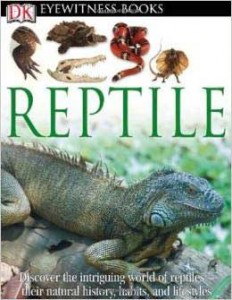
DK Eyewitness Books: Reptile by Colin McCarthy

DK Eyewitness Books-ReptileWith more than twenty million copies sold in forty languages in ninety countries worldwide, DK Eyewitness been the most trusted young adult nonfiction book series for more than thirty years. Visually engaging, informative, and lively, the one-hundred-plus titles in the Eyewitness series focus on subjects that complement students’ personal interests and areas of study to make learning simple and fun…


Herpetology, Third Edition: An Introductory Biology of Amphibians and Reptiles By Laurie J. Vitt and Janalee P. Caldwell

Herpetology-Third Edition--An-Introductory-Biology-of Amphibians and Reptiles

This third edition, now fully revised and updated by two of Dr. Zug’s colleagues, provides herpetology students and amateur reptile and amphibian keepers with the latest taxonomy and species developments from around the world. Herpetology is a rapidly evolving field, which has contributed to new discoveries in many conceptual areas of biology. The authors build on this progress by updating all chapters with new literature, graphics, and discussions-many of which have changed our thinking.

[dropcap type=”1″]3)[/dropcap] Amphibians and Reptiles in Minnesota By John J. Moriarty and Carol D. Hall

Amphibians and Reptiles in MinnesotaSnakes on the patio, salamanders in the basement, frogs crossing the road, and turtles nesting on the shore in the land of 10,000 lakes: from the enchanted child to the curious adult, from the amateur naturalist to the dedicated conservationist, living with wildlife in Minnesota means finding amphibians and reptiles in prairies and forests and your own backyard…


Venom and Toxicology

Casarett & Doull’s Toxicology: The Basic Science of Poisons, Eighth Edition by Curtis Klaassen

Casarett-and-Doulls-Toxicology-The Basic Science of Poisons-Eighth-Edition

The most trusted all-in-one overview of the biomedical and environmental aspects of toxicology–NOW more complete, up-to-date, and in full color. The Basic Science of Poisons not only delivers a comprehensive review of the essential components of toxicology, it offers the most up-to-date, revealing, and in-depth look at the systemic responses of toxic substance available anywhere.

Casarett & Doull’s Essentials of Toxicology, Second Edition by Curtis Klaassen and John B. Watkins III

Casarett and Doulls Essentials of Toxicology--Second-Edition

The most concise and authoritative introduction to the principles of toxicology and how poisons affect the human body – now in full color.

A Doody’s Core Title ESSENTIAL PURCHASE for 2011! This book is an easy-to-absorb distillation of the field’s gold-standard text Casarett & Doull’s Toxicology: The Basic Science of Poisons. Presented in full color for the first time, the book combines an accessible and engaging approach with coverage of essential introductory concepts to provide you with a solid grounding in basic and medical toxicology.

Dreisbach’s Handbook of Poisoning: Prevention, Diagnosis and Treatment By Bev-Lorraine True and Robert H. Dreisbach

Dreisbachs Handbook of Poisoning Prevention Diagnosis and Treatment-Thirteenth Edition

Now in its thirteenth edition, Dreisbach’s Handbook of Poisoning is long established as the definitive handbook of poisoning for all physicians, nurses, crisis and hotline workers, paramedics, and students. Rapid response is critical during the initial management of poison cases. This ready-reference guide provides antidotes, antivenins, and more for a vast number of substances. It covers medical toxicology – including prevention and management of exposures, poisonings, adverse effects, abuse and withdrawal from pharmaceuticals—and household, environmental, and natural hazards.

And some more good stuff on our website:

An article about Bill Haast, one of the great pioneers and researchers into venom as medicine. 

An article about the value of poisons and venoms.

Cobra books are also here!

For more fast facts about Cobras click here.


Snake Handling Equipment: HOTS 101 Part 2

Keeping venomous snakes
Keeping Venomous Snakes - by Cobras.org
By Allen Hunter

Hello friends of the fanged ones, welcome to Pt.2 of Hots 101. This time I’ll explain some of the tools and snake handling equipment used in the captive maintenance of venomous snakes.

First off, I should state that the tools and snake handling equipment mentioned here should regarded as being absolutely necessary for handling venomous snakes, and any individual who insists on using their bare hands or even gloves has surely taken leave of their senses and must be regarded as irresponsible and a danger not only to himself, but those around him and his fellow keepers.

SNAKE HOOKS
snake hooks
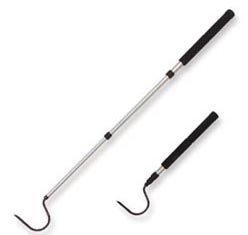
Collapsible Snake Hook from Amazon. Click here for more Info!

The universal tool for handling and pinning venomous snakes. Hooks consist of a rod or pole of various thicknesses and lengths which terminate with a 90 degree angle ‘foot’ or hook. The end is rounded to prevent injury to the animal and the top should have a rubber or wooden handle for optimum control. A good cheap source for these are golf clubs with the heads cut off and a 1/4-3/8″ bent aluminum or steel rod welded to the end of the golf club shaft. Commercially made snake hooks are available, and can be ordered to size from various reptile dealers. Check out the Collapsible Snake Hook (17-39 in) at the left from Amazon. 

A Tool you always need: Snake Bite Kit. For more info click here!

The keeper should have an assortment of different sizes and lengths of hooks to accommodate any size of snake. Popular lengths include 12-16″ hooks fashioned from strong coat hanger wire or part of a fishing pole for neonates and juveniles, 24-36″ for most med. sized snakes(2-3.5 ft.) and 36-48″ for larger species. Personally, I find that any hook over 48″ is rather cumbersome to use, and does not aid in speed of movement if necessary.

THE GRAB STICK

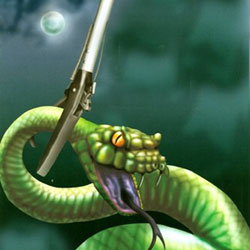
The grab stick, or Pilstrom tongs as they are generically referred to, is a mechanical grasping device intended for use in restraining large, fast or extremely aggressive snakes. These tongs consist of a 3/4″ aluminum tube, 24-60″ long, a pistol-type grip and lever similar to a bicycle brake and two 6″ fingers at the bottom end which are connected to a long thin steel rod that is under spring tension.

Snake Handling Equipment: Tongs
Snake Handling Equipment: Tongs. Extra Heavy Duty Snake Stick. Click here for more info.

As opposed to lifting and guiding the snake with a hook, the jaws of the grab stick clamp onto snake (never in the neck region!) and prevent it from running. Great care must be exercised in using a grab stick, as most snakes react violently to something restraining them instead of simply being lifted, and can easily damage ribs, spine or internal organs. Fortunately, you can feel how much pressure is being applied to the snake and help to avoid injury.

Personally, I feel that grab sticks are a little brutal and are only used as a last resort when a particularly fast or aggressive snake is getting dangerously out of control using hooks. I find they are much more useful for offering dead prey to large snakes and moving or taking out objects in the cage. Check out the EXHD (Extra Heavy Duty Snake Stick) at the left, from Amazon.

THE TRAP BOX

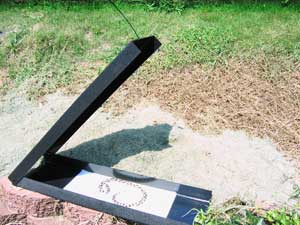
This simple but very effective control device greatly eases the day-to-day cage maintenance and stress on both the snake and keeper. It is basically a sealed hide box with a sliding plexiglass or wooden door and a means to lock or secure the door shut when taken out of the cage.

Trap boxes are generally reserved for large elapids or other snakes with berserk temperaments which cannot be easily controlled with hooks. Mind you, for the venomous snake keeper there is no safer method than the trapbox.

snake handling equipment
Snake Trap. For more Info click here!

If you construct it yourself, be sure to use strong materials as you would when building a cage, and don’t forget to drill a few small holes for ventilation while it’s outside the cage. If you prefer to buy – check out the Snake Trap on the left, from Amazon.

MISCELLANEOUS SNAKE HANDLING EQUIPMENT

snake handling equipment
Stainless Forceps. Click here for more info!

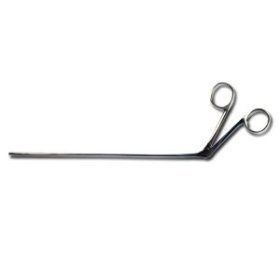
Every keeper of venomous reptiles should include long (16-24″) forceps or locking hemostats for feeding dead prey to small to medium-sized snakes. They are commercially available from medical supply depots and most large herp dealers, and should be considered an absolute necessity. I personally know one bonehead who thought rattlesnakes couldn’t strike straight up from a coiled position and promptly offered an adult mouse to a 3.5ft. Northern pacific with his bare hand and was immediately bitten from a distance of 12″ in the palm of his right hand with both fangs. Well, he almost died from his stupidity and to make us think him even more of a genius, three weeks later he was bitten again (!!!), this time by a W. Diamondback!

One other tool which gets a lot of use in my herp room are plexiglass shields. These are simply pieces of plexi in various sizes, screwed onto pieces of broom handle at various lengths. These are placed between the resting snake and you, so you can quickly grab a waterbowl, uneaten rodent or scoop feces without disturbing the snake or stressing it by constantly taking it out of the cage for maintenance.

Well, that’s all for now. Part 3 will discuss the methods and potential horrors of transporting venomous snakes.

Take care for now. “Go for a bite?”, “No fangks” 😉

For more fast facts about Cobras click here.

For further discussion on snakes, scientific classifications, venom research and much more, check the resources available in “The New Encyclopedia of Snakes”, available on Amazon.com.

069113295X
Click here to take a glimpse at 
“The New Encyclopedia of Snakes” 


If you feel like a having a real Book on Snake Bites, then get this book:Snakes and Snakebite‘ by Visser, J. & Chapman D.S.

And if you love African Hot snakes, this is THE Book for you:  ‘Dangerous Snakes of Africa’ by Spawls, S. and Branch, B.

First Aid For Snake Bite: Prevention

Albino Cobras
The legendary Albino Cobra. Photo by Kobchai Matasurawit

This is intended to be the ‘Prevention’ part of any First Aid For Snake Bite Guide. The author takes no responsibility for the accuracy of this information!

  • Obviously the best prevention is to avoid getting bitten. This will save you the hassle of even using the full guide of First Aid for Snake Bite. This is facilitated by the fact that humans are not the natural prey of any Venomous snake. We are a bit large for them to swallow whole and they have no means of chopping us up into bite size pieces.
  • Nearly all snake bites in humans are the result of a snake defending itself when it feels threatened. In general snakes are shy and will simply leave if you give them a chance. The basic rule is to be sure the snake knows you are coming. Walk heavily, they probably sense ground vibrations better than sound. If they sense your presence they will almost always leave before you even know they are there. (This may not apply in other parts of the world. Some of the more potent snakes may protect their territory as well as their bodies.)
  • If you do unexpectedly confront a snake, stay calm, back away and do nothing to threaten it. (This assumes of course that the surprise didn’t cause you to jump well beyond the snake’s reach. It’s amazing what the human body can do in such circumstances.)
  • Don’t run around barefoot in snake country, especially after dark. During warm weather snakes will be most active at night and will defend themselves if stepped on or if you walk too close and they sense danger. MFM lists going barefoot and gathering firewood after dark as two of the more common activities leading to snake bite. Going barefoot not only exposes you but also makes your footsteps quieter so you are less likely to be felt. You could invest in a pair of “snakeproof” boots but any high top leather boot is probably adequate. Long pants will also help since the snake has difficulty distinguishing between clothing and you. Venom injected into a fold of your clothing won’t hurt you much.
  • first aid for snake bite
    Get your Snake Bite Kit on Amazon!

    Remember that snakes like to hide under rocks, logs, brush etc. to protect themselves from sun or cold. Be *very* careful in snake country about moving such objects or reaching into anywhere a snake might hide, or even walking by them. They might well perceive your actions as aggressive and defend themselves. This is probably the most dangerous situation since there may be more than one snake in the same place and, taken by surprise, they will strike without warning. Furthermore they will be more likely to bite your unprotected hand, not a leg or foot protected by clothing.

  • Rock climbers should be careful in snake country. Snakes like to sun themselves on ledges and it can be a real eye-opener to poke your head up and stare one in the eyes. And while you won’t find them in the middle of a 5.12 face you may find them in cracks near ledges etc. Remember, the mice and rats which inhabit many cliff areas mean food to a snake and so attract them.
  • It is also a good idea to protect yourself while sleeping. Snakes won’t come looking to bite you, but when the temperature starts to drop they often do look for a warm place to spend the night. That sleeping bag with you inside can be very attractive. Use insect netting or something else to keep them out (unless you relish the thought of waking up to find a snake in bed with you). There is a bit of controversy about if they will actually crawl into bed with you, but I would want to take precautions. Also check the sleeping bag before you get in to be sure it isn’t already occupied. The same goes for your boots in the morning.
  • Be careful entering old buildings such as mining cabins. They make nice homes for snakes.
  • Obviously you should not handle or tease poisonous snakes. Less obvious is the danger of handling them when they are dead. A reflex strike from a dead snake can be just as dangerous as a snake bite by a live one. This also applies to detached heads of dead snakes.
  • And lastly, when your planning to be around snakes for a while – always have a Snake Bite First Aid Kit close by. Here’s one good one:

    Coghlan’S Snake Bite Kit

For more fast facts about Cobras click here.

For further discussion on snakes, scientific classifications, venom research and much more, check the resources available in “The New Encyclopedia of Snakes”, available on Amazon.com.

069113295X
Click here to take a glimpse at 
“The New Encyclopedia of Snakes” 

If you feel like a having a real Book on Snake Bites, then get this book:Snakes and Snakebite‘ by Visser, J. & Chapman D.S.

And if you love African Hot snakes, this is THE Book for you:  ‘Dangerous Snakes of Africa’ by Spawls, S. and Branch, B.