
Home Blog Page 20

Warning System against Crocodile Attack?

crocodile attack
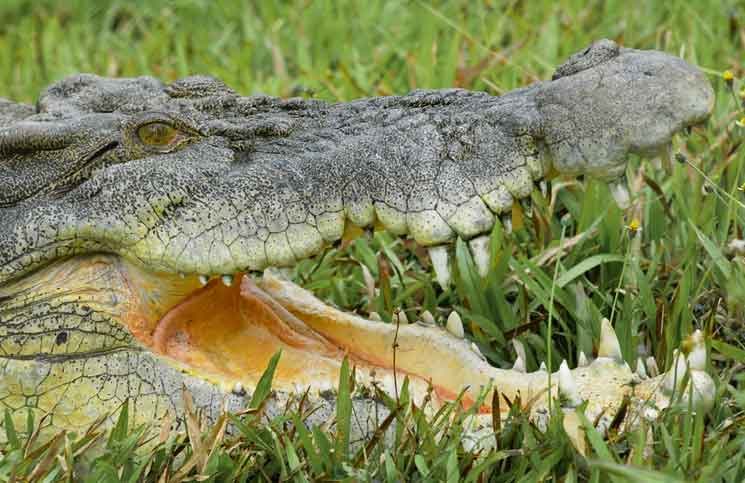
Crocodile Attack: Can we be warned? Photo by Shatalkin

How many crocodile attack stories have you heard this year? Well, if you are into reptiles as most our readers are, you surely read quite a few stories about crocodile attacks on humans. Unfortunately, as long as we mess with their ecosystem – we will always be legitimate targets. But what would you say if you could use a special warning system against crocodiles?

A recent study by a team of researchers from the University of New England, was able to predict, even down to the hour in some incidents, as to when a crocodile was likely to appear. The research uncovered useful crocodile facts, which if combined and put into a model – could someday be used to warn people from a possible crocodile attack. The study results could make swimming and fishing in the far north of Queensland and many other areas – much safer.

The team of scientists, led by Project leader Dr Hamish Campbelltried to find out when crocodiles are most likely to be lurking around. They monitored the crocodiles by using tracking devices over three years in two river systems in the far north of Queensland, Australia.

Among the facts found, the team revealed that crocodiles and large reptiles are more likely to visit areas that are frequented by humans between the months of September and January, and at high tide. The scientists recorded 270 incidents over the period of three years, in which reptiles passed through areas that were frequented by fishers, swimmers and other people.

During the mating time of September and January, the activity increased, due to the fact that males were searching for females, while females were searching for nesting sites. The observations also revealed that crocodiles were more likely to move during the night, and that some crocs even travelled up to 50 km. Another interesting crocodile fact that came up in the research, is that while crocodiles did frequent areas where people were hanging around, the crocodiles tended to move quickly through these areas and did not stick around.

Project leader, Dr Hamish claims there are locations where they can predict down to the exact hour – when crocodiles will turn up. Based on all the facts gathered in the research, the scientists claim that they can basically say “At this time of year, when the tide is like this or at this time of the day this is the sort of patters where crocodiles are going to be”. These results could be put together into some kind of model of Crocodile Attack Warning System. This could save dozens of lives every year. However, the scientists say that more research is required in other areas, before a Crocodile Attack Warning System is developed…

Let’s hope and see…
Poll: Which Snake Do you Love Most?

Taipan Snake
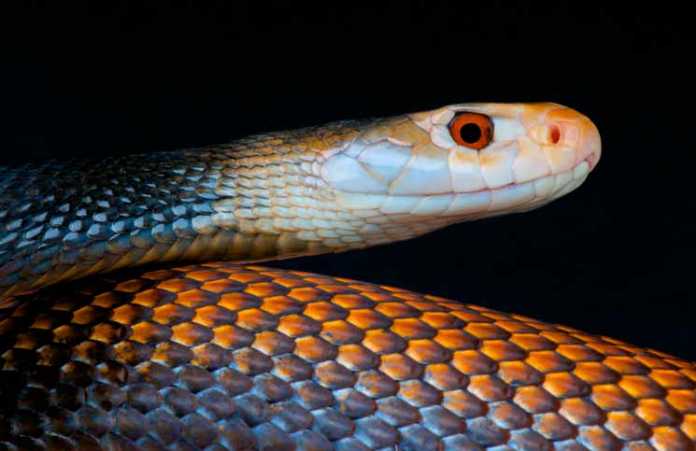
The Taipan Snake: Is this No. 1? Photo: Matthijs Kuipers

New Monitor Lizard Species Discovered in Black Market

lizard species
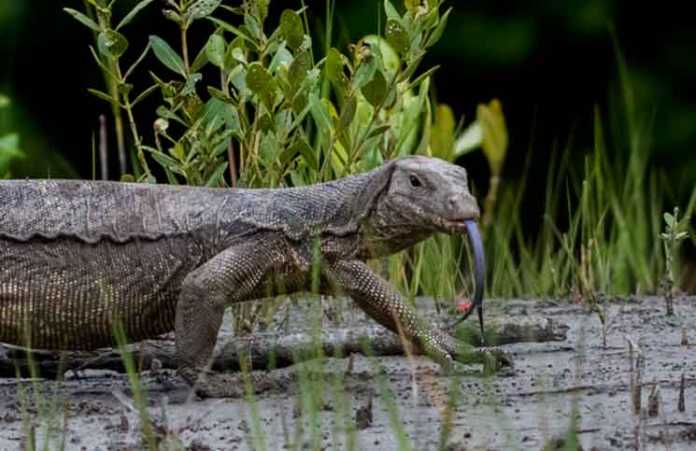
Water Monitor Lizard. By Dibyendu Ash [CC BY-SA 3.0], via Wikimedia Commons

Have you ever visited wild animal markets in exotic countries like Thailand, Indonesia or the Philippines? If you have, you’d surely know how these illegal traders boast and brag of having the rarest snakes and monitor lizard species in the world, with origins in the most remote parts of earth. Well, a recent study may have actually confirmed one of these stories.

A group of scientists from the Biodiversity Institute of the University of Kansas, claim to have identified two new monitor lizard species in the black market of the Philippines. It appears the scientists have spent the last five years trying to catalog all the wild animals that are sold on the Philippine black market. A lot of this black market has moved from the streets of Manila to the webpages of Facebook and other online markets.

The scientists analyzed and bought dozens of animals in hidden alleys and secret websites. They would then perform genetic analysis on the purchased animals, building a database that other researchers and authorities could later on use. However, during their year-long research, the scientists suddenly came upon two monitor lizard species which they couldn’t identify. There was no record of them anywhere in the books. They were two water monitor lizards: One black and white, and the other black and yellow. Their DNA was absolutely new to science.

The Water Monitor Lizard species, known as Varanus salvator, is a big lizard native to South and Southeast Asia. It can grow larger than 1.5-2 m (4.906.6 feet), while the largest Water Monitor Lizard was recorded in Sri Lanka, measuring 3.2 meters (10.5 feet). This unique carnivore lizard, which is an excellent swimmer, defends itself by using its tail, claws and jaws. It will usually eat fish, frogs, birds, crabs, rodents and snakes. Some water monitor lizard species have even been observed devouring on catfish, tearing off chunks of meat with their teeth.

The two new monitor lizard species discovered in the black market of the Philippines, have been named Varanus dalubhasa and Varanus bangonorum.

For more specific details you can read the study at Zootaxa.

Snake Prank: Jimmy Fallon Horrified by a Cobra

On last Monday’s “Tonight Show”, host Jimmy Fallon got pranked pretty badly, with a great Cobra snake prank!

Fallon was hosting animal expert Jeff Musial (more about this amazing guy below), who first brought some terrifying Mexican tarantulas, which already scared Fallon immensely. The huge spiders crawled on his head until Fallon practically collapsed on the floor. After that, seconds before the Snake Prank, you could hear Fallon ask Musial not to scare him again.

However, Musial then brought a snake basket and put it on Fallon’s desk. Musial told him there was a venomous Cobra inside, and gave Fallon a tiny hook and a flute, so the host could charm the snake. When the “snake” (which was of course a rubber snake prank replica) wasn’t moving, Musial asked Fallon to tap on the side of the basket with the hook, encouraging the scared host to get closer and closer to the basket. Fallon was edging slowly closer and closer, until Musial brilliantly detonated the rubber snake prank!

Fallon jumped almost up to the ceiling, terrified by the fake snake encounter, he still smiled, like always…Don’t miss this great snake prank! Watch now!

About Jeff Musial

Jeff Musial has certainly made a name for himself in the world of wild animals. He started out working in a pet shop, and in the last few years he’s been showing on national television, and more. He’s definitely not only great at snake pranks, Jeff is an amazing educator about all sorts of wild animal species.

Jeff’s love for animals started when he was a kid, catching garter snakes and frogs in his backyard. He was always with animals, studied zoology in college, and then in 1999 he started his own business, Nickel City Reptiles and Exotics.

Since then, he’s been captivating people of all ages, using an amazing blend of education and entertainment. Check his official website here.

Want to subscribe to Jimmy Fallon’s awesome show? Here’s a link to The Tonight Show Starring Jimmy Fallon.

Want Your Own Fake Rubber Snake To Do your own Snake Prank?

snake prank
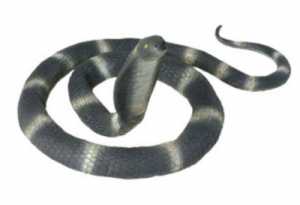
Cobra Snake Prank. Get it at Amazon.com!
Rubber Cobra Snake Prank – Click here!

This rubber cobra will be sure to scare people. Lay it in the grass by the door and watch your guests’ and family’s reactions and they walk up to the door! This classic prank never gets old. The cobra is a dark olive green with white stripes. It is also made of all rubber. This cobra is realistic-looking and life-size!


snake prank
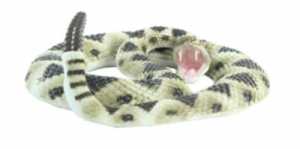
Rattlesnake Prank. Get it at Amazon.com!
Eastern Diamondback Rattle Snake Prank – Click Here!

The Eastern Diamondback is the largest rattlesnake in the world, measuring an average of about 5.5 ft. It’s also one of the most venomous snakes in North America and has fangs that can be up to an inch in length. Be careful: This snake can strike from a distance equal to one-third its body length! The Incredible Creatures Collection features Extra large, soft, playful, true-to-life vinyl replicas of some of the most amazing creatures in the world. Excellent learning tool to introduce young children to our delicate and often endangered inhabitants of our planet. A fun way to spark the innate curiosity of a child. Each replica is finely hand painted and accurate down to the last detail.

prank snake
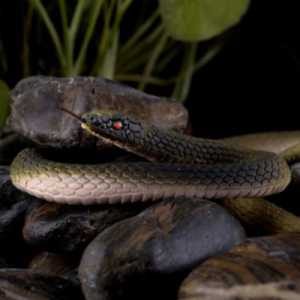
Green Snake Prank. Get it at Amazon.com!
Green Snake Prank – Click Here!

This beautiful, lifelike replica of a lovely Snake (green) measures approximately 49 inches from nose to tail. Replica is constructed of heavy duty, durable rubber. Recommended ages 5 to Adult 49″ from nose to tail (approximate).


One Anti-Venom Against All Snakes?

anti-venom
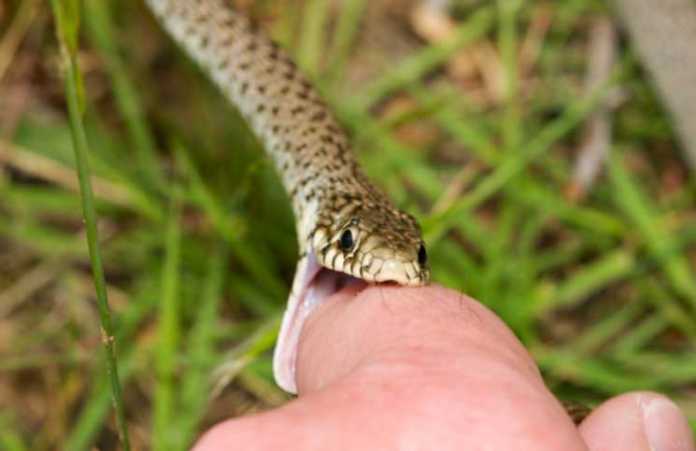
Snake Bite. Photo by Marcelkudla

Are scientists close to developing a universal Anti-Venom that could be effective against all venomous snakes in sub-Saharan Africa?

According to news reports in England, scientists from the Liverpool School of Tropical Medicine (LSTM) are currently using a new technique called ‘antivenomics’ to increase the potency of venom extraction, in the hopes of creating a new universal anti-venom for all venomous snakes in the sub-Saharan Africa.

There are more than 30,000 deaths in Africa every year, due to snake bites, and lack of effective snake bite first aid. More than 90,000 people are disabled because they do not get adequate snake bite treatment. A revolutionary universal anti-venom could save thousands of lives each year.

According to the head of LSTM, Dr. Robert Harrison, there are over 20 species of venomous snakes in the Sub-Saharan Africa. When victims arrive to the hospital, Doctors usually rely on the victim’s description of the snake, so they can decide how to proceed the treatment. Most victims cannot supply an accurate description, and therefore doctors usually give them a broad-spectrum anti-venom that will cover all the possible snake species. However, this broad-spectrum anti-venom is extremely expensive, and often not even available. In addition, the broad-spectrum anti-venom may increase the chances of side effects.

snake bite first aid
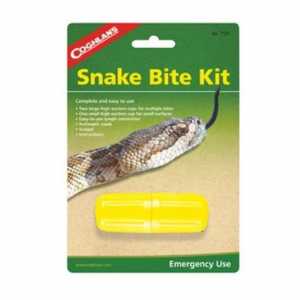
Going to Snake Territory? CLICK HERE!

The main problem with producing anti-venoms, is that they are limited in quantity due to the tedious methods of extracting them: The venom is first extracted from various venomous snakes, and then injected into livestock, which in turn – produce antibodies that are later extracted from the animal’s blood, in order to create the anti-venom.

Now, LSTM, which inhabits 400 snakes and extracts venom from reptiles each week, is working together with the Institute de Biomedicina de Valencia in Spain and the Instituto Clodomiro Picado in Costa Rica, in order to change the current situation, and produce a low-cost universal anti-venom, that could be used against all venomous snakes in the sub-Saharan Africa. The plan is to use proteins from all their extracted venom and add stabilizing chemicals, so it withstands extreme heat.

Interested in more details? You can visit the website of the Liverpool School of Tropical Medicine (LSTM).

Need a Snake Bite First-Aid Guide? Sign-up to Cobras.org and you will get it for FREE!

Shingleback Lizard Warns us of Pollution

The Shingleback Lizard might be known for its extreme slowness, hence the other name it has: The Sleeping Lizard, but a new study shows that it might be one of the first animals to warn us of pollution.

Scientists from the University of Sydney have managed to show that the Shingleback Lizard, as well as similar indicator species, could essentially warn us of the impact of agricultural chemicals on plants, people and wildlife.

The scientists examined two groups of Shingleback lizards: The first was close to an agriculture-intense area in southern Australia, while the other group was living in undeveloped rangelands. The findings revealed that while more than half of the Shingleback lizards living in the agriculture-intense area were anemic, no signs of anemia were found in the lizards living the undeveloped area.

Who is the Shingleback Lizard?

Known by its scientific name of Tiliqua rugosa, the Shingleback Lizard is a short-tailed, slow moving species of blue-tongued skink that is found in Australia. The Shingleback Lizard, which was first described by John Edward Gray in 1825, has an extremely heavy and armored body, in colors ranging from dark brown to cream. Despite its average length of 10 to 12 inch (26-31 cm), the Shingleback lizard is very heavy, and therefore called the “Sleeping Lizard”.

Shingleback Lizard
Shingleback Lizard. Photo by Cygnis Insigis

One of it’s unique body features is its wide and short tail that actually looks like its triangular head, and hence used as a defense mechanism to confuse predators. Some even call it the “two-headed skink”. Among the animals that are regarded as potential predators are foxes, cats, dingos and snakes. The Shingleback lizard is an omnivore that spends most of his time searching through vegetation, predominately eating snails, insects, flowers and plants, and even human food! Including chicken, fruits and sausages.

What caused the Anemia?

Back to the study conducted in Australia, according to the scientists, it’s most likely the large range of fertilizers and chemicals that the lizards were exposed to in the agriculture-intense areas, that are the cause of the high rate of anemia. If the Shingleback Lizard is affected by these chemicals, it most probably means that other animals and even humans may be at risk. However, it’s still not clear which exact chemical is causing the anemia.

The most important element coming out of the study, is the identification of a specific animal that can practically warn us of the ever-growing dangers of man-made pollution.

If you wish to read the entire study, it was published in the Journal Royal Society Open Science.

Anole Lizard Study: Its External Male Intermittent Organ Evolves Rapidly

A new fascinating study conducted by a team of scientists from the University of Campinas in Brazil, claims that a lizard’s External Male Intermittent Organ evolves 6X faster than any other part of its body. Julia Klaczko, lead researcher in this study, and her team, examined the organs of 25 species of the Anole Lizard, which belongs to the family of Dactyloidae.

The Anole lizard is actually one of the best examples of Adaptive Radiation, as well as Convergent Evolution. Adaptive Radiation is the process in which animals diversify into various new forms, specially when a change in the environment creates new challenges. Convergent Evolution on the other hand, describes the independent evolution of similar features in species of different lineages. Populations of the Anole Lizard living on isolated islands diverge and inhabit separate areas. These changes in habitat are then followed by morphological changes. Some scientists believe therefore, that the evolution of the Anole Lizard can be predicted.

For more riveting posts and articles about the Anole Lizard, you can visit “Anole Annals”, it’s a great blog written and edited by scientists who study Anole lizards.

Does the Anole Lizard develop its Organ in order to better stimulate the Female?

The new research conducted by scientists of the University of Campinas in Brazil is actually the first study that measured the evolution rate of the External Male Intermittent Organ of any species. However, scientists have long believed that the male’s sexual organ evolves faster than its other body parts. So why did Klaszko decide to examine the Anole Lizard?

anole lizard
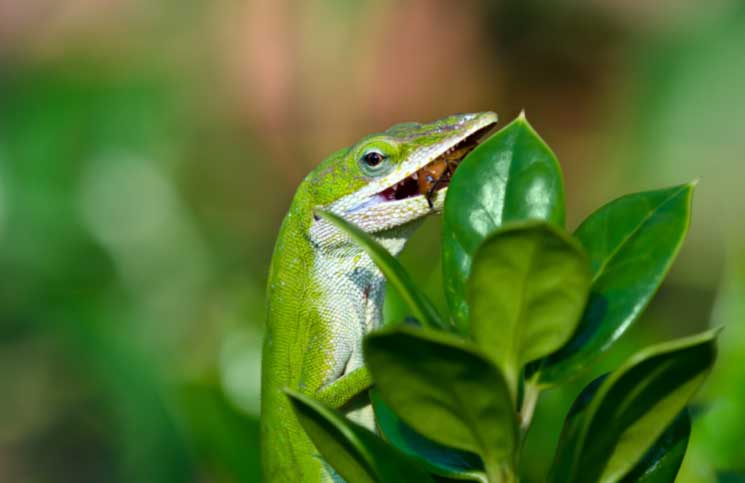
The Green Anole Lizard. Photo by Lee Kris

Well, Anole lizards have been studied extensively in the frame of dozens of researches. Scientists have already gathered lots of data about the relationships between the species, as well as their habitats and body shapes. Klaszko and her team measured the length and width of the lizard’s sex organs, as well as their limbs and dewlaps (throat flaps). They then used mathematical modeling in order to estimate the rate of evolution required to reach the differences in genitals, limbs and dewlaps.

The study results showed that male sex organs of the Anole Lizard evolves six times faster than its limbs or delwlaps. What is the reason? Scientists are not sure, but they have some remarkable ideas. Among the possibilities: It might be that males are developing their sex organs in order to gain an advantage in the reproduction process. Another idea is that maybe the male lizards are evolving more stimulating or better fitting organs for the female sex organs.

Interested in reading the entire study? You can read it on the Journal of Zoology.

Did you read why BLUE is key for LOVE among Fence Lizards? Read our post and find out…

cobra


Fence Lizard: Why Is Blue Key For Love?

Why does the female Eastern Fence Lizard find the blue patches on the undersides of the male Fence lizard so sexy? And why is the male Eastern Fence Lizard turned off by blue females?
Sounds like a mystery, doesn’t it?

A team of biologists from Pensslyvania State University, headed by Tracy Langkilde, has revealed some insights on this mystery. The team of scientists has tried to evaluate how the blue color affects female lizards. According to their study, which was presented recently at the annual meeting of the Society for Integrative and Comparative Biology, despite some disadvantages, the blue female Eastern Fence Lizard will usually run faster and have stronger offsprings that survive better than fence lizards that are not blue.

Who is the Eastern Fence Lizard?

Known also as the Prairie Lizard, Gray Lizard, and scientifically as Sceloporus undulatus, the Eastern Fence Lizard is a medium-sized lizard found on rocks and tree stumps in the eastern region of the United States. The gray (female) or brown (male) lizard has keeled scales with a dark line stretched along its thigh. They will grow to lengths of between 4-7 inches. A remarkable study from 2009 revealed that the Eastern Fence lizard has evolved in 70 years and developed longer legs, in order to escape the red fire ants, which can easily kill the fence lizard. Several years ago, Biologist Tracy Langkilde conducted a research on native fence lizards and their adaptive reactions to the presence of the invasive fire ant.

Watch this video and interview with Tracy Langkilde:

Back to the new study on how blue rules their lives, the biologists suggest that various traits can have different costs and benefits for the two sexes of lizards.

According to the study, the blue patches of the males appeal to females, while on the other hand, males prefer to mate with non-blue females. They sometimes even mistaken blue female fence lizards for other males, and therefore do not harass them. Further more, blue females are slower to lay their eggs, which also weigh less than the clutches of eggs of non-blue females. However, the blue female fence lizard runs faster, according to the study, and reaches speeds of 1.5 meters per second, compared to only 1.2 m/s for non-blue females.

For those interested, here is some more info about the leading biologist in this study, Tracy Langkilde.

Have you heard that the Lizard’s Penis evolves 6x faster than any other part of its body? A new study conducted by scientists from the University of Campinas in Brazil examines the organs of 25 species of te Anole Lizard. Read our post about this fascinating research.

Saltwater Crocodile Bites Off Handler’s Thumb

saltwater crocodile
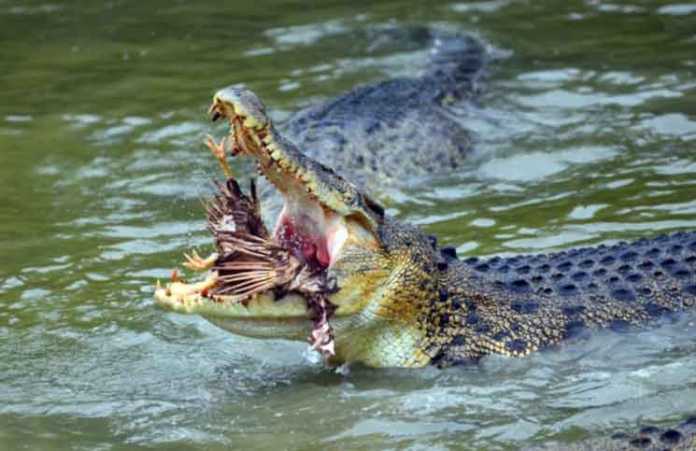
Saltwater Crocodile devouring prey. Photo by Keringat Seni

An Australian Saltwater Crocodile, the largest crocodile in the world, managed to bite off the thumb of a reptile handler at the Snakes Downunder Reptile Park & Zoo near Childers, Queensland, Australia.
Watch this news report about the incident:

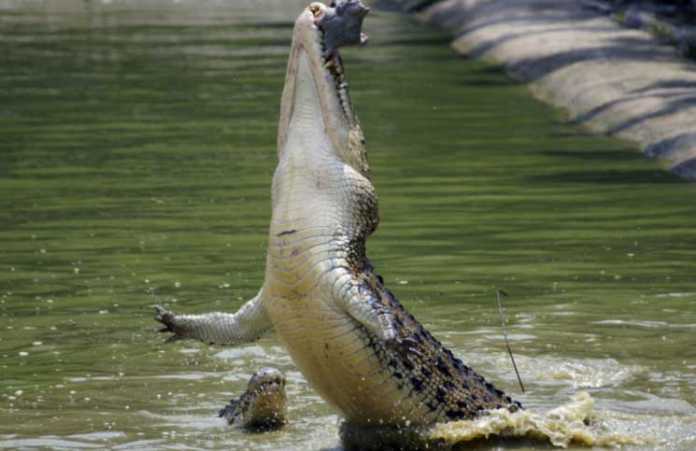
The tragic incident happened as the 58-year old crocodile handler was conducting a feeding session. He was trying to get the attention of one of the crocodiles waving his hat he was holding in his left hand, while a chicken was in his right. According to eyewitnesses, the crocodile suddenly leaped out of the water and bit the handler’s hand, pulling him into the water. Part of the man’s thumb and hand was amputated, and he was immediately flown to Bundaberg Base Hospital, where he will undergo surgery.

About the Australian Saltwater Crocodile

The Australian saltwater crocodile is not just the largest crocodile but also the largest reptile in the world. There were larger reptiles earlier but among all living ones, the Australia saltwater crocodile is the absolute winner. It is huge. An average male weigh about a ton. The least that a male Australian saltwater crocodile would weigh is about half a ton. There are quite a few that weigh more than two tons. Some rare ones exceed two tons by another ton or so. Imagine how large or bulky a crocodile weighing three tons can be. Add to that a length of about 25 feet and you get a mammoth size. The largest crocodile is not only a terrifying creature for humans but for all other reptiles and mammals.

Saltwater Crocodile
Saltwater Crocodile. Photo by Roboriginal

The Australian saltwater crocodile has been chronicled by many. It has featured or at least it has been an antagonist in many movies. Dozens of books have mentioned it and there are specific case studies dedicated to the largest crocodile.

The Australian saltwater crocodile is so called because it thrives in the oceanic or salty waters of Australia. However, the species is not restricted to down under alone. The species is also found in Indo-Pacific regions, eastern coasts of India and in some coastal areas of Fiji. The one in Australia is the most terrifying because it has been thriving there over the last five decades. There is not much protection of this species in India and Fiji which has lead to a relative decline in its numbers.

However, the numbers are well protected in Australia. Trading and any kind of commercial utility of the largest crocodile is banned in Australia and there is no threat to the species. It is actually listed as least concern in its conservation status. It is not very surprising that the Australian saltwater crocodile is not endangered considering its outreach, physical strength, survival instincts and the large territory that it occupies.

Being a saltwater croc, it can travel long distances along the coasts. With its size, speed and bulletproof back, it can survive almost all predators. It can also survive planned attacks by humans to an extent. Besides, the Australian saltwater crocodile is ferociously aggressive when it comes to their territory. They can attack anyone who is supposedly trespassing or entering their territory.

The largest crocodile is a brilliant creation of nature, but do exercise caution and don’t venture near it, at any place.

About the Snakes Downunder Reptile Park & Zoo

This fun and affordable Zoo is designed for the whole family. Set just 500M off the Bruce Highway – just south of Childers – it displays over 45 species and sub-species of Australian reptiles, amphibians and marsupials.

WATCH: Burmese Python and Baby Go Viral

Would you let a 14-month old baby play around with one of the five largest snakes in the world? Well maybe after you watch this awe-inspiring video, you will…

Snake handler Jamie Guarino is raising his daughters with snakes for years already. When his daughter Alyssa was only 14 month old, Gaurino filmed her at their home in Michigan, having the time of her life playing with a 13-foot-long Burmese Python (Python bivittatus). His menu is usually made up of appropriately sized birds and mammals, as it uses his sharp teeth to seize his prey, wrapping his body around it, while contracting its muscles, constricting and suffocating it to death. Amazingly, these giant reptiles have become extremely popular snake pets due to their beautiful colors and easy-going nature.

Gaurino claims he is raising his kids with exotic pets in order to open the minds of children to something different. He tries to show the world that these wonderful reptiles are not dangerous as most believe. Many people watching the video reacted with fear, saying to themselves that the python might swallow such a baby alive. However, Gaurino claims the Burmese Python has no desire to bite or swallow the baby, and you can actually see that in the video. Despite their bad reputation, Burmese Pythons “can be a loving pet”, he says. Gaurino’s dream is to open a reptile zoo together with his daughters.

burmese python
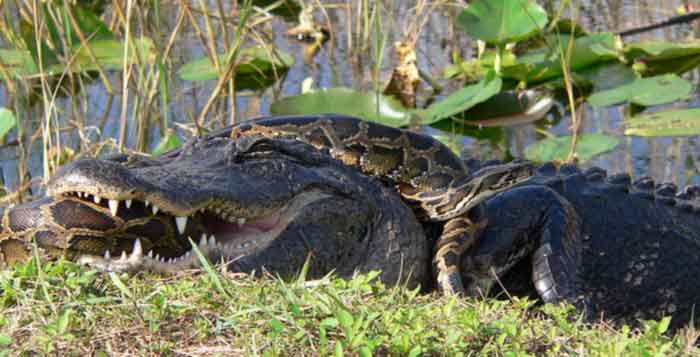
Burmese Python vs. Gator. By Lori Oberhofer, National Park Service [Public domain], via Wikimedia Commons
Our Take: I want to stress out our own remark on this, that although pythons are typically afraid of humans and will generally avoid hurting us, special care is always required when handling them. In extreme situations, these snakes are capable of overpowering and killing even a fully grown adult.

About the Burmese Python

This giant reptile has a rapid growth rate, and can average 12 ft (3.7 meters) in the wild, although there are records of Burmese pythons that reached 19 ft (5.7 ft). They are good climbers, but more than that – excellent swimmers who are usually found near water. They can be found in swamps, woodlands, marshes, jungles or grasslands, and are native to the tropic and subtropic regions of Southern and South-east Asia. However, Burmese Pythons have practically invaded other areas of the World.

In South Florida, scientists believe the invasion of Burmese pythons originated with snake owners who started to release their snake pets into the Everglades National Park. It is quite a remarkable situation, where the Burmese python is declining in its native habitat in Asia and is considered by the IUCN as “Vulnerable”, while the numbers of the giant snake in Florida are increasing dramatically. The reason: It has practically no predators in Florida, and are therefore it is becoming a threat to various animals, such as birds, coyotes and even the Florida panthers. The number of Burmese pythons in the area has reached the required minimum to classify it as an “invasive species”.

Watch this video about the issue:

Want to help solve the issue?

In 2008, The Nature Conservancy in Florida launched the Python Patrol, which trained over 400 responders to deal directly with the situation by safely and humanely capturing and removing pythons or other exotic constrictors they encounter.

Citizens can learn how to identify pythons and other non-native animals at an in-person detector training or online. Anyone can call in snake sightings (1-888-IVE-GOT-1) to the Florida Fish and Wildlife Conservation Commission, which now coordinates Python Patrol, and a trained responder can be dispatched.