
Home Blog Page 21

Is This The World’s Smallest Goanna Lizard?

Goanna
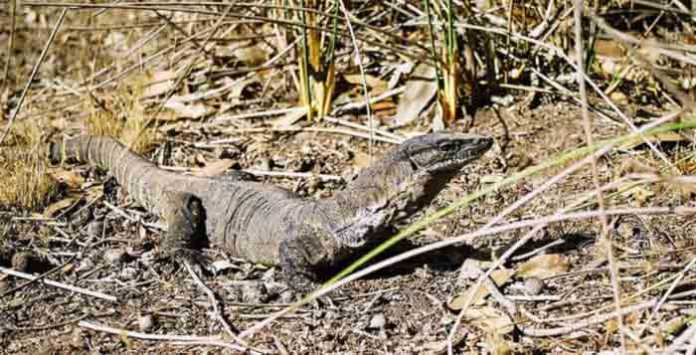
A Heath goanna (Varanus rosenbergii): It is not the Smallest Goanna on the Planet. Photo by Cody Pope. License CC BY-SA 2.5 via Wikimedia Commons

Roy Teale and Greg Harold, two consultants from Biota Environmental Sciences, were surveying the areas of North Broome and Derby in the Kimberley region of Western Australia, as they discovered the world’s smallest species of Goanna. Already named ‘Varanus Sparnus’ or ‘Dampier Peninsula Goanna”, the tiny Goanna measures only 9 inch (23 cm) and weighs only 0.56 ounce (16 grams). Scientists believe the little Goanna lives exclusively in North of Broome and Derby, and that it has remained unchanged for more than 6 million years.

Described by scientists as an “evolutionary marvel”, the smallest Goanna is currently on display at the Western Australian Museum, where it was classified by Dr. Paul Doughty, Curator of Reptiles at the WA Museum.

[vc_button title=”Want to See the Smallest Goanna? CLICK HERE!” target=”_self” color=”red” size=”size_large2″ href=”http://adf.ly/vj4ww”]

Dr. Paul Doughty from the Western Australian Museum claims that according to genetic data, they believe the Goanna diverged around the same time that chimpanzees diverged from human beings. That is quite remarkable.

So who is the Goanna Lizard?

There are approximately 30 known species of Goanna lizards, 25 of which can be found in Australia, while some species can also found in Southeast Asia. This unique family of carnivorous lizards range greatly in size, from the tiny new discovery, ‘Varanus Sparnus’, and up to the huge Monitor Lizards and Komodo Dragons that can reach 9.8 feet (3 meters) long and weigh 176 pounds (80 kilos). Unlike other lizard species we know, Goannas cannot dispatch their tails when in danger, or regrow them again.

The Goanna lizard is mostly dark in color (brown, black or dark green) and is quite a predator. It will prey on practically any animal it can swallow whole. The smaller Goannas will usually eat insects, eggs or smaller mammals, while the bigger Goannas are sometimes even blamed for devouring sheep. A large Monitor Lizard was once observed in Australia killing a young Kangaroo and eating it bite after bite. Most of the medium sized Goannas will just hunt whatever smaller animals they can catch, mainly fish, eggs, small lizards, rodents and even snakes. All Goanna species are carrion eaters, meaning they will immediately be attracted by the smell of rotten meat and will eat the carcasses of dead animals.

Most Goannas lay their eggs in a nest or burrow, while others lay them inside termite mounds, which provides both protection, as well as a delicious termite meal for the young hatchlings. The Goanna can be found almost all across Australia, except for Tasmania. Most species will climb trees, while others have adapted to swampy coastal habitats, and can even be found in lagoons and rivers.

The Goanna lizard is also quite popular in Aboriginal mythology and Australian folklore.

[vc_button title=”Want to read an Aboriginal Myth about Goannas? CLICK HERE!” target=”_self” color=”default” size=”size_large2″ href=”http://adf.ly/vjCBx”]
cobra


The Secret of The Flying Draco Lizard

Have you ever seen the amazing Draco Lizard as it glides between trees? I assume you haven’t seen it live in the wild, but surely on TV or YouTube, If not – watch these awe-inspiring clips we selected for you and discover the hidden secret behind it…

A new exciting research conducted by a scientists from the University of Melbourne and the University of New South Wales, claim to have discovered a captivating finding.

However, before we dive into the fascinating answers of science, let me enhance your knowledge about the remarkable Draco Lizard, which is actually a genus of the Agamid Lizards that are known as Flying Dragons. Did you know that the Draco Lizard is the only living lizard on the planet that has extendable gliding membranes which enable it to glide for long distances? Its ribs and connecting membrane extend and its hind-limbs are flattened, creating flying wings, while a small set of flaps on its neck become the stabilizers and its slender tails are used for steering. Scientists have recorded glides that reached lengths of 200 ft (60 m), over which the Draco Lizard only lost approximately 33 ft (10m) in height. If you consider the size of the lizard, which amounts to only 7.9 in (20 cm), it is definitely a remarkable feat.

The Draco Lizard can be found in Southeast Asia and Southern India, where it glides in the dense forests and jungles to escape danger, attract mates and find meals. It feeds almost exclusively on insects, specially ants and termites. The male Draco is quite a territorial lizard, and it will use its gliding power to threaten rivals and guard the trees it claims as belonging to him. So what is the secret of the Flying Dragon, discovered by scientists from Australia?

The Draco Lizard Mimics Falling Leaves

According to PhD Student Ms. Danielle Klmop and her supervisors Dr. Terry Ord, Dr. Devi Stuart-Fox and Dr. Indraneil Das, the Draco Lizard mimics the red and green colors of falling leaves in order to avoid falling prey to birds, while it glides between trees. The study claims that some populations of the Flying Dragon have developed gliding membranes that resemble the colors of falling leaves, acting as a superb disguise against potential predators.

The scientists observed two groups of Draco Lizards in Borneo, which had different colored membranes and controlled different habitats. One group lived in an area where the falling leaves were red, and the lizards indeed had red gliding membranes, while the other group lived in an area where the falling leaves were dark brown and green, and so were their gliding wings.

It’s quite an astonishing finding, to see how a lizard species managed to evolve and develop its body design according to the colors of falling leaves in its habitat. It practically mimics a moving part of the environment, in order to protect itself from predators. Absolutely astonishing.

Want to read the entire study?

You can find the fascinating research at the website of the Royal Society Publishing: Marked Colour Divergence in the Gliding Membranes of a Tropical Lizard Mirrors Population Differences in the Colour of Falling Leaves.


Spitting Cobra Bites a 10-month old Baby

spitting cobra
Mozambique spitting cobra by Willem Frost

According to South African IOL News, a 10-year old foster child was bitten this last wednesday by a ferocious Mozambique Spitting Cobra.

The foster child who lives with a couple in the city of Rustenburg in North West South Africa, is currently at the hospital, and according to doctors – he is breathing on his own.

His foster mother was terrified as she heard him scream in the early morning. When she arrived to the baby’s room, she found a Mozambique Spitting Cobra on the carpet.

It is believed that the deadly snake somehow managed to reach the roof of the house, and then fell into the baby’s bed. The poor child had no chance to defend himself.

The Mozambique spitting cobra, also known as Naja mossambica, is the most common cobra species of the savanna regions of the tropical and subtropical Africa. It is regarded as one of the deadliest snakes in Africa, who can very accurately spit its venom. The Spitting Cobra’s bite can cause local tissue destruction, and when it hits your eyes – it can even make you blind.

The Mozambique Spitting Cobra will usually hunt and eat various types of amphibians, as well as birds, eggs, small mammals, and like every cobra – also other snakes.

The problem with this Spitting cobra is it’s temper, which probably triggered his reaction to bite the poor 10-month old baby. This cobra is extremely nervous and highly strung. Whenever he feels in danger, he will rear up almost two-thirds of its body, spread his hood and prepare for “shooting” out his most powerful weapon. He will usually spit his venom from a reared-up position, and reach distances of up to 3 meters (10 feet). However, despite its name – this cobra doesn’t only spit. Depending on the situation, the Spitting Cobra will also bite his victim, without hesitation. When he’s confronted in close and enclosed areas, like the bed of a baby – the cobra will most likely bite his victim.

Watch this nice video depicting the “rescue” of a Mozambique Spitting Cobra. This snake had lost her way into one of Thanda store rooms. Someone spotted it disappearing behind a cabinet in the room.

Scientists Create New Lizard Species in Lab

lizard species
Aruban Whiptail Lizard. Photo by Bjørn Christian Tørrissen . Creative Commons License by Wiki Media

Sounds quite amazing, but according to the Journal Breviora, scientists from the American Museum of Natural History, Regis University, Stowers Institute for Medical Research and Kansas University Medical Center, have indeed managed to create a new lizard species, in the lab.

Scientists around the world have been trying for years to create new hybrid species. You might say, what is the problem of bringing two species to mate? Well, that is not the problem. The difficulty so far, was creating an offspring that will be able to survive and reproduce. If it can’t, then it is not a new species.

Regarded by all means as a breakthrough in genetic research, the scientists created a new lizard species that is called Aspidoscelis neavesi. It is a hybrid of two distinct species of Whiptail Lizards, Aspidoscelis exsanguis and Aspidoscelis inornata. These lizard species have the unique ability to reproduce without the assistance of males. Occasionally, when a female of one lizard species mates with a male from another species, a Parthenogen is produced, which is a female that is able to produce viable eggs that are identical to her own cells. Whiptail Lizards can thus multiply by asexual reproduction, in which the growth of embryos occur without fertilization.

During the research, scientists brought together a female A. exsanguis and a male A. inorgata and put them in one container in the lab. The lizards mated and remarkably produced four females, who are now able to reproduce by their own, making it a new species. So far, 200 hybrid lizard species have been reproduced in this awe-inspiring experiment.

One family of whiptail lizard species which are native to the Americas, are the Teiidae, which can be distinguished from other lizards by certain characteristics. The Teiidae have well developed limbs, large rectangular scales that form unique transverse rows and small granular scales. They also have head scales that are separated from the skull bones. Their teeth are solid and their tongue is forked, like that of a snake. Teiids mostly eat insects, although some will include a small amount of plants in their menu.

Watch this video about unique reproduction methods:

For more fast facts on Lizards – visit our beautiful Lizard World Page!

Habitat Loss: Cobras Found in The ATM?

habitat loss
Cobras found in ATMs? Photo by Dmitry Kalinovsky

Every year that passes, more and more Cobra species are becoming threatened and endangered due to extreme habitat loss. This is happening because of human actions such as deforestation, mining activities, farming and habitat destruction, poaching, unregulated hunting and illegal wildlife trade. All these have pushed away many exotic species, and their pure existence is now at risk. Unfortunately, people are intolerant to their surroundings and give no consideration to the need of balancing our biodiversity.

The mighty King Cobra, the world’s largest venomous snake whom we all fear and admire, is currently listed in the IUCN Red List of Threatened Species, as vulnerable. This is due to rapid deforestation and intense harvesting for traditional medicine, meat and the skin industry. The rate at which the habitat loss of king cobras is accelerating is frightening, and sad. Can you imagine our world without the awe-inspiring King Cobra?

Early this year, forest officers and environmentalists in India gathered together for a workshop intended to raise awareness to this alarming situation. According to the Indian experts, human actions and behavior are posing serious threats to king cobras in India. Cobras are being spotted lately far away from their natural habitat, even at locations like Delhi. Several Cobras were even found wandering in the Delhi Technical University. Luckily they were rescued.

Wildlife experts explain that habitat loss has been forcing snakes to find refuge in buildings, booths and even ATM machines. Some snakes were found lying coiled inside these cash-dispensing machines.

As economies of developing countries such as India continue to grow rapidly, the habitat loss of cobras and other snake species will only get worse. The only solution is to train and educate officers, farmers and villagers about the importance in conserving and saving cobras. They must first understand that snakes are not here to harm us. Snakes will not attack a person if he does not try to harm them. Snakes are also crucial for balancing our ecosystem. Education is key, and so is sharing articles like this one on social media, giving the topic the necessary awareness it deserves.

For more fast facts about Cobras click here.

For further discussion on snakes, scientific classifications, venom research and much more, check the resources available in “The New Encyclopedia of Snakes”, available on Amazon.com.

069113295X
Click here to take a glimpse at 
“The New Encyclopedia of Snakes” 

New Study: Bearded Dragons imitate like Humans?

bearded dragons
Bearded Dragons. Photo by PTN Photo

Scientists from the University of Lincoln, UK and the University of Vienna, Austria, have managed to demonstrate that one lizard species can truly learn through imitation. The finding is quite surprising, since “imitating” has been always regarded as a human behavior.

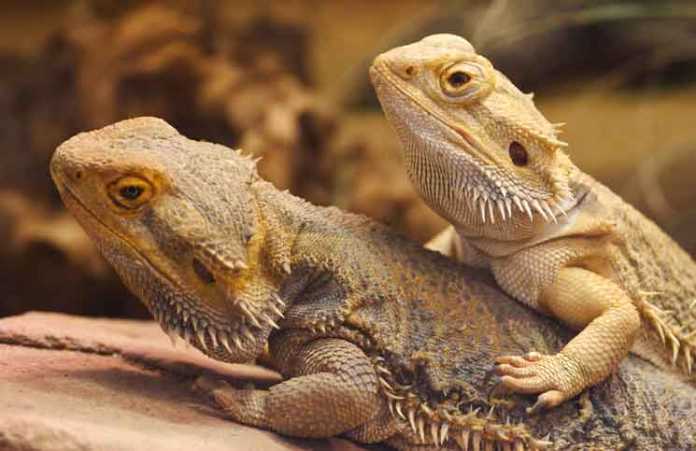
The study, published in the Animal Cognition journal, claims that Bearded Dragons, also known as Pogona vitticeps, are capable of learning by imitating the behavior of others. The Pogona lizards have a so called “beard”, a lower part of their throat that turns black whenever they are stressed. That is why they are called Bearded Dragons. They are great climbers who are found throughout Australia. A few species of the Pogona, such as Central Bearded Dragons, are extremely popular as pets and exhibited in zoos.

The scientists built their experiment by first training a lizard to open a sliding door in one direction. After the lizard learned it perfectly, they recorded it performing the task on video, and showed it to other lizards who never ever received the same training. The lizards imitated the lizard in the video and slid the door in the same direction. Even when the scientists flipped the direction of the sliding door, the bearded dragons would imitate the exact action from the video, and slide the door in the same direction. Other bearded dragons who did not watch the video could not and would not slide the door at all.

One of the scientists, Anna Wilkinson from the University of Lincoln, hopes that the study will improve how pet owners and people in general treat their lizards.

One place where lizards are well taken care of, is in Ohio…

Unique Lizard Project at a Special School

In Monroe County, Ohio, students at the GMN Sardis Head Start Center recently took part in the incubation of Gecko lizards, which are actually living in the classroom. The students were able to watch how two baby geckos hatched from their eggs, and transformed into fabulous living creatures. The kids can now continue to monitor, learn and watch how these lizards grow and evolve from day to day.

Watch this video of Crested Geckos hatching:

Geckos belong to the infraorder Gekkota, and are found in warm climates all over the world. They are actually quite unique among lizards, being the only species that have a voice. Some Gecko species emit a strange clicking voice that may sound a bit like “gecko”, hence their name. Most geckos are also not able to blink, so they lick their eyes to keep them moist.

GMN Sardis Head Start Center is an admirable organization that provides comprehensive services to low income children. Services are provided without charge to families. Ten percent of the children enrolled can be from over income families.


News Flash: Snakes for Christmas?

snakes
California Kingsnake by Eric Isselee
In the small city of Claremore, Oklahoma, a mysterious case of snakes is developing, and it might involve Santa Claus…

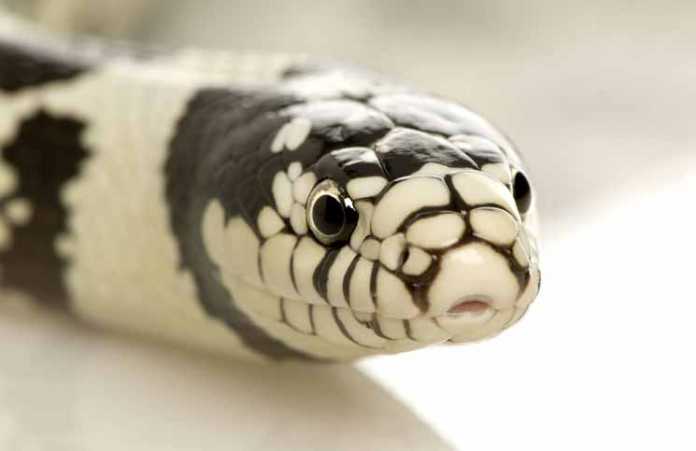
The Claremore Animal Shelter has lately been receiving numerous calls from alarmed residents, who have all found a King snake inside their homes. Extremely bewildering, Authorities have tried to delve into the case. One resident by the name of Dorothy Parker, described the snake as 3 feet long, lying on the floor of her living room. After a short chase inside the house, her neighbor managed to pin down the non-venomous snake, who prefers to eat rodents and snakes. That followed by a call to the Animal Shelter who came by to pick the snake.

However, the mysterious question was, how did the snake get inside this Claremore home? And how did other snakes like it do the same?

According to the Animal Shelter, the snakes might have been crawled inside the Christmas trees which were dragged from garages into homes.

So is this Santa’s surprise and are we all getting snakes for Christmas?

And in Australia: Pythons are flourishing thanks to Weather

Snake experts in New South Wales, Australia, are claiming that Diamond Pythons, as well as Eastern Browns, Red-bellied blacks and swamp snakes are flourishing, growing larger and multiplying, thanks to the warm wet weather.

What does the weather have to do with it? Well, it has triggered a boost in the numbers of frogs and rodents, which are among the snake’s favorite prey. These snakes are having the times of their lives, especially after the long period of drought which hit the area.

Watch this video to get a glimpse:

According to the experts, these snakes are totally dependent on weather patterns and natural cycles, but not only. Man-made projects like clearing of bushes increased the numbers of rodents as well.

Red-bellied Blacks and Brown snakes, which usually grow to lengths of 2m (6.5 feet), were now being caught the area, measuring lengths of 2.5m (8.2 feet).

Mom Loses Custody because of Snakes, Lizards and more…

A mother in Fort Pierce, Florida, has lost custody of her children and is facing charges of child neglect, after authorities found her home filled with crawling cockroaches, mice, rats, snakes, lizards and more…

There were approximately 40 animals removed from the house by authorities.

However, according to the Society for the Prevention of Cruelty to Animals, the mother did keep the lizards and snakes in the proper containers.

The snakes were safely moved to a pet shop in the area.

Lizard News: Horned Lizards endangered?

Legless lizard
Legless Lizard by F. Delventha

There are some disturbing new studies and research in various regions around the world, revealing the dangers facing species of Horned lizards, as well as Legless lizards.

A recent study by the Australian National University (ANU) claims that the Striped Legless Lizards are in grave danger of extinction. This unique lizard which has no legs, known also as Delma impar, belongs to the Pygopodidae family and is found only in Australia. According to the study, Kangaroos in Canberra are overgrazing and threatening various local reptiles, among them the striped legless lizard.

The local Authorities in Canberra have implemented measures to protect the grasslands from overgrazing, like reducing the number of kangaroos in the area. However, it doesn’t seem to be as effective in recent months. Groups like Animal Liberation have tried to revoke the Government’s cull license, but their claims were rejected. According to the ANU, if we want to save the lizards, the numbers of kangaroos per square km should not exceed 100. The numbers in some areas in Canberra are currently at 300 kangaroos per sq-km.

And in California: Are Horned lizards in extreme danger?

According to California’s Department of Fish and Wildlife, Flat-tailed Horned lizards, known as Phrynosoma mcallii, may require protection under the state’s Endangered Species Act. Unfortunately, global warming, deforestation and habitat loss are pushing these rare desert lizards toward extinction.

The Flat-tailed Horned lizard once occupied large areas of the Sonoran Desert in Southern California, but construction of roads and agricultural development have diminished most of its natural habitat. In Coachella Valley for instance, there is only one small population left, of the flat-tailed horned lizard.

Watch this video about the flat-tailed horned lizard:

Despite efforts such as the voluntary “Interagency Conservation Agreement” that has been in effect since 1997, trying to manage lizard habitats, their numbers have been declining rapidly. Many lands which were once protected areas of lizard habitat have been opened by Government agencies for destructive and intensive off-road vehicle use. The population of the flat-bodied horned lizard has been declining for years, but according to scientists of Center for Biological Diversity, it’s now at a critical point, where they face extinction, unless something is done.

The flat-tail horned lizard, which boasts 8 horns from the back of its head, was named after Colonel George A. M’Call, who collected the first specimen in California during the 19th century. Of its 8 horns, two are long, slender and quite sharp. The medium-sized lizard, which mostly eats harvester ants, has a wide oval-shaped body with smooth back skin and small spines.

For more information you can visit the Center for Biological Diversity, which is a national, nonprofit conservation organization.


Snake News Flash: Pregnant Cobras Captured

spitting cobra
Mozambique spitting cobra by Willem Frost

Snake News 1: Pregnant Cobras Captured in South Africa

A small South African neighborhood in Newlands East, Durban, was terrified this early December, as a group of deadly snakes decided to settle in the nearby bushes. The frightening group of snakes included three pregnant Mozambique Spitting Cobras, as well as another Cobra and a Black Mamba.

The snakes were fist spotted by wood collectors who were searching through the bushes for wood, as they suddenly heard terrifying sounds of hissing. As soon as they saw the Cobras, the men ran as fast as they could. Panicking residents almost set the bushes on fire, to kill the notorious snakes, but luckily one smart resident called Jason Arnold, Durban’s Snake catcher.

Realizing the snakes were in imminent danger, Arnold performed swiftly, capturing the pregnant Cobras and the rest in a matter of hours. They were relocated to a safer habitat, further away from human danger…

Snake News 2: Indian Snake Catcher Eats a Cobra And Dies

A 50-year-old snake catcher called Nanhu was rushed this last November to a house in Sitapur, a small town in the state of Uttar Pradesh, India. He was called to capture a deadly Cobra snake, who woke up and terrified an entire family in the middle of the night.

As Nanhu was about to catch the notorious snake, the Cobra tried to escape and bit Nanhu’s hand. Surprised and angry, the Indian Snake catcher chopped the head of the Cobra, roasted its body and ate it. Nanhu thought he had made the ultimate revenge for that bite, but soon after finishing his snake dish, the snake catcher started vomitting and feeling dizzy. Nanhu was rushed to the hospital, where he died.

According to police and snake experts, Nanhu most probably dies from the snake bite and not from eating the roasted body of the cobra. Why? Because the Cobra’s venom glands are located in the snake’s head, while the rest of its body isn’t venomous.

Snake News 3: Escaped White Cobra will Join The Zoo

Remember the white cobra that was captured last September in California?

If you forgot, watch the video:

Well, it looks as if it will soon become the new proud resident of the San Diego Zoo.

The 4-foot-long female Monocled Cobra, who is about 2 years old, is undergoing medical exams, and if all is OK – the beautiful white snake will get her own cage in the famous Zoo.

Still with no name (a naming contest will soon be set), the monocled Cobra will surely require a period of time to adjust to her new home. However, as we all know the San Diego Zoo – they will make it as comfortable as possible for her.

3 Types Of Turtles You Must See

types of turtles
Snapping Turtle by Brian Lasenby
Did you know there are 327 known species of turtles in the world? How many types of turtles do you know? 

Almost all turtle species have at least one unique feature. Even if there are absolute similarities in the physical characteristics of certain species, there will usually be some behavioral differences depending on their natural habitat and the history of their evolution. Naturally, if you are a turtle enthusiast, then you should acquaint yourself with the most exciting types of turtles out there. Among the hundreds of species, here are three types of turtles you definitely must learn about, and if possible – see in person…

Red Eared Slider Turtles: Are they the
Most Invasive Types of Turtles?

types of turtles
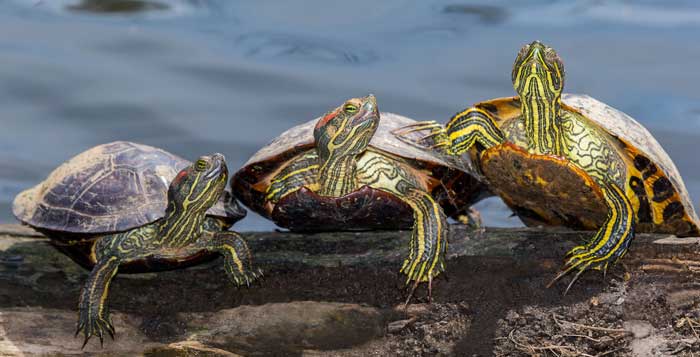
Red-Eared Slider Turtles by Marie Daloia

I would be surprised if you haven’t heard of the beloved Red eared slider turtle, since it’s quite popular wherever you go. This cute turtle got its name from the red markings on the sides of his head. It’s a semi-aquatic turtle and is also known as Trachemys scripta elegans. There are some nonscientific names as well such as Red-eared terrapin. This species is found most abundantly in southern United States and northern Mexico, and it is related to the pond slider.

The Red eared sliders are among the most popular types of turtles, mainly because they have been widely domesticated in the United States and across the globe. Since they were first introduced to the U.S, they have aggressively outcompeted and displaced western pond turtles from many fresh water ponds. In the state of Montana, officials of the Fish Wildlife and Park department even decided to ban the Red-eared sliders! Why? Well, they were eating about anything on their way. These combative turtles are actually on the list of the 100 most invasive species in the world!

However, don’t be alarmed. As pets, Red eared sliders are extremely convenient to maintain, they are not aggressive at all and don’t pose much threat to the pet owner.

Green Turtles: Popular Soup in The U.S?

These beautiful types of turtles were once regarded as a delicacy of the sea. They were commonly used for making turtle soup in Singapore and the U.S, and were nearly hunted down to extinction in many regions of the world. Green turtles are also known as the Green sea turtle, while their scientific name is Chelonia mydas. They are also popularly known as black sea turtles or pacific green turtles. They are aquatic and mostly found in subtropical as well as tropical seas. This is why they thrive in abundance across the Pacific as well as the Atlantic Oceans.

Green turtles are regarded as exotic creatures. They are considerably large and tend to stay and hibernate together. During hibernation or while looking for fresh feeding grounds, the green turtles tend to flock together to new shores and destinations. They can swim for long distances across the seas. It is due to this collective flocking tendency that brings them to many beaches along their path, which leads to the naming of certain islands as Turtle Island.

Unfortunately, in recent years, Green Turtles have been plagued by a cauliflower-like tumor that sprout from their mouths, fins or eyes. As you can probably guess, the cause is human-made, namely the pollution we create, manufacture and then spill into our oceans.

Are There Really Snapping
Turtles With Two Heads?

You surely heard the news this last November about the lady in Main who discovered a shocking two-headed Snapping turtle! This deformity, which occurs also in humans, is called Polycephaly. It happens when twin embryos fail to separate. However, most Snapping Turtles have only one head.

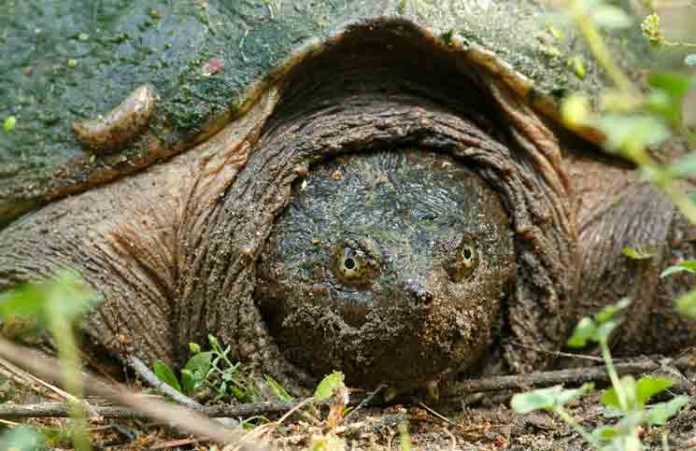
There are actually two types of Snapping turtles – the common snapping turtle and the Alligator snapping turtle. The common snapping turtle is known as Chelydra serpentine. It is a freshwater turtle found mostly in Canada and along the Rocky Mountains. They are also found in Florida and Nova Scotia. The common snapping turtles have beak-like jaws, their heads and necks are very agile and they can move in patterns similar to that of snakes.

The Alligator snapping turtles are known as Macrochelys temminckii. They are much larger than the common snapping turtles, and are also found in freshwaters. This huge and unique turtle, who is often called the “dinosaur of the turtle world”, is the largest freshwater turtle on the planet, based on weight. It can weigh as much as 200 pounds. Unfortunately, these marvelous creatures were harvested in the past for human consumption, are now critically endangered.

Want to learn more about endangered types of turtles? Take a look at the Sea Turtle page of the World Wild Life organization.