
Home Blog Page 19

Is this the Most Social Skink Lizard on the Planet?

In 2011, a group of researchers from Macquarie University discovered that the Great Desert Skink lizard is probably the most social lizard in the world. The researchers claimed it is the first lizard on the planet known to form stable families that build and maintain underground homes and “villages”.

They jointly work with one another in building and taking care of their burrows. The adults usually excavate the tunnles, while the younger lizards dig the small “pop” holes. Couples are faithful to one another and always mate with the same skink lizard.

The studies of the desert skink lizards were conducted at the Uluru Kata-Tjuta National Park in Northern Australia, the location of the world-renowned sandstone monolith, which stands 348 meters high and bears various inscriptions made by ancestral indigenous peoples. The rangers of the National Park monitor the threatened desert skink lizard, which belongs to the genus Liopholis, native to the south-western quarter of Northern Australia.

The Great Desert Skink Lizard is a medium-sized burrowing lizard, reaching average lengths of 7 inch (19 cm). It has very smooth and glossy scales, and is mostly rust-colored on the top of its body, with a vanilla-colored belly. It has fairly large eyes and a short snout.

Is it really the only Social Skink Lizard?

So far, there have been over 5,000 species of lizards that have been documented and studied all over the world, and from all these – only the Great Desert Skink Lizard has been found to live in tight social families that truly invest in building long-lasting homes. Their burrows can reach up to 40 feet (12 meters) in length, with as many as 20 entrances, and the skink lizard families will usually inhabit them for up to seven years.

This unique Skink lizard can pair with a mate for many years and raise several generations in one burrow constructed by the two parents. Old lizards will live in the same burrow with their siblings, regardless of age difference. Similarly to many humans around the world, these skink lizards can have one shared home for multiple generations of skinks, where all are contributing to finding food and maintaining their home.

The researchers also revealed that young skink lizards sharing the same home are almost all siblings, who decide to delay their home-leaving in order to care for their families. This family-like character is extremely unusual among lizards, making them possibly the most social lizards on the planet.

This research also collaborates with the old stories and knowledge of the ancient Aboriginal people, native to the area. They claim that Skink lizards indeed dig extensive burrows, then find their mates, return to the burrow and raise social families within these “homes”. They also claim that skink lizard parents usually remain faithful.

The research into the Great Desert Skink Lizard continues, as scientists believe these unique creatures can provide more insight into the evolution of family groups, and social behavior, which might also be relevant to humans.

Curious for more fascinating Lizard Facts and tales? Visit our Lizards Page!

cobras

Snakebites: Two Tales of Two Cobras

snakebites
Photo by Marcelkudla

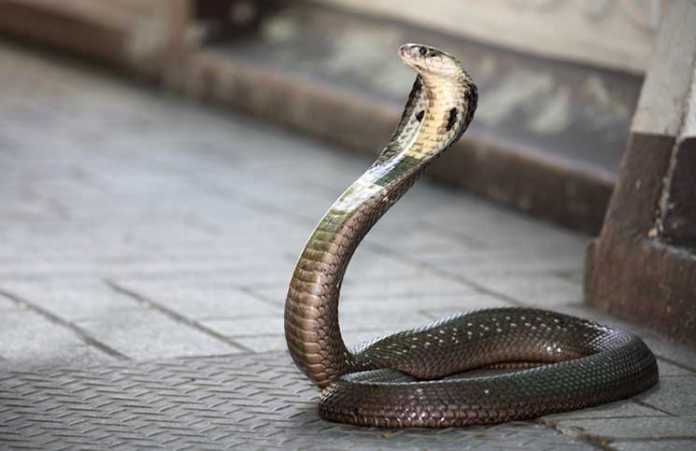
Most snakebites and fatalities by snakebites occur in Southeast Asia and sub-Saharan Africa, with India reporting the most deaths from snakebites, more than any other country in the world. Just this last few days presented us with two extremely different tales of two different Cobra snakes. The first was a three-foot-long Cobra that was rescued from the coach guard area of Biju Patnaik International Airport in the Odisha Capital in East India, while the other was a 20-foot-long Cobra that was sadly shot dead by police in the city of Karachi, India.

According to police reports, the 20-foot-long Cobra had caused terror in the area of Karachi. Residents were fearing for their lives, and were not able to sleep peacefully. During the past three months, there were more than 1,300 cases of snakebites reported in Thar’s Government hospitals. Snakebites have also caused multiple deaths in various areas across India over the years. However, most snakes and most of the bites are harmless.

The vast majority of snakebites are actually caused by non-venomous snakes. And to make things clear, out of the 3,300+ species of snakes known in the world, only 15% are regarded as dangerous and capable of inflicting deadly snakebites.

Snakebites Stats: How many get bitten each year?

Unfortunately, reporting a snakebite is not mandatory in most regions of the world, leaving us with no accurate statistics and with no substantial ability to examine the frequency of snakebites in every country. However, according to certain reports, it is estimated that there approximately 5.4 million snakebites every year. Around 46% of these (2.5 million) are venomous, resulting in approximately125,000 deaths, each year.

When do most Snakebites happen? Who is the typical Victim? And more…

Summer is the time when snakes are most active and us humans are outdoors enjoying the sun. This naturally makes it the most prone time for snakebites. Following the same pattern, tropical regions which are hot and humid all year long – mostly report more snakebites than anywhere else. The typical victims are those who tend to be more outside, playing, which are typically males between 17-27. Sadly, due to their weaker immune systems, children and old people are the most likely to die from deadly snakebites.

Back to our more optimistic story that occurred in the Biju Patnaik International Airport: It appears that some tower workers spotted the deadly Cobra roaming around in the backyards of the coach guard office, not far from where all the planes are kept. The snake could have easily entered a plane through the lower openings and led to casualties. However, instead of calling Police to shoot it down, they smartly called the Snake Helpline, which came by, rescued the snaked and released it in its natural habitat.

Who is Your Favorite Lizard? Check the Poll!

anole lizard
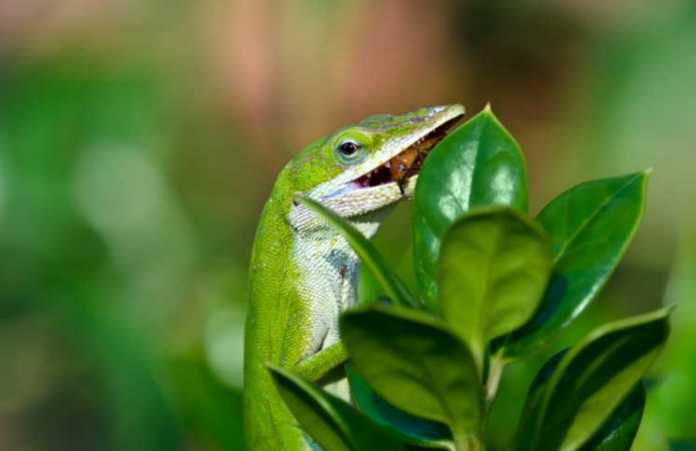
The Green Anole Lizard. Photo by Lee Kris

Take a few minutes to join our worldwide Lizard elections! Give your vote and help decide who’s the most beloved lizard on the planet…

Cobra Zebra Snake Attacks a Chameleon

Watching this riveting video of a Zebra Snake attacking an innocent Chameleon, makes you want to know more about this powerful Cobra. Well yes, the Zebra Snake, known also as Naja nigricincta, is a species of the Spitting Cobra of the genus Naja that belongs to the Elapidae family.

This unique Cobra had actually long been considered to be a subspecies of the black-necked spitting cobra (Naja nigricollis), but genetic differences have led researches to recognize it as a separate species. Don’t ask me if it was a necessary move, but that’s the situation.

The Zebra Snake and its Characteristics

There are two subspecies that are formally recognized under the Naja nigricincta:

1) The Naja n. woodi, also known as the Black Spitting Cobra, who’s solid black and can only be found in the hot desert terrains of southern Africa.
2) The Zebra Spitting Cobra, also known as the Western Barred spitting cobra, or just Zebra Snake, is native to parts of southern Africa, such as South Africa, Namibia and southern Angola. This beautiful cobra was given its name mainly because of the white or yellowish evenly spaced strips along its dark-brown to black body. The color of its ventral scales vary from white to orange, while its head and hood are black or dark brown.

Both subspecies of the Naja nigricincta are fairly small (smaller than the N. nigricollis), reaching lengths of less than 4.9 ft (1.5 m). The Zebra Snake can flatten its head and neck into a hood, in the same manner that other cobra species do.

Zebra snake
By Luca Boldrini [CC BY 2.0 (http://creativecommons.org/licenses/by/2.0)], via Wikimedia Commons

The unique Venom of a Zebra Snake

It’s friendly name does not resemble a Zebra’s character at all. In Namibia, the Zebra snakes are known to torment villagers across the country, with dozens of reported bites every year. It seems that when it’s very hot and humid, these stripped cobras are somehow attracted to densely populated areas, where they attack from time to time, even humans.

The Zebra Snake can easily and accurately spit it’s powerful venom, which is highly cytotoxic and might cause massive hemorrhaging, necrosis and even paralysis. Interestingly, the anti-venom that is available – is ineffective in the treatment against a Zebra snake bite. The treatment that is mostly used involves radical excision around the site of the bite, which naturally brings about an ugly outcome. In case the venom makes it through to the bloodstream, then the problems intensify and the expensive treatment can last for many months, possibly a year or more.

There is one positive element in the nature of the Zebra Snake’s venom: It acts very slow, allowing the victim enough time to search and find the right medical treatment.

Enjoyed this post? Maybe you’d enjoy our “Cobras: All You Need To Know” Page!

And for the royalty among you – check out our elaborate King Cobra page: 

cobras

Cuban Crocodile Family returns to Castro

Cuban Crocodile
Cuban Crocodiles. Photo by Surz

Back in the 1970’s, Cuba’s Dictator, Fidel Castro, sent a unique gift to the Russian astronaut, Vladimir Shatalov, as a token of friendship and appreciation. What was that special gift? Simply two Cuban Crocodiles named Hillary and Castro, born in 1974.

However, Shatalov’s wife didn’t really like the idea of sharing a small apartment with two frightening Cuban crocodiles, which can grow up to 11 feet (3.5 m). Shatalov logically couldn’t keep the “pets”, so he gave them to the zoo in Moscow. Surprisingly, even the Moscow zoo didn’t possess the necessary infrastructure to keep and maintain the Cuban Crocodile pair, so in 1981 Hillary and Castro were transferred to Stockholm’s Skansen zoo. They’ve been living there ever since. But who are these Cuban Crocodiles? Take a look…

Cuban Crocodile Facts

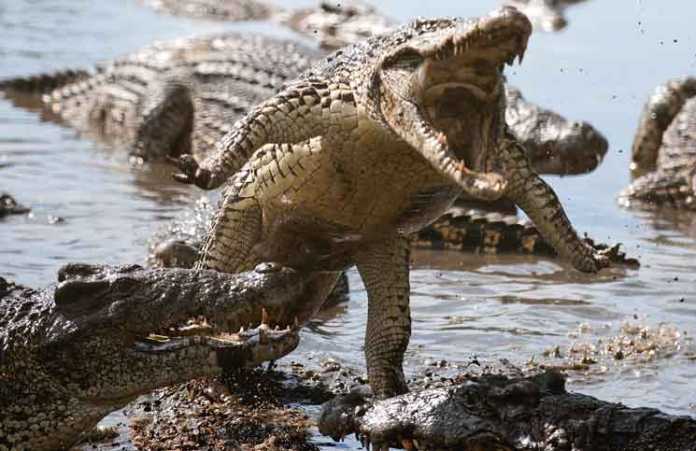
The Cuban crocodile (known as Crocodylus rhombifer) is a rather small but extremely aggressive crocodile that is found only in Cuba, and specifically – in Cuba’s Zapata Swamp and the Isle of youth. The Cuban Crocodile has some unique characteristics, like his bright colors, the rougher scales and his strong long legs. It prefers freshwater habitat like rivers, marshes and of course swamps, and will rarely be seen in saltwater. The Cuban Crocodile mates its entire life and lives deep into its 80’s.

Another unique characteristic of the Cuban Crocodile, is it’s suspected tendency for pack-hunting behavior. No other crocodilians display pack-hunting behavior, making the Cuban crocodile a very interesting species for reptile researchers from all over the world. The Cuban species is also regarded as one of the most intelligent crocodiles on the planet. Sadly, it is also a very endangered species, mainly due to loss of habitat, deterioration of its ecosystem, hunting and also due to breeding with other species. Experts believe there are only around 100 cuban crocodiles left in the world, but recently something great has happened, which might change the entire situation.

Approximately 20 months ago, Hillary and Castro, the two Cuban Crocodiles gifted by Castro to Vladimir Shatalov, have given birth to 10 healthy hatchlings, which are still too young to even determine their sexes. In sort of a homecoming, these beautiful crocodile hatchlings have been returned back to their old homeland – the marshy swamps of Castro’s communist Cuba. They will actually be kept in quarantine in Havana for several months, then transferred to a semi-captive habitat, until they are over three years old and ready to be released into the wild swamps.

Watch this News Clip about the return of the Cuban Crocodiles:

This extraordinary return back to Cuba is an extremely important step towards saving the Cuban Crocodile from extinction. Let’s hope this unique mission succeeds.

Snake Brain: How Intelligent are Cobras?

King Cobra
King Cobra by Mark Dumont, CC License. Link: http://bit.ly/1xW9dvL

The bone-encased snake brain and sensory organs are contained in the snake’s head. Snakes have almost all the senses we do, with several interesting modifications in the hearing, sight and smell organs. However, the really interesting question is what’s behind that brain, and how intelligent are they? How smart are Cobras?

I could find little research on the intelligence of cobras, so the following are my personal observations. I have owned two cobras over a period of 8 years. The second cobra I had, named Kachsa Khan, was a King Cobra (O.Hannah.)

Indeed…it was all fun ‘n games till he got to about 6′, then he became relatively unmanageable. I couldn’t take him out of the “Junglesphere” after that because if he got interested in, or distracted by something, I couldn’t stop him from going to investigate it. He was *quite* inquisitive. I could tell when he got sick or tired because his alertness level would diminish…it was that obvious. I would have to say that O.H. is probably one of the most intelligent herps with the possible exception of King Snakes. To watch either of them approach, attack and ultimately devour another snake, no matter what it’s size or defenses give one a great respect for the smarts of these beasts. This definitely says something about their snake brain capabilities.

I had the unfortunate “luck” of stopping in a back alley snake shop in Bangkok, Thailand one evening just in time to witness a 5-6 yr. old O.H. defending it’s “crown” against a variety of “foes”. It was like watching a car accident…incredible, awesome, yet perverse. The cobra, about 5′, was able to dispatch the following adversaries: a Black Mamba using strategy; some kind of boa with brute force; a ratel with *much* strategy and gnashing of teeth (he almost lost this one, but the ratel had been pitted against another snake earlier that day, I was told, so it was tired; and lastly the big battle, against another King Cobra that was about 3.5’ and 2 yrs. Old.

This last was an interesting one – they didn’t want to fight, and only the prodding and poking of the “handlers” caused them to actually go at it. Even then, neither would multiple strike, as if they knew that it was their “job” to put on a show, but with no real aggressiveness or heart in it. In the end, however, the “champion” did get tired of the abuse from the handlers, and realized that he wasn’t going to be left alone until the other cobra was removed, so with a very slow, methodical movement, he slipped his head around behind the others, and put both fangs through the neck right behind the other’s head. The entire “show” seemed oddly staged in that the champion cobra always seemed to know what was expected of it, and how to accomplish it. This would certainly indicate a level of intelligence far above what most would attribute to herps in general, even most snakes. This particular snake demonstrated the ability to learn fairly advanced techniques as well as interactive skills. Do you need any more evidence for an advanced snake brain?

Well, the fight with the ratel was the most amazing, because cobras usually lose when attacked by a mongoose or ratel. Cobras are not fast enough, nor can they access vital body parts due to the course hair on these animals. This cobra seemed to know this well, and planned his strikes so that he would hit the fleshy parts of the ratel, mostly going for the underside and it’s neck and nose.

For more fast facts about Cobras click here.

For further discussion on snakes, scientific classifications, venom research and much more, check the resources available in “The New Encyclopedia of Snakes”, available on Amazon.com.

Click here to take a glimpse at 
“The New Encyclopedia of Snakes” 

The Blue Tongue Lizard That Blew My Mind

Blue tongue lizard
Blue Tongued Lizard. Photo by Peter Waters

You may have come across some rare birds or exotic animals which blew your mind for a moment and the images have stayed with you ever since. Have you ever come across a lizard that blue your mind?

Blue lizards or a blue tongue lizard is a very common species, especially if you live in Australia. The blue tongue lizard is also very popular as a pet. A blue tongue lizard doesn’t belong to any specific species but there are many species and sub species that can be regarded as blue tongue lizards.

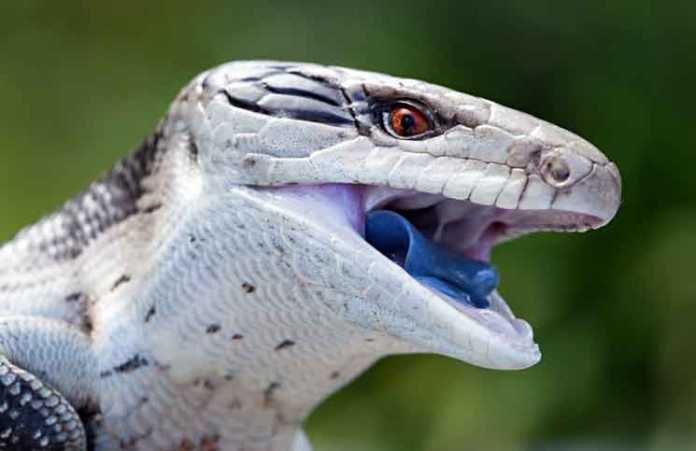
One of the most commonly found blue tongue lizard is the eastern blue-tongued lizard. Scientifically known as the Tiliqua scincoides scincoides, this blue tongue lizard is known so because of its blue tongue. Not all species have a blue tongue, but in that sense, this one actually a blue tongue lizard. The lizard is found in bush-lands and across many suburban areas in eastern Australia; more specifically, in the state of Queensland. The blue tongue of this lizard can be light blue, dark blue or can be extremely bright or glowing blue.

This blue tongue lizard is extremely popular as pets because it moves very slowly. The size of this lizard is usually up to 60 cm and it can be easily spotted in the gardens or in roadside landscapes. The lizard can be observed for a long time due to its slow movements and it can also be caught easily. This blue tongue lizard is also very friendly to humans and thus can be easily petted.

There are some other blue lizards as well which are similar to the eastern blue lizard. For instance, there is the common blue tongue lizard which is the eastern species, there is a northern blue tongue lizard, a western and central species as well as blotched blue tongue lizard, shingle-back and pygmy blue tongue lizard. There is even a special place for the blue tongue lizard at the Australian Museum in Sydney.

The northern blue tongue lizard is found in the tropical regions of Australia, the northernmost region of Queensland and Northern Territory. The western and the central blue tongue lizards are relatively rare and are listed as endangered or vulnerable. The blotched blue lizards are found in the south west and they prefer the highlands and not the plains or coastal regions. The shingle-back blue lizard is also known as sleepy lizard, bob tailed lizard and stumpy tailed lizard. They are mostly found in the Great Dividing Range. The pygmy blue tongue lizard is found in South Australia, more specifically in and around Burra.


Cobra Attack: Man Bitten in Toilet

Cobra Attack
King Cobra. Photo by Poto Wizard

Malaysia: A very unlucky construction worker is currently in critical condition after a King Cobra Attack. The 28-year old Foreign worker from Indonesia was bitten by a 5-meter long cobra in the toilet of his own home in the district of Tuaran. Situated in the West Coast of Sabah, Malaysia, on the island of Borneo.

It is believed that the young Indonesian entered the toilet of his home in the late afternoon, without noticing that a snake has slithered in. After a few minutes, the King Cobra attack occurred: The notorious snake lodged its fangs onto the left arm of the young man, who instantly screamed for help. As family members reached him, they somehow managed to get the deadly cobra off of his arm. They then killed the Cobra.

The construction worker was immediately rushed to Tuaran Hospital, together with the dead King Cobra, for venom identification.

As in almost any news event these days, social media posts were among the first to report the incident. However, this time they were to blame for incorrect rumors and posts saying the King Cobra was caught inside the hospital. That was not the case.

The hospital doctors said it was the first case they encountered involving such a big snake.

More about a King Cobra Attack

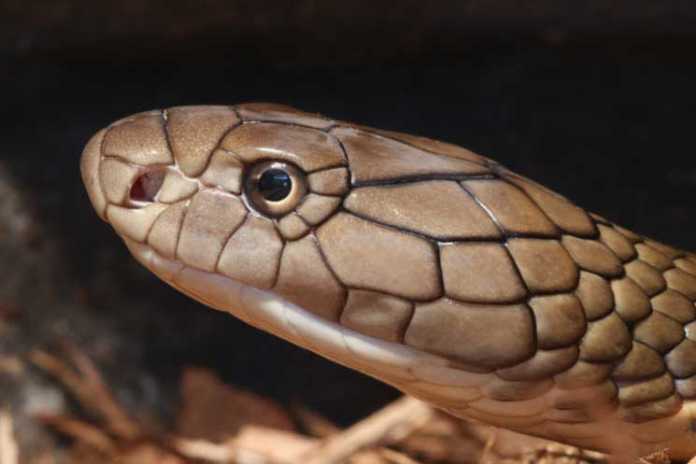
How does a King Cobra bite? The King has two fixed fangs in the front of his mouth. These deadly fangs are used like needles to inject the venom into its prey. But how strong is the King’s Venom?

You better not mess with this snake. The King Cobra’s Venom is mostly comprised of neurotoxins. These will brutally attack anyone’s central nervous system. One fatal bite by the King can channel a large amount of venom into its prey. The doses range from 200 to 500 mg and even higher. What happens if you are bitten? The symptoms may include severe pain, vertigo, and up to paralysis or coma. The next stage is respiratory failure, and death. Though uncommon, a King Cobra bite may also cause kidney failure.

How fast can it kill? A bite by a King Cobra can lead to death within thirty minutes. One bite can actually kill approximately 20 men. There are even records of King Cobras that have killed elephants in a few hours.

Looking for Anti-Venom? There are only two types of anti-venom produced for treating bites by King Cobras. One is manufactured in Thailand by the Red Cross, while the other is made in India by the Central Research Institute.

For more riveting facts about the King Cobra, click the following Image:

cobras


Lizard Names: How To Name Your Pet?

Lizard Names
What's Your Name? Photo by Jasminko Ibrakovic

Naming your Reptile pet and selecting that one unique name that you like, out of an endless array of Lizard Names, is not an easy task. However, it’s just one tiny part of having a per lizard. Petting a lizard can be quite captivating and also challenging. Petting a dog is easier than training a dog. Owning a cat is also relatively easier. When you deal with reptiles or exotic pets, then you have to be more dedicated. Not only is training a lizard more than hundred times as difficult as training a dog, petting a lizard is also exponentially more challenging.

When you decide to have a lizard for a pet, you should invest enough time and effort to learn how to choose a lizard, how to create its ideal habitat, what you should feed it, what kind of terrain and lights you would have in its home and you must also learn about the dangers or safety measures of having a lizard. Once you get accustomed with all the information and develop the best and safe practices, having a lizard around can be quite fun.

Another challenge you would face as you opt for a lizard as your pet is assessing various lizard names. There are dozens of popular names for lizards. The pet lizard names may be according to convention or you may take a completely unconventional approach. An easy way to pick lizard names is to go for any name that caters to your imagination or preference. Another easy way to pick names for lizards is to consider its species or scientific name and then altering it to suit your preference. The objective is to make a proper noun using the words or the entire scientific name as the origin. If you want uniqueness, then you should have your own way of choosing pet lizard names.

If you want random lizard names which are popular then you may consider Ajax, Amos, Arlian or Arnie, Arther, Astrid and Azul. You may go with Barnabas, Bender, Blubeard, Bubba, Burt or Carlos, Chewie, Cilla, Cleo or Cornolio, Darvarus or Delores, Demonicus or Demon, Dino, Draco, Drake or Durangeo. There are hundreds of such lizard names that you can choose from. Each alphabet has at least a dozen odd popular names for lizards.

Want to check a conservative Pet Names database? You can try PetNames.net.

You should consider the physical attributes and natural tendencies of the lizard you have bought before you start choosing pet lizard names. The best names are those that are specific to a particular lizard, based on the color of the body, texture of its skin, size and shape of its head, the kind of tail it has and what kind of activities it indulges in.

People using Lizard Names

There are those innocent pet owners who are just looking for cute names for their lizards, but there are thousands of people and groups exploiting the lizard name for their means. There are of course the positive ones, like various sports teams that call themselves Lizards (New York Lizards). However, there’s currently a vicious group of Hackers called LIZARD SQUAD, known for their cyber attacks on numerous websites, especially those relating to gaming. The LIZARD SQUAD got famous after hacking the social media accounts of Taylor Swift, obtaining nude photos of the pop star.

I just hope all this doesn’t hurt the good name of lizards…

A Bully or a Nerd? The Python Snake

Python snake
Indian Python. Photo by Berangere Duforets

When imaging the python snake, thoughts will come to mind of a massive creature that sneaks up on prey before striking. As a result, Python snakes are often seen as bullies. People think of them as stone cold killers (possibly because they are cold blooded) and imagine them as lords of their realm.

The question is, are Python snakes really bullies? Lets take a look at some Python facts to get a better understanding of how pythons operate. When you review these facts about python, you may be surprised by some of the things you learn.

1. If nothing else, know this of the Python Snake:

If you are going to know any facts about pythons, know this. Pythons are known as constrictors. This is because pythons will kill their prey by squeezing them. When squeezed, the prey eventually stops breathing and passes out, making an easy meal for the python. Once their pray is ready, a python will swallow their pray whole, digesting almost every part of the pray.

2. Time between meals

Python facts that people want to know often include questions about how long a python can go between meals. This depends on the size of the python, and the size of their meal. On average, a python will eat between 4 to 5 times every year. Every meals will last for weeks or months. Meals include antelopes, caimans, monkeys, and many other medium sized mammals.

3. What causes a python’s skin coloring?

Pythons are notoriously difficult to find because they are excellent at camouflage. This is because their skin blends in with the ground around them. What causes this? Well, the skin color will be based on the habitat the snake lives in, which is a result of natural selection. This camouflage helps snakes spring traps on their pray. In addition, the beautiful patterning has unfortunately made snake skin a popular commodity in the fashion industry.

4. Less a Bully, More a Nerd

The python snake can find prey primary through fluctuations in the surrounding heat. The python uses this to target its prey before attack. In addition, a female python can lay between 12-36 eggs. She will protect these eggs by coiling herself around them. This also keeps the eggs warm until they are ready to hatch. Though some people may consider python snakes a bully, it is important to note that pythons know a great deal about fluctuations in heat, making them excellent hunters.

Despite being sort of a Nerd, there’s currently a new front in the war on invasive snakes in Florida, and “Python Patrols” are a major part of it. According to the state’s officials, there are approximately 150,000 Burmese pythons occupying southern Florida. They’ve become top predators that devour native animals like alligators and other species.

Wildlife officials are now recruiting citizens and teaching them about the Python snake and other invasive species, training the people how to identify them and even how to capture these huge reptiles. Volunteers are spending hours in classrooms learning all the important facts about pythons and their relatives. These classes are planned to be held regularly on a monthly basis, with the goal of training hundreds of Python catchers. The volunteers then go outdoors into areas where python snakes have been released. They track them down and contain them.