
Home Blog Page 23

Watch: Deadliest Snake in the World – Part 1

This “Deadliest Snake in the World” clip brings back nice old memories of “The Crocodile Hunter”. For those of you who don’t know the show or its world-renown star, Steve Irwin, should do a little googling, because Irwin definitely changed the world of wildlife documentary television, for ever.

“The Crocodile Hunter” was a world hit TV show hosted by Irwin and his wife, Terri. The show was so wild, educational and entertaining, that it became a hugely popular franchise, and even a feature film was produced, ‘The Crocodile Hunter: Collision Course”. The TV series was screened on Animal Planet and on dozens of TV networks around the world.

Together with his wife Terri, Irwin, whose full name was Stephen Robert “Steve” Irwin, also owned and operated the Australia Zoo, located 50 miles north of Brisbane.

Sadly, Irwin died in 2006 after being pierced in the chest by a stingray while filming an underwater documentary film about the Ocean’s Deadliest creatures.

In this clip we see Irwin in the early stages of his quest for the most deadliest snake in the world. All 10 snakes are located in Australia, making it a beautiful ride through Aussie land. In this first Youtube episode Irwin encounters the Western Brown Snake and the mighty Death Adder.

Don’t miss this breath-taking clip…
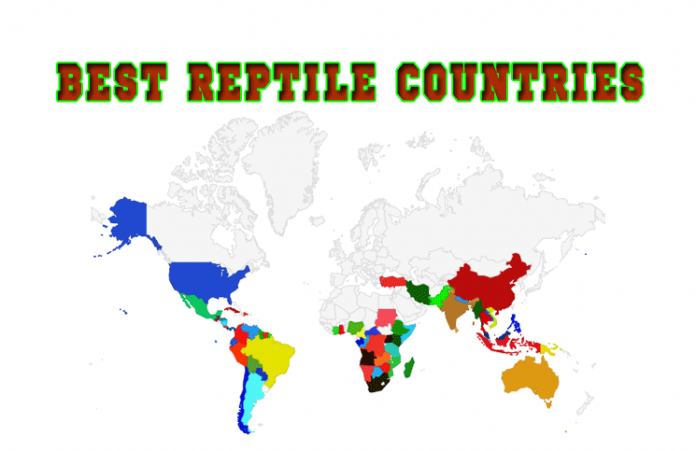
Map: Best Reptile Habitat in the World

Reptile Habitat
Best Countries For Reptiles
You ever wonder which places provide the best conditions for Reptiles to thrive? Check out our Reptile Habitat Map…


World Map: Best Reptile Habitat Countries

Just hover your mouse over any country to view how many Reptile species it contains! 

This World Map presents the Countries with the most number of Reptile species, or in other words – the countries that provide the best Reptile Habitat on the planet. Countries that are not colored or portrayed on this map did not make it to our prestigious list. Most of these countries are in the northern hemisphere.

No Reptile Habitat in the North?

Why don’t we see on the map any ‘good’ Reptile Habitat Countries in the Northern Hemisphere?

Well, Reptiles can be found on every continent in the world except for Antarctica. However, because reptiles depend on the external environment for regulating their body temperature, most species are found between the latitudes of 40 degrees N and 40 degrees S. That region of earth is the best reptile habitat. Over 3,000 reptile species are found in Central and South America, and over 2,000 species are found in Asia. Reptiles do not survive well in extremely cold climates. If we compare them to birds and mammals which can maintain a high and constant body temperature even in cold conditions, reptiles generate almost no body heat metabolically. They get their heat from their environment, like warm grounds or sunlight.

So how do Reptile regulate their body temperature? Well, they do all kinds of funny stuff, with the emphasis on “do”, and “funny”. Reptiles change their temperature by moving, running or jumping from place to place, putting parts of their body in the sun, touching hot grounds, and some just open their mouths (Crocodiles). In very cool temperatures, reptiles become very sluggish.

So how do Reptiles survive in cold habitats?

There are many places in the northern hemisphere, that if Reptiles stayed out in the open, they would freeze to death. For reptiles to survive in these places, they find creative ways to avoid exposing their bodies to the cold winter. Most of them go underground and hibernate, and some go underwater. There are turtles that dive to the bottom of lakes or ponds that do not freeze, while snakes and lizards use cavities and burrows to go underground and hibernate.

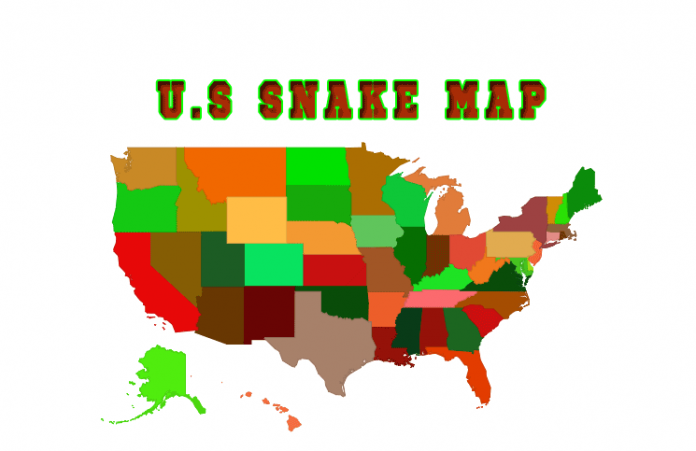
Enjoyed this resourceful map? We also created an interactive ‘North American Snakes’ map that provides detailed information on how many and which Snake species live in each and every State in the U.S. In this map you can just hover over the States to discover the number of snake species present in each region, and how many of them are venomous. Clicking on each state provides you the complete list of snake species in that state. Click here to try this map for yourself!

Source: Source: World Conservation Monitoring Centre of the United Nations Environment Program (UNEP-WCMC), 2004. Species Data (unpublished, September 2004).

North American Snakes: U.S Interactive Map

North American Snakes Map

North American Snakes U.S Large

This interactive ‘North American Snakes’ map provides detailed information on how many and which Snake species live in each and every State in the U.S.

Just hover over the States to discover the number of snake species present in each region, and how many of them are venomous. Click on each state in order to view the complete list of snake species in that state. 

We also created a World Map that presents the Countries with the most number of Reptile species, or in other words – the countries that provide the best Reptile Habitat in the World.

Crash Course: What Do Turtles Eat?

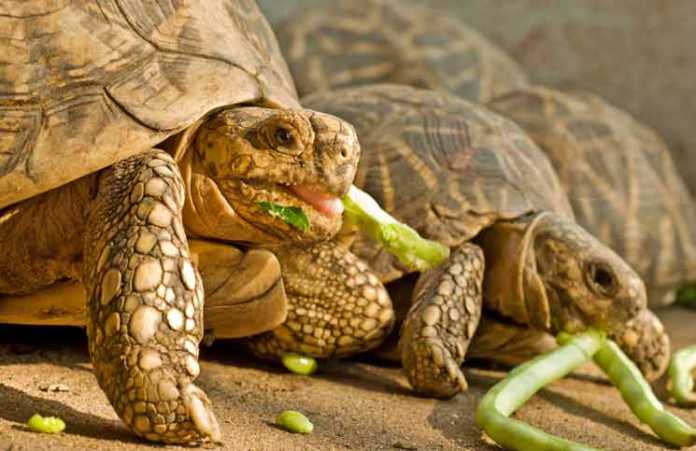
Tortoise Eating
A Group of Tortoise Eating. Photo by Bishwamber Nath

What do turtles eat has no definite answer. There are hundreds of different species of turtles and thus there are many variations in their diets or dietary preference. Turtles were not domesticated for a long time and thus their options were entirely dependent on what was available in the wild. Besides, there are significant differences among the species based on their natural habitat. Freshwater turtles and sea turtles don’t have the same dietary habits. Likewise, aquatic and semi-aquatic turtles have their unique preferences and compulsions as well. The same difference applies to tropical and subtropical turtles. Considering the fact that there are more than three hundred different species and subspecies of turtles, what do turtles eat has a very exhaustive list.

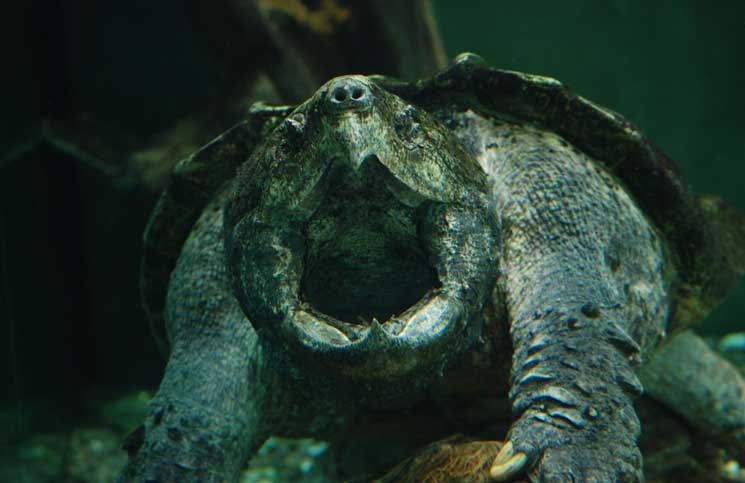
Alligator Snapping Turtle
I’m Hungry: What Do Turtles Eat? In Photo: Alligator Snapping Turtle. Photo by Christopher Evans. CC License. CLICK TO ENLARGE!

Most turtles have a vegetarian diet. But some species of turtles can be carnivores. Contrary to popular perception, most turtles are not vegetarian. They are mostly omnivores. They eat plants as well as animals. Apart from the species, natural habitat and what the turtles may prefer and get in the wild; the jaws of the turtles also determine the kind of food they would eat.

A bit confused? Well, here’s a more organized list that answers the holy grail of turtle owners, “What Do Turtles Eat?”… 
  1.  Sea turtles have a generic diet of algae, sea-grass, squid, crabs, shrimp, jellyfish, sea cucumbers and cuttlefish. Leatherback sea turtles have sharp jaws, almost like scissors, and they only feed on jellyfish. Green sea turtles are however herbivores and don’t eat any other animals. They mostly eat sea-grass and algae.
  2. Freshwater turtles usually eat insects, snails, worms, crustaceans, algae, fruits and water plants. Snapping turtles are carnivores and they eat fish, frogs, small mammals and snakes. These turtles may even eat other smaller turtles.
  3. Terrestrial turtles eat grubs, beetles, earthworms, snails, fruits, flowers, berries, caterpillars, grass and mushrooms. Terrestrial as well as aquatic turtles have a penchant, to varying degrees, for decaying flesh or carrion.
  4. Semi-aquatic turtles combine the dietary preferences of terrestrial and aquatic turtles.
  5. The species of turtles that are domesticated or petted also eat various foods. They can gorge on fish pellets or turtle pellets. Some turtles may gorge on legumes. Insects and bugs, small fish, earthworms and specially stuffed bugs or insects are also good for turtles. These can be found at most pet stores.

Since the dietary options for a domesticated or pet turtle is dependent on what is fed by the owner and not found by the turtle in a natural setting, a diet plan must be chalked out after consulting a vet.

Think you know enough to take our Turtle Quiz? If so, click here to take the quiz!

12 Amazing Crocodile Facts

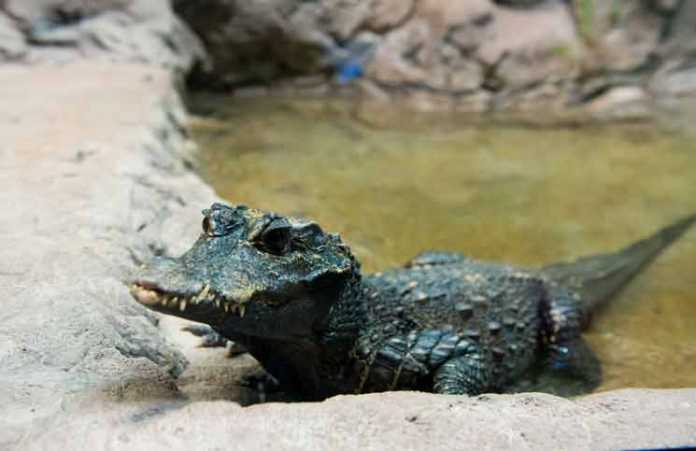
African Dwarf Crocodile
African Dwarf Crocodile. Photo: Antos 777

Crocodiles are a rare reptile. They have been around longer than any other species or animal alive. They instill fear, they terrify people and have survived the last mass extinction event sixty five million years ago and yet they have a very slow, almost nonexistent pace of evolution.

Here are some amazing crocodile facts that would fascinate, startle and possibly dazzle you.

  •  The saltwater crocodile which is scientifically known as the Crocodylus porosus is the largest known crocodile species. It is found in India, Fiji and albeit Australia. The crocodile weighs a ton. It can be as long as 23 feet. The dwarf crocodile found in Africa is the smallest known crocodile species. The longest dwarf crocodile is about 6.5 feet.
  • One of the weirdest Crocodile facts is, that they actually shed tears. This strange bodily reaction happens when they feed. That is not due to any pain or any psychological reasons. It is purely due to a physical reaction of air being pushed through their sinuses which trigger their tear glands and thus they weep while eating. Since the tears are not that of remorse or guilt, they are called fake tears. Hence the expression ‘crocodile tears’!
  • This is definitely one of the mind-blowing crocodile facts on our list: Crocodiles don’t have skin on their back. It is made of bones which are known as osteoderms, and therefore – the back of the crocodiles are invulnerable to bullets, spears and arrows.
American Crocodile
Look at that back: American Crocodile. Photo by Tomas Castelazo. CC-BY-SA-2.5-2.0-1.0 License, via Wikimedia Commons. CLICK TO ENLARGE!
  • Crocodile skin, the one that is derived from the belly of the reptile, is extremely sought after and expensive. A wallet or purse made of crocodile skin can be priced at around $15,000.
  • Some crocodiles like the Caimans have a shiny tapetum layer in their eyes that make them glow in the dark and thus they become visible post sundown.
  • In many erstwhile civilizations, the crocodiles were regarded as gods. The ancient Egyptians venerated the reptile.
  •  Crocodiles mate during the monsoons or rainy seasons and this is the time of the year when they are at their most aggressive behavior.
  • The reason why entire stones, rocks and even human body parts are found in the stomach of the crocodiles is because they have teeth that can crush but not chew.
  • This is one of those Crocodile facts which leave people saying “Ahhhh, now I understand!”. Crocodiles cannot sweat normally through their skin because their back is made of bones. So how do they stay cool? They keep their mouths open to sweat and thus to cool down. That’s why you always see them opening their mouths so wide and open. It has no threatening intention whatsoever. They’re just cooling down…
  • Crocodiles, like birds, have four chambers in their hearts.
  • Despite the large sizes of the crocodiles, their eggs are very small and so are their offspring. This is the saddest Crocodile facts on our list: Unfortunately most crocodile babies (approx. 98-99%) are eaten in their first year by large fish, lizards or even by other crocodiles.
  • And to the brightest among our Crocodile facts: Among those Crocodiles who do survive the first year, some can live for eighty years and more.


Venomous Snakes: Who is No. 1?

Taipan Snake
The Taipan Snake: Is this No. 1? Photo: Matthijs Kuipers

Every week here at Cobras.org, we receive dozens of inquiries regarding Venomous Snakes, “Is this snake dangerous?”, “Is this snake Poisonous?”, and of course, “What is the most venomous snake of all?”

Well, first all let me clarify one important misunderstanding: There is a big difference between Poison and Venom. Poison is effective only if absorbed or ingested orally, while Venom is injected. So Snakes cannot be poisonous. However, some of them are Venomous.

The major families of Venomous Snakes are the Elapidae, the Viperidae, the Atractaspididae and the Colubridae. It may sound to you like a list of the most dangerous Mob Families, but these Snake Families’ weapons are much more sophisticated than the Mobs’. These venomous snakes use their unique teeth, the fangs, to “shoot” the venom right into their prey. After the venom cripples the prey, they either devour it whole, or disappear.

On the other side of the Snake Families, the Non-Venomous snakes usually overpower their prey using their jaws, or by coiling around it and suffocating the prey to death. It is actually believed that venom was once present in the old ancestors of all snakes, and somehow along the last thousands of years, some snakes lost their ability to produce venom and became Non-Venomous. Sadly, these are usually less “exciting” or “intriguing” to many readers, who are always fascinated by the search for the most dangerous or venomous snake out there.

So who is the most dangerous or venomous Snake? Again, it’s as if we’re talking about a grand contest between the most Professional Assassins of all Mob Families. If that was the case we would probably need to measure several factors such as: How many victims did each Assassin eliminate during his entire Mob career? What weapons did he use? How much ammunition was used? How fast and clean did he complete each “operation”? What was the average number of victims in each operation? and so forth. Well, in our case of snakes, many scientists and snake enthusiasts have performed various researches on this matter. I’d like to mention one of these organizations, namely the Australian Venom Research Unit, or AVRU – an internationally recognized interdisciplinary research unit focused on the problem of venomous injury in Australia and Asia-Pacific.

The Most Venomous Snakes

No. 2 on the List: Eastern Brown Snake. Photo by Justin Otto

Taking the most significant factors into account, AVRU created a unique and more relevant list of the “World’s Most Venomous Snakes”. Their list was compiled using their International Danger Quotient Method, which is based on six critical factors: Average size of an adult snake of this species, Average venom yield in a bite, Toxicity of venom, Length of Fangs, Typical defensive disposition, and the number of deaths per year from each species.

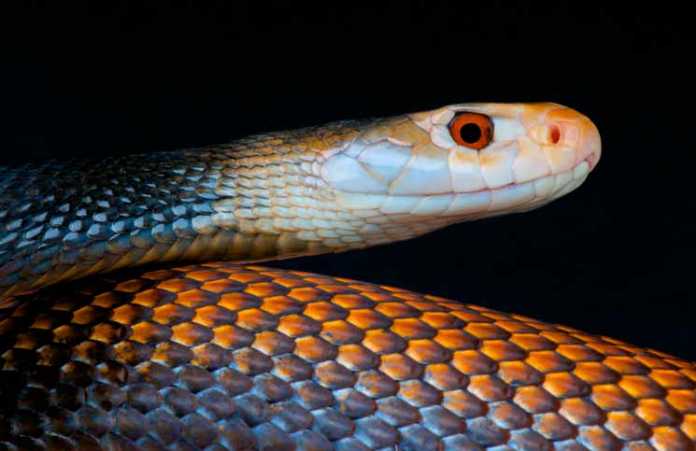
According to AVRU’s research, the most venomous snake in the world is the Inland Taipan, followed by the Eastern Brown snake (2) and the Coastal Taipan (3). The mighty Cobra reached only the 12th place. Based on the median value of lethal dose in mice, the venom of the Inland Taipan is indisputably the most toxic and dangerous of any snake in the world. One drop can kill 100 men. However, despite this awe-inspiring fact, the Inland Taipan seldom comes in contact with human beings, so we need to take that into account as well.

You can view the entire list of AVRU’s Most Venomous Snake here.

Look At These Gorgeous Turtle Pictures

painted turtle
Nature in Balance by Mr. TinDC.

As we do periodically, the Cobras.org team has come together again in order to search for great Pictures. This time we selected a new thrilling gallery of the most beautiful Turtle Pictures taken in recent years. We have Green turtles, Painted Turtles, some laying eggs while other turtles show amazing family bonds…

Enjoy, and please send us your own favorite pictures of Turtles! CLICK the Images to enlarge.

Text, Credit and Links:

1) Green Turtle in Tenerife

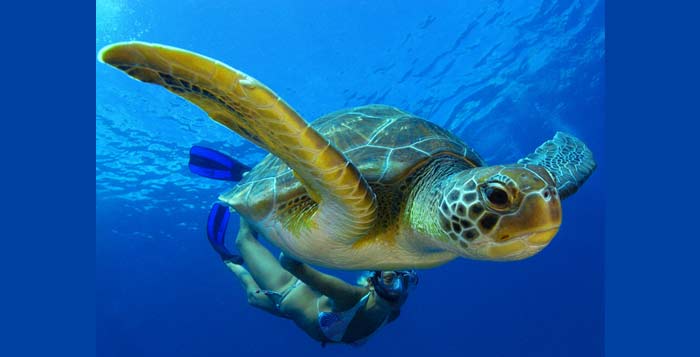
Taken by Philippe Guillaume in 2009, this breath-taking image of a Green Sea Turtle made it to our Gorgeous Pictures list, since it captures the turtle and the diver behind him in amazing fluid movement, tempting us, the viewers, to dive in with them, at least in our dreams…CC License here. 

2) The Majestic Western Painting Turtle

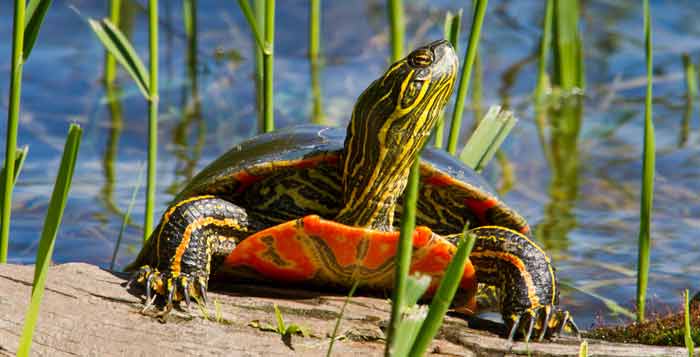
Taken by Shawn McCready in 2014, who was fortunate enough to discover this Majestic Western Painting Turtle on a piece of drift wood. Take a careful look at the brisk colors and details of this magnificent turtle. CC License here. 

3) Turtle Family Walk

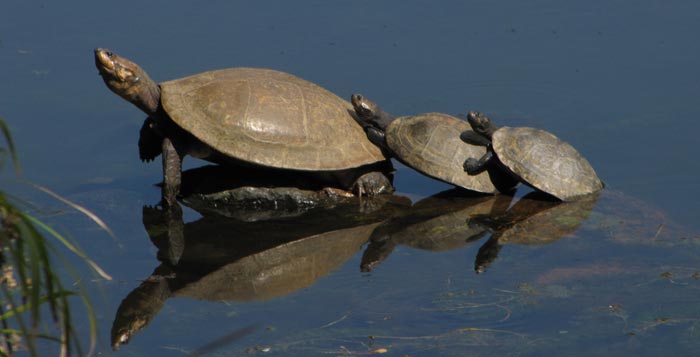
Taken by Luz Adriana Villa in 2014, this is definitely one of the most family oriented pictures of Turtles, ever captured. CC License here. 

4) Nature in Balance

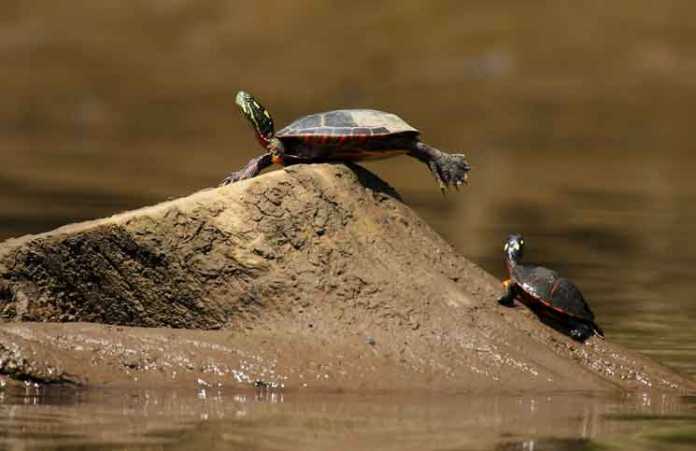
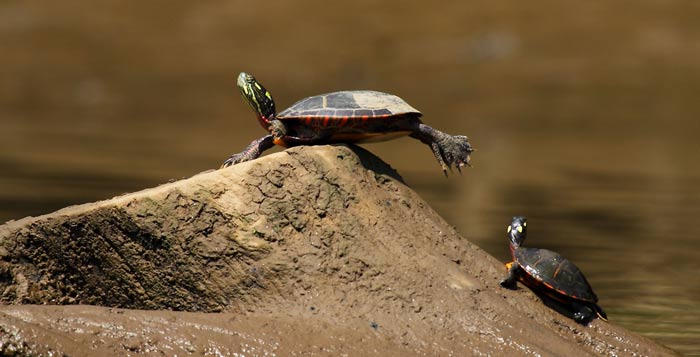
Taken by Mr. TinDC in 2011 in Prince George’s County, this Painted Turtle, the most widespread native turtle of North America – precariously balances himself on a log in the Anacostia River. Absolutely stunning. CC License here.

5) Turtles in a Row

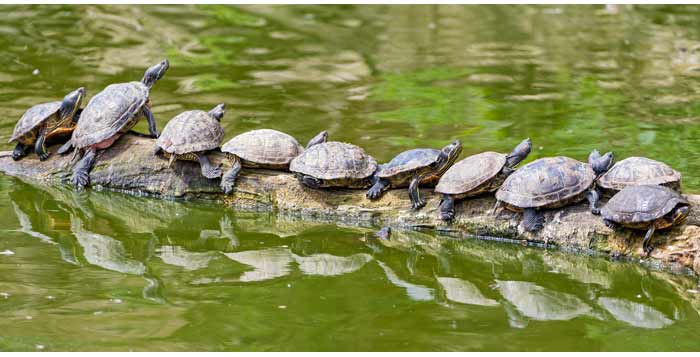
Taken by Tambako The Jaguar in 2013, we left one the best pictures, for last, so you get a good taste in your mouth as you soon click on out of this post. Look at these Red-Eared Slider Turtles, as they all gather on this branch, trying to hold on…CC License here.

6) Wary Box Turtle

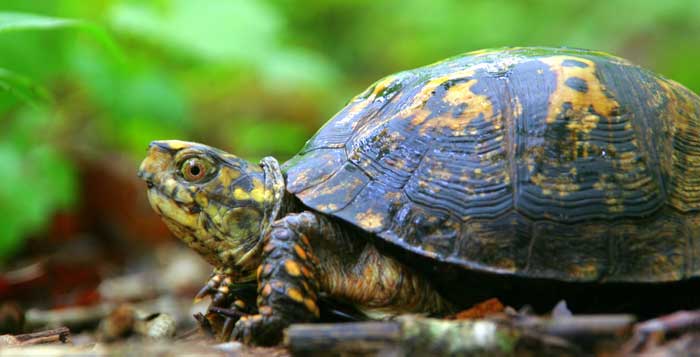
Taken by Ezra S F in 2008, this profile picture of an Eastern Box Turtle, captures it as it carefully sits still and watches the photographer. CC License here. 

7) The Red-Eared Slider

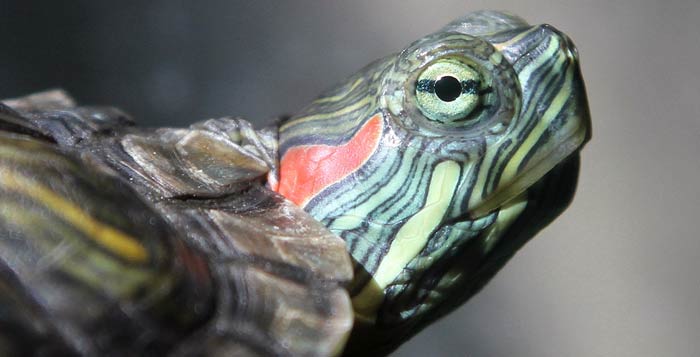
Taken by Jim The Photographer in 2011, this is with no doubt one of the prettiest close-up pictures of any Red-Eared Slider Turtle. Look at these colors! CC License here. 

8) The Western Painted Turtle

Taken by John McAllister, this gorgeous close-up of the Western Painted Turtle makes you want to dive into his mind, and discover the purest thoughts of a Turtle…

9) At last, Sand

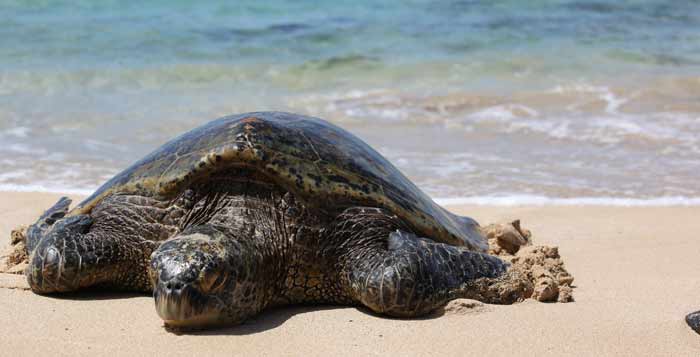
Taken by Aaron Goodman in 2014, this gorgeous Sea Turtle looks as if he’s just returned from a long long journey…CC License here.

Well, we hope you enjoyed our selection of the most gorgeous Turtle Pictures, until our next batch!

Did you know that a Turtle’s life depends on temperature? Or that Turtles have great senses? Just click here to read the fast 8 Amazing Turtle Facts!

Snake Eating Crocodile

Watch this amazing Snake Eating Crocodile clip, taken in Lake Moondarra, Queensland, in the Australian outback. Using the usual method operandi of any python, the snake crawls itself around the crocodile before constricting it to death. It takes the snake five hours as it devours and eats it whole. This is definitely one of the most amazing clips revealing a Snake Eating Crocodile.

For more fast facts about Cobras click here.

For further discussion on snakes, scientific classifications, venom research and much more, check the resources available in “The New Encyclopedia of Snakes”, available on Amazon.com.

069113295X
Click here to take a glimpse at 
“The New Encyclopedia of Snakes” 


9 Amazing Turtle Facts

pig turtles swimming
Turtles swimming. Photo by Geraldas Galinauskas
Turtles are amazing, period.

Just to watch them move awkwardly and slow, popping up their cute wrinkled head out of their massive shells, and suddenly pulling it back in again. That in itself makes me smile every time I see it, and that is a fact.

However, here are a few more amazing turtle facts that will surely leave you wondering…

1) Turtles are Prehistoric.

The first turtle evolved even before the lizards and crocs, more than 200 million years ago. That’s old. Extremely old. Interesting facts to notice: Back then they couldn’t pull-back their heads, but they did have teeth.

2) Turtles Are Found All Over, Almost.

In a similar fashion to Snakes, also Turtles can be found all over the world, on each and every continent, except for the coldest and driest continent of all — Antarctica.

3) Turtles Have Great Senses.

Despite their old wrinkled looks, and being prehistoric, surprisingly turtles have excellent eyesight, a superb sense of smell, and they can even hear good!

4) The Turtle Shell is Not Bulletproof.

We tend to think that the powerful robust shell of the Turtle is some kind of bulletproof tank, and that as long as the turtle pulls his head back in – then he’s completely protected inside. That nothing can happen. Well, the facts tell us differently. The turtle shell has nerves and blood supply, and is actually made of up to 60 different bones that are connected together, so any injury to the shell structure—might make the turtle bleed and suffer from pain.

5) There Are Terrifying Turtles.

Are there really such things? It seems unthinkable, and most people I talk to have the one and only image in their minds, of the old funny-looking-Grandpa-like Turtle, slow, cautious and smiling. However, a Terrifying Turtle that is considered dangerous—does exist. It’s ‘The Alligator Snapping Turtle”, regarded as the heaviest freshwater turtle in the world, with a heavy head and a long thick shell, it resembles a dinosaur. This scary turtle lures fish using his tongue, right into his mouth, asit then devours them with tremendous speed and force. It will eat almost anything it can catch.

Alligator Snapping Turtle
Alligator Snapping Turtle. Photo by Christopher Evans. CC license. CLICK TO ENLARGE!

Still, these turtles must be handled with extreme care and considered potentially dangerous.

6) Turtles Hardly Survive.

This is definitely one of the unfortunate turtle facts on our list. Taking into account their amazing track-record of survival over more than 200 million years, it’s quite surprising that only one out of 1,000 sea turtles survive after hatching. Most are eaten in their very early stages. However, if a baby male sea turtle does make it from the land, where it just hatched, to the sea, it will most probably never step on land again.

7) Turtle’s Life Depends on Temperature.

One of the interesting Sea Turtle facts is, that during incubation the turtle’s sex is determined by Temperature. If it’s above 29 degrees – then the baby will be a female turtle. If it’s below 29 degrees – then it will be a male. If the temperature rises above 33 degrees – then the turtle will not survive at all.

8) Turtles Are Immortal, Almost.

Some turtle species have the amazing ability to surpass a hundred years of age, easily. There is one Seychelles Giant Tortoise by the name of Jonathan, that lives on the Island of Saint Helena I nthe South Atlantic Ocean. He was born in 1832, and is still alive. This makes him 182 years of age. Don’t believe me? Want the original facts? Read this BBC article about Jonathan the Tortoise. 

9) Can Turtles Boost Fertility?

In ancient mythology, some cultures admired the turtle for its longevity, while others, like the Egyptians, regarded it as the enemy of the Sun God, and as the one who brings draught. The Tortoise on the other hand was portrayed as the one supporting the entire planet at its creation. Some ancient cultures believed the Tortoise had oracle powers and was associated with immortality, while others believed it was a symbol of fertility.

How did you like our Turtle post? Let us know your by any way you like.

Want to watch some gorgeous Turtle Pictures? Just click here!

The Amazing Snake Of The Snake Charmer

Snake Charmer
The Snake Charmer. Photo by Rossella Apostoli
Does this following scene sound familiar to you?

A typical Indian Snake Charmer wearing a traditional white or red turban on his head, sitting on the floor in a bustling street, playing a Pungi flute, with a big basket standing just a distance away. Inside the basket is a coiled Cobra, which slowly rises and sways, dancing to the tune of the Snake Charmer. The dancing snake, as well as the excited audience, are charmed…

There was a time in the past, when there were millions of Snake Charmers roaming the streets of India. The heart-stirring profession of the Indian Snake Charmer dates back thousands of years to ancient Egypt, where one form of snake charming is believed to have existed. Today however, this bewildering practice of pretending to hypnotize a snake, is most common in India. The Charmers use various snakes for their dazzling street shows, such as Vipers, Pythons and Mangrove snakes, but the typical Snake Charmer will always prefer to hypnotize one particular snake. Namely, the notorious Naja Naja, also known as the Indian Cobra, or the Spectacled Cobra.

Naja Naja
Naja Naja. Photo by Harsimran ‘Dino’ Singh Aulakh. CC License.
The Snake Charmer and his Naja Naja

The Indian Cobra (Naja Naja), which can easily be identified by its majestic hood with a rounded mark, belongs to one of the four species which inflict the most snakebites in India. Its venom is highly toxic, and when threatened – it hisses and sways its marvelous hood, and sometimes – it strikes. The Naja Naja usually preys on mice, rats, frogs, toads, poultry, small mammals like the mongoose, and even other snakes. This Cobra’s preferred hunting time is night, from dusk till dawn, but it can also be seen at daytime.

The Naja Naja, whose colors can vary between grey, yellow, brown, reddish or black, has a special place in Indian culture and mythology, and today it’s even protected under Indian law. In religious Indian drawings, you can see the Naja Naja coiled around the neck of the Hindu God, Shiva. These unique Cobras, which live in dense forests, wetlands, agricultural lands and even in city outskirts, are highly revered and worshipped in countless rituals.

snake charmer
Snake Charmer. Photo by Dennis Jarvis. CC License.

In the musical ritual of the Snake Charmer, however, it needs to be mentioned, that the Naja Naja is utterly deaf. Meaning – it cannot be dancing to the beautiful flute music. The Naja Naja is actually responding to the hand and body movements of the Charmer, and to the vibrations pounding the ground.

Today, it is believed that less than one million snake charmers are still active in India, and their numbers are declining dramatically. Thanks to popular channels like ‘Animal Planet’, ‘National Geographic’, or YouTube, which have diminished the fears and awe towards snakes, it has become a dying profession.

I’m pretty sure you’ve seen a similar world-renown scene somewhere in your life, either on Tv, on the net or live, but if not – watch this short video of an Indian Snake Charmer in action.

For more fast facts about Cobras click here.

For further discussion on snakes, scientific classifications, venom research and much more, check the resources available in “The New Encyclopedia of Snakes”, available on Amazon.com.

069113295X
Click here to take a glimpse at 
“The New Encyclopedia of Snakes” 

If you feel like a having a real Book on Snake Bites, then get this book:Snakes and Snakebite‘ by Visser, J. & Chapman D.S.

And if you love African Hot snakes, this is THE Book for you:  ‘Dangerous Snakes of Africa’ by Spawls, S. and Branch, B.