
Home Blog Page 16

Do Lizards Lay Eggs? A Short Guide On Lizard Eggs and More

Lizard eggs

Do lizards lay eggs? The answer is yes and no. Some reptiles lay eggs while some give birth to their offspring. The same is done by lizards. Some lizards lay eggs while some give live birth. You will find lizard eggs of geckos, iguanas and monitor lizards. You won’t find blue tongue lizards, Solomon island lizards and shingle-back lizards laying eggs. They give birth to their live offspring.

Why do lizards lay eggs and reproduce like mammals has a simple reasoning. It is the possibility of a particular species engaging in male-female coupling. Some lizards mate and then lay the eggs, conceal the lizards eggs in a safe place and move on with their lives. These lizards don’t return to their eggs, ever. Some lizards mate and give birth to live offspring. Some lizards also procreate through asexual reproduction. However, it is quite rare.

Like most animals, lizards also have a breeding season or specific circumstances when they reproduce. However, there is no uniformity across the lizard kingdom. There are variations in the time of the year and the circumstances depending on the species of the lizard. Also, there is no standard rule of how many lizards eggs the species would lay at a given point in time. Some lizards can lay up to half a dozen eggs at the same time while some species would lay only one lizard egg at a time. Like all eggs, lizards eggs are also dependent entirely on the incubation process. Whether they would hatch or not and whether the offspring would be alive or not depend on the incubation process. If the incubation is successful, which happens naturally in the wild and under controlled environment in captivity, then the lizards eggs would hatch and the offspring would be alive and healthy.

Those who intend to breed gecko lizard eggs in captivity must learn the art and science of incubation. Incubating lizard eggs is easier than bird eggs but it still requires a controlled setting that has to be mastered.

Also, most lizards have a tendency to reproduce with uncertainty. While the expectation may be a certain number of lizards eggs, the number could be much less or more. There can be uncertain or unexpected laying of lizards eggs as well. It all depends on the breeding of the lizards and the genetic traits of a particular species. All such factors must be studied before dealing with lizards eggs.
How To Raise Baby Turtles? A Beginner’s Guide

baby turtles
Photo by Macsim

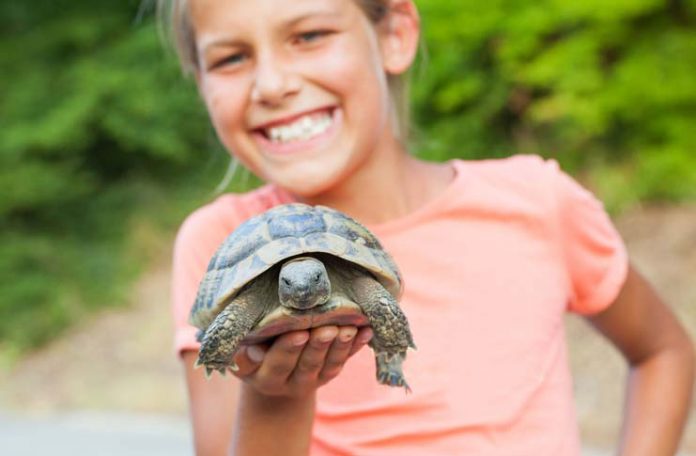
Baby turtles are quite difficult to raise. They require dedicated care and a very well arranged environment. You should know that Reptiles are not among the easiest of pets to have. Even if a leopard gecko appears to be friendly and doesn’t pose much danger, baby turtles should not be included in the same category. Raising baby turtles is a tough job and only a dedicated pet owner should consider the option. If someone has a mild interest in baby turtles or is slightly passionate about the whole experience just as a hobby, then the course ahead is not really a desirable one.

Turtles in general are quite demanding species. They need a lot of attention, care and they can also live long which means that the owner will have to spend a lot of time for many years remaining dedicated to the pet. This is not to discourage anyone from owning and raising baby turtles but just to give you guys a reality check. It’s a big chunk of responsibility.

Also, baby turtles are carriers of salmonella which is dangerous for kids. This is the reason why the Humane Society of the United States has recommended not having baby turtles as pets and certainly not considering them if a family has infants around.

Here’s a brief but helpful guide on raising baby turtles:

  • First, you will need your baby turtle from a trusted source. You would then have to create its habitat which will require an aquarium, water, heat lamp, soil and stones and then for the turtle you would need the recommended food.
  • Next, you will have to create the habitat. You need to set up the aquarium. The best place to keep the aquarium is close to the window or any opening wherefrom the baby turtles can get ample sunlight or natural light. The aquarium doesn’t have to be exorbitantly large but it should not be small either. Baby turtles tend to grow into large sizes and they would quickly outgrow their habitat if the aquarium is not large enough. Besides, the turtles have to move around and swim in the water so the aquarium should be a large tank.

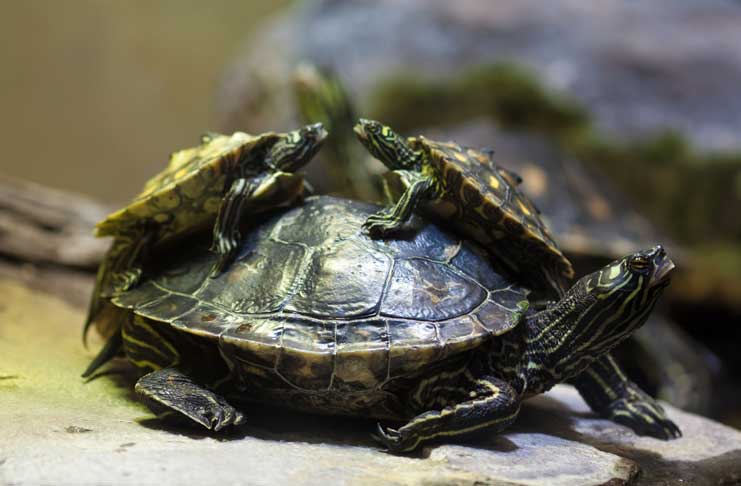
    baby turtles
    Ready to raise a family? Look at this family of Map Turtles. Photo by Gaschwald
  • You can cover the bottom of the tank or aquarium with soil and place a few rocks, slates or some artificial trees and small plants inside. You can go with decorative plants as well which otherwise would not contaminate the tank but make the setting look beautiful.
  • You should have the heat lamp right above the aquarium and you would need a pump to clean out the water regularly. You should adhere to the dietary recommendations that you get at the time of buying baby turtles or what your vet states.


The Blue Lizard That Blew My Mind: Part 2

Have you ever come across a blue lizard? If you live in Australia, especially in Queensland, South Africa or California, then the possibilities are very high that you have come across that one lizard that blue your mind. You might have also read our first post about the Blue Tongue Lizard That Blew My Mind.

Well, there is no dearth of exotic animals or even reptiles in the world. If you thought there is nothing more to lizards than the ones which crawl in your rooms, then you have to venture into the wild and explore the unseen. Lizards come in various colors. They can be grey, red, black, white, blue, green and brown among others. More interestingly, they can come in a combination of various colors, which make them even more captivating. Lizards can camouflage their entire presence and blend in with their immediate environment. It is not without a reason that chameleon has become a muse for so many writers and philosophers.

There are various kinds of blue lizards. You will find a blue belly lizard, blue tailed lizard, blue headed lizard and a blue tongue lizard among others. There are some lizards which have a blue body but their tails, heads, tongues and bellies are not blue.

Blue Belly Lizard

The western fence lizard is a blue belly lizard. Known as Sceloporus occidentalis, this blue lizard is found in abundance in California. It has a blue belly but only the adults have a distinct blue abdomen and not the babies. There are six identified or recognized subspecies of the western fence lizard or the blue belly lizard. They are the Island fence lizard, San Joaquin fence lizard, Coast Range fence lizard, Great Basin fence lizard, Northwestern fence lizard and the Sierra fence lizard.

These lizards don’t have a blue body. Their bodies are usually black or brown. There can be some greenish variations or some black stripes on their back but their bodies are never blue. It is only their bellies that are blue. Some of the blue belly lizard species and subspecies may also have a blue throat or a blue patch around their neck.

Do Not Scare This Blue Lizard: The Blue Tailed Lizard

The blue tailed lizard is scientifically known as Cryptoblepharus egeriae). It is found only in Christmas Island, Australia. Its characteristic feature is its blue tail. These lizards usually grow up 8 cm and they have a tendency to shed their tail when they are too surprised or scared. The blue tailed lizard found in North America, more specifically in eastern US, is known as Plestiodon fasciatus.

Blue Headed Lizard

The blue headed lizard is known as southern rock agama or by its scientific name, Agama atra. It is found across South Africa in rocky regions.

Do You Want A Leopard Gecko Pet?

Leopard Gecko
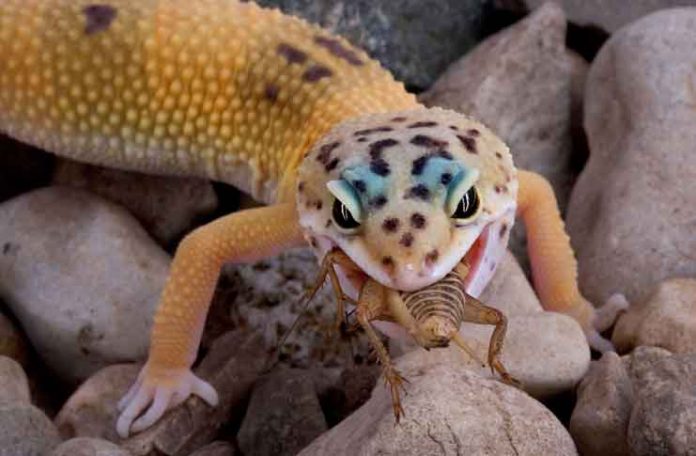
Having Lunch: The Leopard Gecko. Photo by Cathy Keifer

The amazing Leopard gecko is one of the earliest domesticated lizards. By many accounts, it was the first species of lizard that was petted. When you wonder if you want a gecko pet, you will come across a pertinent question, do you really want a leopard gecko pet?

The question is obvious since reptiles are still not the most common choice for a pet. It is fourth in the order of preference, after canines, felines and birds. But to answer the question, one has to quote Matt Damon in ‘We Bought A Zoo’ – why not? There is really no reason why you cannot have or want a gecko pet.

Leopard geckos are small, they are quite sturdy and they need very little maintenance or care. Naturally, they are the best choice for domestication. If you are fine with the idea of having a reptile as your pet, then a leopard gecko pet is the safest choice.

The primary reason why a gecko pet is a good choice is because it is manageable but beyond that it is actually the matter of safety. Most leopard geckos today have been bred in captivity. None of them have been captured in the wild. The species actually breeds well in captivity and that has allowed the luxury to keep them safe and to contain their wilder instincts. Besides, the spree of breeding in captivity has allowed for numerous variations in the species itself.

Check out this great video by AnimalBytes TV:

Today, there are albino geckos, pattern-less leopard geckos, blizzard, tangerine, hypomelanistic, jungle, giant and snow geckos. In other words, you can have a unique gecko pet that none of your friends have.

Having a gecko pet doesn’t have many challenges. All you need is a bit of awareness as to how you should make its home and how you should attend to its needs. You have to setup a tank, arrange for the heat, make its living space interesting with some rocks and certain features that make it look like the wilds and you have to buy the gecko from a reputed company or agent wherefrom you will not get some other species or a captured gecko. It is best to go with a leopard gecko that has been bred and raised in captivity.

When you buy a gecko pet, you will get all the information or advice you need as to how you should make its home and what you should be doing for the welfare of your pet.

For more information about the Leopard Gecko you can check out this resource.

Cobra Bite Kills a Popstar

Indonesia, and the entire world – was shocked last week as Irma Bule, a 29-year-old indonesian pop star died on stage, following a King Cobra bite.

The tragedy happened in the middle of a concert in Karawang, a village in West Java, in which Bule was singing and dancing with snakes. Bule was known for dancing with snakes, but these were usually non-venomous pythons or boa constrictors. She’s been doing the singing act with snakes for the past three years, and the snakes have become her trademark.

During that tragic evening, while performing her first song, Bule danced to organ music with the King Cobra hanging around her neck. As the song ended, she put the Cobra into a sack, and started her next act.

It was during Bule’s second song of the night, when the Cobra came out of the sack, and the Pop star accidentally stepped on it, according to witnesses. The fearsome King Cobra did not hesitate and sunk its fangs into Bule’s thigh. As known, King Cobras are among the most venomous snakes on the planet. The amount of toxins released in a single King Cobra bite can kill an elephant, or 20 people.

cobrasA snake handler immediately to Bule’s side, but the Pop star was calm, chatted with the expert and refused to get an antidote for the Cobra bite, although it was offered to her by the crew. Instead – Bule got back on stage and continued her singing and dancing act for another 45 minutes, until she suddenly started to vomit. A scary seizure followed.

Bule, a mother of three young children, was then rushed to a hospital, where the Pop star sadly died.

Why did the popular Pop Star dance with a lethal King Cobra? According to witnesses, she thought the Cobra had been de-fanged.

In case you or anyone close to you ever experience a Cobra Bite or any Snakebite – please follow these rules and tips for “Emergency Treatment of Snakebite”.

The Mysterious History Of Crocodiles

History of Crocodiles
How Long Have They Been Here?

The history of crocodiles is fascinating. Very few animals, including humans, have as mysterious a history as the crocs. The only known animal thought to have survived the asteroid that wiped out the dinosaurs and everything that existed in the world at that point in time, is the crocodile.

The history of crocodiles dates back to 250 million years for sure. There could be more evidence, yet to be discovered, that may peg the history to a much earlier era. The annihilating event of the asteroid hitting the earth happened about 65 million years ago. Dinosaurs, giant elephants and various types of mammals, reptiles, fishes and birds had become extinct thereafter. But crocodiles survived that mass extinction and even today the species thrives across the world.

Crocodiles hail from the Archosaur family and they thrived in the Cretaceous period. The same period is also referred to as the Age of Reptiles. Archosaurs were among the first giant lizards that evolved during the Permian period which was sometime around 250 million years ago. It is believed that as the Permian era made way for the Triassic period which dates about 220 million years ago, the crocodiles or the Archosaurs evolved further. One evolution lead to crocodiles and the other evolution lead to birds and dinosaurs. In that sense, crocodiles have an origin that is same as that of dinosaurs but they may be older than the latter. Protosuchus, which is the oldest fossil found till date happens to be 240 million years old. The term, Protosuchus, actually means first crocodile. The period to which the fossil belongs is the renowned Jurassic era.

Considering the fact that crocodiles have been around for more than three hundred millions of years and possibly for many millions of years more, one would expect the species to be much more evolved. But then there is the reality that they survived a mass extinction which even the larger variants, the dinosaurs did not. That is where the real mystery of the history of crocodiles lies in. How did the crocodiles survive? Did they evolve through the post apocalyptic days or they transformed in ways that we do not know of?

The answers cannot even be guessed, let aside having enough scientific data or evidence to make an informed inference. Among the Archosaurs, birds and crocodiles are the only remaining species. But no known bird is as old or as mysterious as the croc.

The Amazing Rattlesnake: Part 1

Rattlesnake
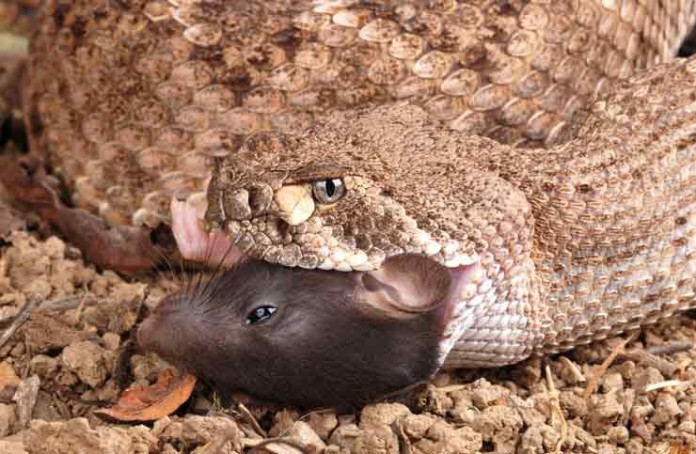
A Diamondback Rattlesnake. Photo by Audtay

The rattlesnake is one of the most commonly spotted crawlers in the Americas. North and South America are home to about 32 species of rattlesnakes. The number is that of the known species but there is little possibility of there being more species that are unfound.

Rattlesnakes are an amazing creature and some of them are endangered or close to extinction. The canebrake, timber rattler and the massasauga rattlesnakes are endangered species due to organized extermination and loss of their natural habitats. Almost all rattlesnake species prefer arid or semiarid regions but over the last many decades, they have found their ideal habitats in rural areas, forests and swamp lands. You are more likely to come across a rattlesnake than most other snakes.

Quick Rattlesnake Facts

Here are some enticing facts about this wonderful snake – that any enthusiast should be aware of.

  • Rattlesnakes are quite amazing in regards to how they hunt. They have thermal receptors that can trace or sense the presence of their prey. Also, they can track the scent of their prey in the air. Besides, rattlesnakes can observe even the minutest vibration in the ground.
  • A rattlesnake is typically three or four feet long but there are some larger ones that can be as long as eight feet.
  • Rattlesnakes have the unusual quality of blending in with its surroundings. They can camouflage their presence since they do not have very colored bodies. Rattlesnakes are usually black or brown, grey or olive.
  • The rattlesnake head is quite interesting. It is triangular in shape and it has vertical pupils.
  • The rattlesnake is so named because of its tail which ends in a rattle.
  • The rattlesnake sound is also quaint. It rattles and thus warns any predator to stay away from it. However, the rattlesnake sound is not produced when the snake is shocked. Take a look at this video about the rattlesnake’s sound:
  • Rattlesnakes are usually venomous. They secrete hemotoxic venom. It has the ability to destroy blood vessels and cells. Deaths caused by rattlesnake venom are not common because antidotes are widely available. But if a person is not given the antidote in a timely manner, then possibilities of fatality are very high. However, a rattlesnake may not always release the poison when it bites a prey or a human. Such attacks are called dry bites. Like many snakes, rattlesnakes cannot secrete the venom quickly and thus successive bites will not have the venom once it is lost.
  • The foods on top of the dietary chart of rattlesnakes are small birds, rats and mice.

Famous Florida Snakes: Who’s Your Favorite?

There are more than fifty types of Florida snakes that you would encounter in the beautiful sunshine state. Each of those types also has some variants as almost every species has some genetic and mutative tendencies that make them slightly or considerably different.

While there is no dearth of Florida snakes, you will not come across many venomous snakes in Florida. More than forty five types among the fifty odd snakes found in the sunshine state are actually non venomous snakes in Florida.

The known venomous snakes in Florida are the Cottonmouth (Water Moccasin), the Eastern Diamondback Rattlesnake, the Timber or Canebrake Rattlesnake, the Dusky Pigmy Rattlesnake, the Coral Snake and the Southern Copperhead.

  • The Cottonmouth or Water Moccasin has a heavy body. It is dark and has reddish brown cross-bands on a brownish skin. When these snakes get old, they tend to become darker and thus blacker. An adult cottonmouth is usually two to four feet in size.

    florida snakes
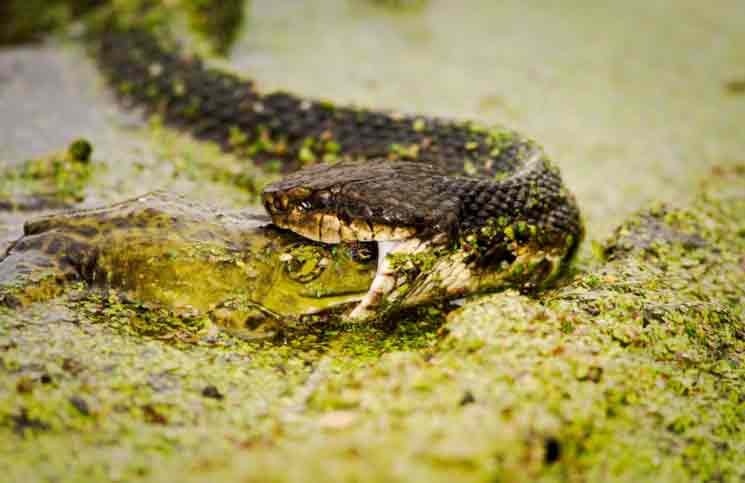
    The Fearsome Water Moccasin eating a Frog. Photo by Paul Wolf
  • The Eastern Diamondback Rattlesnake is also a heavy snake and is larger than the cottonmouth. The eastern diamondback is usually three to six feet in size. Characterized by its cream borders and brown centers, the eastern diamondback rattlesnake has a brownish or gray tail.
  • The Timber or Canebrake Rattlesnake is often confused with the eastern diamondback but they are different. The canebrake is also a large snake but it has reddish brown stripes along the center of its back. This is the unique attribute that makes it different from the diamondback. There are cross-bands, usually like chevron which are black and large. The timber or canebrake rattlesnake is usually three to five feet in size. It has a large head just behind the eyes or in a diagonal line with the eye.
  • The Dusky Pigmy Rattlesnake is a small snake. It is two feet at its largest adult size, making it one of the smallest Florida snakes among the venomous ones. The pigmy rattlesnake has a triangle shaped head and has nine scales, quite large ones. Considering its length, the dusky rattlesnake is quite fat, or thick. Its natural body color is dark gray and the pigmentation of gray varies according to age.
  • The Coral Snake is also among the smaller venomous snakes in Florida. Its size ranges from a little less than two feet to about two and a half feet. It has black, red and yellow rings. The yellow rings are smaller that separate the larger black and red rings.

    Florida Snakes
    Coral Snake. Photo by Enrique Ramos Lopez
  • The Southern Copperhead has a stout body, gray or brown cross-bands and is at its largest about three feet in size.
Had any encounters with some beautiful Florida Snakes? Send us your experience or photos!

Is This The Largest Crocodile On The Planet?

The Australian saltwater crocodile is not just the largest crocodile but also the largest reptile on the planet. There were larger reptiles earlier in the earth’s history, but among all living ones, the Australia saltwater crocodile is the absolute winner. It is huge. An average male weighs about a ton. The least that a male Australian saltwater crocodile would weigh is about half a ton. There are quite a few that weigh more than two tons. Some rare ones exceed two tons by another ton or so. Imagine how large or bulky a crocodile weighing three tons can be. Add to that a length of about 25 feet and you get a mammoth sized reptile. The largest crocodile on the planet is not only a terrifying creature for humans but for all other reptiles and mammals.

The Australian saltwater crocodile has been chronicled by many. It has featured or at least it has been an antagonist in many movies. Dozens of books have mentioned it and there are specific case studies dedicated to the largest crocodile.

largest crocodile
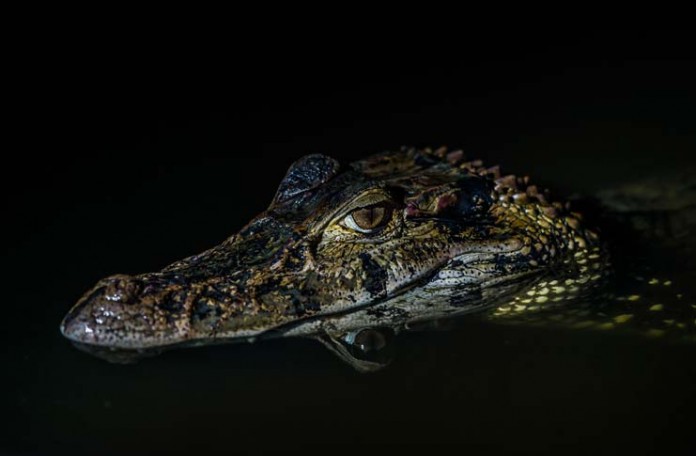
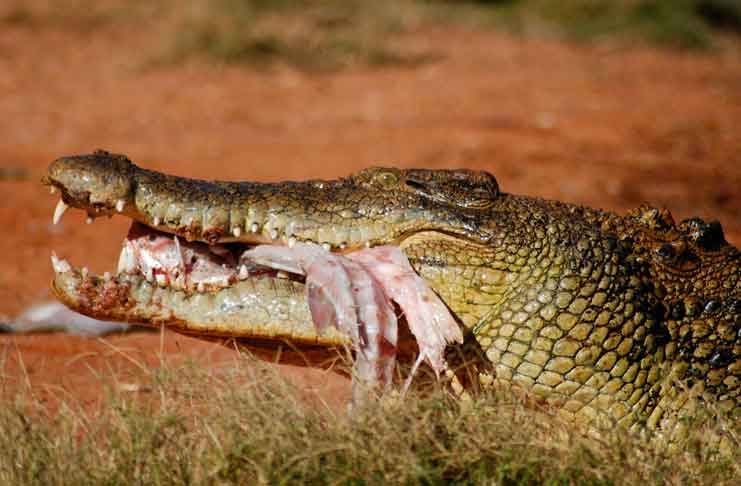
Australian Saltwater Crocodile. By Kat Clay

The Australian saltwater crocodile is so called because it thrives in the oceanic or salty waters of Australia. However, the species is not restricted to down under alone. The species is also found in Indo-Pacific regions, eastern coasts of India and in some coastal areas of Fiji. The one in Australia is the most terrifying because it has been thriving there over the last five decades. There is not much protection of this species in India and Fiji which has lead to a relative decline in its numbers. However, the numbers are well protected in Australia. Although trading and any kind of commercial utility of the largest crocodile is banned in Australia, there is no threat to the species. It is actually listed as least concern in its conservation status. It is not very surprising that the Australian saltwater crocodile is not endangered considering its outreach, physical strength, survival instincts and the large territory that it occupies.

Being a saltwater croc, it can travel long distances along the coasts. With its size, speed and bulletproof back, it can survive almost all predators. It can also survive planned attacks by humans to an extent. Besides, the Australian saltwater crocodile is ferociously aggressive when it comes to their territory. They can attack anyone who is supposedly trespassing or entering their territory.

The largest crocodile on the planet is a brilliant creation of nature, but do exercise caution and don’t venture near it, at any place.

Can This Deadly Snake Heal Anything?

By Jack Burns

Before I delve into one of the world’s most revered snakes, let me introduce to you one of my favorite TV episodes of ‘Austin Stevens Adventures’. Stevens is a remarkable South-African Snakemaster, as well as a wildlife photographer, who travels on assignment, documenting his activities finding and photographing snakes. During each episode, he usually searches for a specific species, while encountering a variety of other snakes along the way. In this fascinating episode Stevens travels all the way to Mexico to catch a glimpse of the Tzabcan rattlesnake, once hailed as a God by the ancient Mayans. Stevens, through the help of local guides and a shaman, crawls though underground rivers and dense rainforest in search of the most deadly snake in Mexico.

Its known as the Yucatecan Rattlesnake, the Crotalus tzabcan, or just Tzabcan, which means “Rattlesnake” in the Mayan language. As mentioned, the Tzabcan was highly revered by the Maya. One can still find carved rattlesnake forms on many Mayan temples, pieces of pottery and it’s the most prominent feature on the head dress of the Mayan Goddes of Herbs Ix Chel. However, its exact symbolic significance is still unknown to this very day. In the Austin Stevens video above you will see how a Shaman, based on ancient Mayan traditions, skins, dries and bakes the most deadly snake in Mexico, and then grinds and sifts it into a powder used as healing medicine. But more about that in a while.

The Tzabcan snake can reach 55-63 inch (140-160 cm), with a maximum length of 71 inch (180 cm). Its body has quite a rough appearance, due to its dorsal scale keels that are accentuated into tuberculations. Its vertebral scales are about as prominently keeled as the fourth row down on the flanks. This deadly snake can be found mainly in the Yucatan Peninsula on the Atlantic coast. Its venomous bites are quite similar to the bites of Rattlesnakes in north America, with severe local symptoms, pain, massive swelling, blistering, and even necrosis that might lead to amputations.

Magical Powers of a Deadly Snake

deadly snake
Can you see the God Snake? The Vision Serpent depicted in Mayan archeology. Photo by Michel Wal

Like the Chinese, the Mayans believed, and still do today, in the healing powers of certain snake species. They have left behind a unique cure-all snake bone medicine called Cascabel, which is still used today by traditional healers.

Cascabel is the Spanish word for rattlesnake, which according to Mayan legends, is the source of one of the most potent medicines known to man. There are different variations of the Cascabel, depending on the rattlesnake, but the most healing powers have been attributed to the deadly Tzabcan, which according to Shamans – produces a much more potent strain of Cascabel.

Ancient Mayan texts revealed that when preparing a Cascabel – no agitated rattlesnake shall be used. It was believed that the anger in the snake causes changes in the medicine’s composition. Only docile rattlesnakes were acceptable. Most rattlesnakes, especially tropical species, are very quick, lean and aggresive snakes. The Tzabcan on the other hand – is an exception. His calm behavior has made him revered among the Mayans, as the snake with the godly healing powers.

So how can a Cascabel heal us from any disease? Well, according to the Mayans, it’s not about a healing powder for treating a disease, but an incredibly strong immune system enhancer that promotes healing for many different sorts of ailments. There are Shamans who claim they have successfully treated patients with severe burns, infections, ulcers, terminal diabetes and even AIDS and cancer. Many locals and foreigners who have taken the Cascabel have remained committed to it, while western scientists and doctors are usually skeptical towards anything that does not conform to western medicine.

According to the Mayan healing tradition, one spoon of Tzabcan snake powder every day will boost your immune system against most ailments, including malaria, dengue and others.