

Home Blog Page 13

Best Pet Suggestions For Aging Seniors

best pet suggestions for seniors

The companionship of a pet is a longstanding indulgence of humans, and your age doesn’t nullify the many positive effects of owning a pet.  However, getting older means that you may require a pet that can live at your pace.  

There are plenty of low maintenance pets from which to choose, and it’s important that you choose one that fits your personality and lifestyle.  Take a moment to read through a brief look at some of the best pet suggestions for aging seniors, and make a new friend today.  

Leopard Geckos Are Exceptional

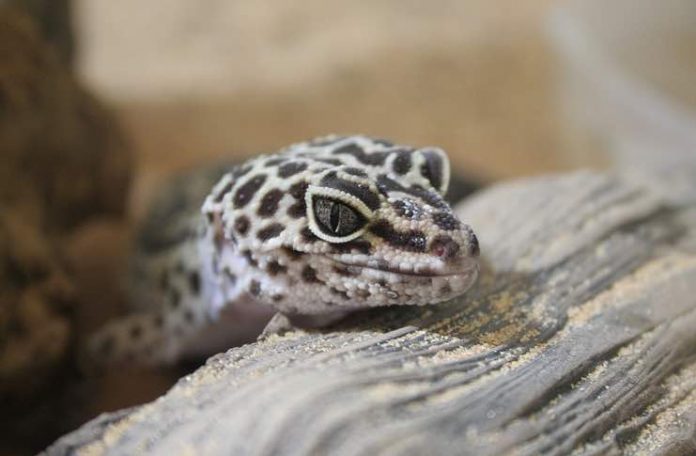
Leopard Geckos may not be first in your line of thoughts when you’re looking for a pet, but they are exceptional creatures.  Once you get your gecko home and in its habitat, there’s little to do to maintain their lifestyle.  

Clean the cage out once a week.  Feed your gecko at least four times a week, and make sure it has an adequate water source.  Leopard Geckos also like to be handled by their owners. You can hang out with your new buddy while watching the evening news.  

Dogs are always good

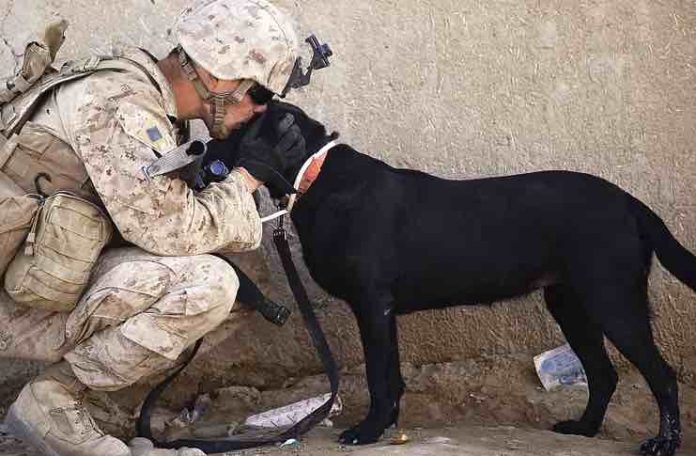
Once you reach an age where you can’t really do everything for yourself, you can always get a service dog to help.  Dogs are great helpers, and certain breeds have an innate desire to help. You may have chosen a lovely caregiver, but there’s nothing more rewarding than the love of a pup.  

Get yourself a fish

Fish are great pets, and they don’t take much maintenance.  You’ll need to clean and condition their tank from time to time, but you can even purchase devices that will maintain the tank for you.  

Fish don’t have the longest lifespan, so you may not want to get too attached.  However, the ambiance of a tank with several colorful fish floating around can be very calming.  

Birds make great companions

The typical pet birds that come to mind like parrots or macaws are typically expensive and hard to handle.  They talk a lot and can be pretty disruptive of a peaceful home environment.  

Canaries and parakeets are better suited to the life of aging adults.  Cockatiels are also quiet friends who can be taught to talk.  You may consider purchasing a couple of love birds to watch as well.  

Cats are extremely low maintenance

Cats are great pets for the elderly, as they typically do their own thing.  They are independent pets that only require feeding and a clean litter box.  

If you have respiratory issues, it’s best to keep the litter box tucked away.  Arrange for someone else to clean the litter box, as the ammonia fumes can be disruptive to your breathing.  

How to Make Your Garden More Reptile-Friendly

Make Your Garden More Reptile-Friendly

Your garden is a place for plants and pretty flowers to grow, and a way for you to destress.

Depending on where you live, it can also be a sanctuary for reptiles, who can in turn help keep your garden safe.

Reptiles like snakes and lizards eat common garden pests. Lizards and snakes come in all shapes and sizes, with over 6,000 species of lizards and more than 3,000 species of snakes in the world.

However, not all of them are beneficial to your small ecosystem, and knowing which ones aren’t is essential when these animals live in your area.

The following is everything you need to know about reptiles and how to attract the good ones to your garden.

Reptile-Friendly Gardens

As previously mentioned, lizards and snakes take care of harmful insects, such as slugs, and pesky animals, like rodents.

More importantly, the presence of these reptiles serves as a barometer of environmental health. These scaly animals are susceptible to pollutants, so their existence in your garden shows that there are low levels of heavy metals and pesticides.

If you’re growing herbs or food, this also ensures that the low levels of these particles.

How to Attract Reptiles to the Garden

For lizards and snakes to make a home in your yard, they need an adequate habitat. It’s essential for you to create the correct environment for your garden to be truly reptile-friendly.

Take the initiative to learn what species are native to your area. Research where they’re likely to lay their eggs, what they prefer to eat, and what environmental elements make them content.

The following are some tips to help gardeners make their space a safe haven for a variety of reptiles:

  • Avoid chemicals. Pesticides often do more harm than they do good. Instead, you should use natural methods to eliminate pests. Methods such as companion planting, insecticidal soaps, and the introduction of natural predators are great ways to create a safe garden. 
  • Avoid using a weed killer. Similar to pesticides, the chemicals in weed killer can be harmful, especially if used on the entire lawn. If you’re having weed problems, spot-treat the issue instead of going with a wide-spread application across the yard. To create a healthier lawn, try thatching, reseeding, and mowing at the recommended levels to naturally deter the growth of weeds. You can also get rid of weeds by simply hoeing or pulling by hand.
  • Mulch the garden. Mulch is great for your garden. It retains moisture, creating a humid environment that reptiles enjoy, and deters weeds. Organic mulch also contributes to soil health when it breaks down over time.
  • Give the reptiles hiding places. Lizards are low on the food chain. While snakes are higher up, they still have predators. Providing protection in the form of bushy perennials, rocks, or brush piles ensures and invites their existence.
  • Include sunning areas for lizards. Stone walls, large rocks, and concrete blocks retain the heat from the sun which is perfect for cold-blooded species to stay warm during cool nights.
  • Fence in the garden. Fencing in the garden protects not only your plants from big mammal predators but also your reptiles. A trusted deer fencing company suggests gardeners install fences like their own. A high-quality deer fence protects your yard from large animals and is invisible at a distance. 
  • Provide water. Install a water feature, such as a small bowl or even a pond. Be sure to include sticks and rocks near the edge to create a ramp for them to access the water.

Avoid:

  • Feeding your pets outdoors. Reptiles can be attracted to food in your pet’s bowl. Feeding your pets indoors ensures that they’re safe from domestic pets. It also ensures that your pets are safe from snake bites. 
  • Collecting lizards from the park. Don’t gather reptiles from shared outdoor places. These animals will be attracted to your garden just from you simply providing them with habitat.
  • Raking up. Raking up takes away from your reptiles’ home. They will love you for letting your twigs, mulch, and leaf litter pile up.
  • Feeding them. These reptiles are great at finding their own food. If you feed them, they may become dependent on it, which can quickly endanger them if you go away on vacation or move houses.

Wrap-Up

With a little effort, you can ensure your garden flourishes while still being friendly to reptiles. Do what’s best for your yard by fostering an environment that’s friendly to lizards and snakes. 

SNAKEBITE ENVENOMATION

0.0  OVERVIEW
 0.2  CLINICAL EFFECTS
  0.2.1  SUMMARY
    A.  EDEMA:
    (1) In most cases, almost immediate SWELLING and EDEMA
        appear.  Swelling is usually seen around the injured
        area within five minutes after the bite and often
        progresses rapidly, involving the entire injured
        extremity within an hour.  Generally, however, edema
        spreads more slowly over a period of 8 to 36 hours.
    (2) Swelling is most marked after bites by the eastern
        diamondback rattlesnake.  It is less marked after
        western diamondback bites, and after bites by the
        prairie, timber, red, Pacific, and black-tailed
        rattlesnakes, sidewinders and cottonmouths.  It is
        least marked after bites by copperheads.
    B.  PAIN:  Immediately following the bite is a complaint of
        most patients with poisoning by rattlesnakes.  It is
        most severe after eastern and western diamondback bites,
        less severe after bites by the prairie and other viridis
        rattlesnakes, and least severe after copperhead and
        massasauga bites.  WEAKNESS, SWEATING, FAINTNESS and
        NAUSEA are common.
    C.  RATTLESNAKES, COTTONMOUTH, AND COPPERHEAD SNAKES
        1. LOCAL:
             a. May include punctures, pain, edema,
                erythema, bleeding, ecchymosis, and
                lymphangitis.
        2. SYSTEMIC:
             a. May include hypotension, weakness,
                sweating or chills, perioral and/or
                peripheral paresthesia, taste
                changes, nausea and vomiting, and
                fasciculations.  Coagulopathies and
                shock may occur in some
                envenomations.
    D.  CORAL SNAKES
        1. LOCAL:
             a. Minimal reaction, punctures may be
                obscure.
        2. SYSTEMIC:
             a. May include drowsiness, weakness,
                dysphagia, dysphonia, diplopia,
                headache, weakness, and respiratory
                distress.
 0.3  LABORATORY
   A.   The following immediate procedures should be carried out:
        typing and cross-matching, bleeding, clotting and clot
        retraction times, complete blood count, hematocrit,
        platelet count and urinalysis.
   B.   RBC indices, sedimentation rate, prothrombin time,
        arterial blood gases, sodium, potassium and chloride
        determinations may be needed.
 0.4  TREATMENT OVERVIEW
  0.4.1  SUMMARY
    A.  This overview contains first aid treatment only.  See
        main section of management for assessment and therapy
        guidelines.
    B.  FIELD OR FIRST AID TREATMENT
    1.  Put victim at rest and keep warm.
    2.  Remove rings and constrictive items.
    3.  Lightly immobilize injured part in functional
        positional and keep just below heart level.
    4.  Give plenty of reassurance.
    5.  Transport to medical facility as quickly as possible.
    6.  Do not pack in ice.
    7.  Use Sawyer Extractor over bite area if transport to
        medical facility is to be in excess of 45 minutes.
        Must be applied immediately.
    8.  Electroshock treatment for snakebite has been
        recommended as initial therapy, but this unusual
        recommendation has been demonstrated to be ineffective
        in an animal model and is potentially quite dangerous.
1.0  SUBSTANCES INCLUDED
 1.3  DESCRIPTION
   A.   There are approximately 120 species of snakes in the
        United States of which 26 are venomous.  Bites by
        nonvenomous snakes are much more common than bites by
        venomous snakes.  These should be treated as simple
        puncture wounds, employing an appropriate antitetanus
        agent.  About 25% of all bites by venomous snakes in the
        United States do not result in envenomation, that is, the
        snake may bite but not inject venom, or may eject it onto
        the skin, as in a very superficial bite.
   B.   Most rattlesnakes, copperheads, water moccasins and coral
        snakes tend to bite superficially but a few bites
        penetrate muscle.  The gravity of the poisoning will
        depend upon:
        1) The nature, location, depth and number of bites
        2) The amount of venom injected
        3) The species and size of the snake
        4) The age and size of the victim
        5) The victim's sensitivity to the venom
        6) The microbes present in the snake's mouth
        7) The kind of first aid treatment and subsequent
           medical care.
   C.   Bites by venomous snakes may therefore vary in severity
        from trivial to extremely grave.  In every case, snake
        venom poisoning is an emergency requiring immediate
        attention and the exercise of considerable judgement.
        Delayed or inadequate treatment may result in tragic
        consequences.  However, failure to differentiate between
        the bite of a venomous and a nonvenomous snake may lead
        to the use of measures that can not only cause discomfort
        but may produce deleterious results.
   D.   It is essential that a diagnosis, based on identification
        of the snake and the presence or absence of symptoms and
        signs, be made before treatment is instituted.  The
        admitting diagnosis should indicate whether the patient
        has been bitten and envenomated by a venomous snake
        (snake venom poisoning), bitten but not envonomated, or
        bitten by a nonvenomous snake.
   E.   "Snakebite" is not a valid medical-legal diagnosis.  The
        identity of the offending reptile, when obtainable,
        should be noted on the admitting record.  It should be
        borne in mind that some persons bitten by nonvenomous
        snakes become excited and even hysterical, and that these
        findings may give rise to disorientation, faintness,
        dizziness, hyperventilation, a rapid pulse, and even
        primary shock.
   F.   IDENTIFICATION
    1.  Identification of a venomous species is not always easy.
        The rattlesnakes are distinguished from the nonvenomous
        snakes by their two elongated, canaliculated, upper
        maxillary teeth, which can be rotated from their resting
        position, in which they are folded against the roof of
        the mouth, to their biting position, where they are
        almost perpendicular to the upper jaw.  Each fang is
        shed periodically and is replaced by the first reserve
        fang.  The pupils are vertically elliptical, but a few
        nonvenomous snakes also have such pupils.  The crotalids
        have a deep easily identifiable pit between the eye and
        the nostril.  The somewhat triangular shape of the head,
        the base being wider than the neck, also helps to
        distinguish them from nonvenomous snakes.
    2.  Color and pattern are the most deceptive criteria for
        identification.  Identification of the offending snake
        on the sole basis of fang or tooth marks is not
        recommended.  Some nonvenomous snakes may leave teeth
        marks very similar to those produced by rattlesnakes and
        rattlesnakes may leave teeth marks in addition to those
        of the two upper maxillary fangs.  Very often, crotalids
        may strike and leave a single fang puncture wound and
        this is too similar to that which might be produced by a
        nonvenomous snake to be relied upon in confirming a
        diagnosis.
    3.  CORAL SNAKE:  The coral snake's upper maxillary teeth
        are also elongated but they are much shorter than those
        of the rattlesnakes, and they are fixed.  Coral snakes
        have round pupils, and can be distinguished from king
        snakes, scarlet snakes and some shovel-nosed and milk
        snakes, with which they are sometimes confused, by their
        complete rings of black, yellow and red, the red and
        yellow ring touching.  "Red on yellow kill a fellow".
 1.4  GEOGRAPHICAL LOCATION
   A.   The distribution of some of the medically more important
        snakes of the United States is as follows:
           SNAKES                       LOCATION
        1.      Pit vipers (Crotalidae)
         a.  Cottonmouths &
              Copperheads
             (Agkistrodon)
           1)  Cottonmouths             TX NE IA KS OK AR MO
                (A. piscivorus)         TN KY IL NC SC GA AL
                                        MS LA FL VA


           2)  Copperheads              TX NE IA KS OK AR MO
                (A. contortrix)         TN KY IL IN OH NC SC
                                        GA AL MS LA FL PA NJ
                                        MD DE VA W.VA NY
                                        N.ENG
         b.  Rattlesnakes
             (Crotalus)
           1)  Eastern Diamondback
                (C. adamanteus)
           2)  Western diamondback      CA NV AZ NM TX OK AR
                (C. atrox)
           3)  Sidewinder               CA NV AZ UT
                (C. cerastes)
           4)  Timber                   TX MN WI NE IA KS OK
                (C. horridus)           AR MO TN KY IL IN OH
                                        NC SC GA AL MS LA FL
                                        PA NJ MD DE VA W.VA
                                        NY N.ENG
           5)  Rock                     AZ NM TX
                (C. lepidus)
           6)  Speckled                 CA NV AZ
                (C. mitchelli)
           7)  Black-tailed             AZ NM TX
                (C. molossus)
           8)  Twin-spotted             AZ
                (C. pricei)
           9)  Red diamond              CA
                (C. ruber)
           10) Mojave                   CA NV TX AZ NM TX
                (C. scutulatus)
           11) Tiger                    AZ
                (C. tigris)
           12) Western                  MO
                (C.  viridis)
                 Prairie                ID AZ NM TX MO SD ND
                  (C.v. viridis)        NE IA WY UT CO
                 Grand Canyon           AZ
                  (C. v. abyssus)
                 Southern Pacific       CA
                  (C. v. helleri)
                 Great Basin            OR ID CA NV AZ UT
                  (C. v. lutosus)
                 Northern Pacific       WA OR ID CA NV
                  (C. v. oreganus)
           13)  Ridge-nosed             AZ
                 (C. willardi)
           14)  Massasauga and pigmy
                 (Sistrurus)
                Massasauga              AZ NM TX MI WI MN
                 (S. catenatus)         NE IA CO KS OK MO
                                        IL IN OH NY PA
                 Pigmy                  TX OK AR MO TN NC
                  (S. miliarius)        SC GA AL MS LA FL
        2.      Coral snakes
            (Elapidae)
         a.  Western coral snake
              (Micruroides              AZ NM TX
                euryxanthus)
         b.  Eastern coral snake
              (Micrurus fulvius)        TX AR NC SC GA AL MS
                                                LA FL
 1.6  OTHER
   A.   CHEMISTRY
    1.  Snake venoms are complex mixtures, chiefly proteins,
        many of which have enzymatic activities.  However, the
        lethal and perhaps more deleterious fractions are
        certain peptides and proteins of relatively low
        molecular weight.  Some of these peptides may be 25
        times more lethal than the crude venom.  These peptides
        appear to have very specific receptor sites, both
        chemically and pharmacologically.
    2.  Snake venoms are also rich in enzymes, including:
        proteinases;   phospholipase A, B., C, and D;  ATPase;
        L-arginine-ester hydrolases; ribonuclease; alkaline
        phosphatase; transaminase;   deoxyribonuclease; acid
        phosphatase; hyaluronidase; phosphomonoesterase; DPNase;
        L-amino acid oxidase; phosphodiesterase; endonuclease;
        cholinesterase; and 5'-nucleotidase endonuclease.  The
        venoms of the crotalids are rich in some of these
        enzymes, while poor in others.
    3.  Although the peptides of the North American rattlesnakes
        have not yet been studied in detail, preliminary
        investigations indicate they are 3 to 10 times more
        lethal than the crude venom, and have molecular weights
        around 10,000.  Several larger lethal proteins have also
        been isolated but their exact composition has not yet
        been determined.
2.0  CLINICAL EFFECTS
 2.1  SUMMARY
   A.   EDEMA:
    1.  In most cases, almost immediate SWELLING and EDEMA
        appear.  Swelling is usually seen around the injured
        area within five minutes after the bite and often
        progresses rapidly, involving the entire injured
        extremity within an hour.  Generally, however, edema
        spreads more slowly over a period of 8 to 36 hours.
    2.  Swelling is most marked after bites by the eastern
        diamondback rattlesnake.  It is less marked after
        western diamondback bites, and after bites by the
        prairie, timber, red, Pacific, and black-tailed
        rattlesnakes, sidewinders and cottonmouths.  It is least
        marked after bites by copperheads.
   B.   PAIN:  Immediately following the bite is a complaint of
        most patients with poisoning by rattlesnakes.  It is most
        severe after eastern and western diamondback bites, less
        severe after bites by the prairie and other viridis
        rattlesnakes, and least severe after copperhead and
        massasauga bites.  WEAKNESS, SWEATING, FAINTNESS and
        NAUSEA are common.
   C.   REGIONAL LYMPH NODES may be ENLARGED, PAINFUL, and
        TENDER.
   D.   HEMATEMESIS, MELENA, INCREASED or DECREASED SALIVATION,
        and MUSCLE FASCICULATIONS may be seen (Russell, 1983).
   E.   RATTLESNAKES, COTTONMOUTH, AND COPPERHEAD SNAKES
         1. LOCAL:
            a.  May include punctures, pain, edema,
                erythema, bleeding, ecchymosis, and
                lymphangitis.
         2. SYSTEMIC:
            a.  May include hypotension, weakness,
                sweating or chills, perioral and/or
                peripheral paresthesia, taste
                changes, nausea and vomiting, and
                fasciculations.  Coagulopathies and
                shock may occur in some
                envenomations.
   F.   CORAL SNAKES
         1. LOCAL:
            a.  Minimal reaction, punctures may be
                obscure.
         2. SYSTEMIC:
            a. May include drowsiness, weakness,
                dysphagia, dysphonia, diplopia,
                headache, weakness, and respiratory
                distress.
   G.   TIMES SYMPTOM OR SIGN WAS OBSERVED/TOTAL
                     NUMBER OF CASES
        Fang marks                      100/100
        Swelling and edema              80/100
        Pain                            72/100
        Ecchymosis                      60/100
        Vesiculations                   51/100
        Changes in pulse rate           60/100
        Weakness                        60/80
        Sweating and/or chill           37/60
        Numbness or tingling of tongue  63/100
         and mouth or scalp or feet
        Faintness or dizziness          52/100
        Nausea, vomiting or both        48/100
        Blood pressure changes          46/100
        Increased body temperature      15/41
        Swelling regional lymph nodes   40/100
        Fasciculations                  33/100
        Increased blood clotting time   31/60
        Sphering of red blood cells     18/46
        Tingling or numbness of         20/49
         affected part
        Necrosis                        38/100
        Respiratory rate changes        20/57
        Decreased hemoglobin            37/100
        Abnormal electrocardiogram      26/100
        Cyanosis                        20/100
        Hematemesis, hematuria,         22/100
         or melena
        Glycosuria                      32/97
        Proteinuria                     21/97
        Unconsciousness                 20/100
        Thirst                          24/100
        Increased salivation            19/100
        Swollen eyelids                  7/100
        Retinal hemorrhage               5/64
        Blurring of vision              12/100
        Convulsions                      1/100
        Decreased blood platelets       12/25
        Increased blood platelets        4/25
 2.6  NEUROLOGIC
   A.   PARESTHESIA:  A common complaint following some pit viper
        bites is TINGLING or NUMBNESS over the TONGUE and MOUTH
        or SCALP, and PARESTHESIA around the wound.  This may
        appear within 5 minutes of the bite.
 2.14  HEMATOLOGIC
   A.   Hematological findings may show HEMOCONCENTRATION early,
        then a DECREASE in RED CELLS and PLATELETS.  Urinalysis
        may reveal HEMATURIA, GLYCOSURIA and PROTEINURIA.  The
        clotting screen is often abnormal.
 2.15  DERMATOLOGIC
   A.   ECCHYMOSIS and DISCOLORATION of the SKIN often appear in
        the area of the bite within several hours.  VESICLES may
        form within 3 hours; generally they are present by the
        end of 30 hours.  HEMORRHAGIC VESICULATIONS and PETECHIAE
        are common.
   B.   THROMBOSIS may occur in superficial vessels, and
        SLOUGHING of INJURED TISSUES is not uncommon in untreated
        cases.  NECROSIS develops in a large percentage of
        untreated victims.
   B.   SKIN TEMPERATURE:  Is usually ELEVATED immediately
        following the bite.
3.0  LABORATORY
 3.2  MONITORING PARAMETERS/LEVELS
  3.2.1  SERUM/PLASMA/BLOOD
    A.  The following immediate procedures should be carried
        out:  typing and cross-matching, bleeding, clotting and
        clot retraction times, complete blood count, hematocrit,
        platelet count and urinalysis.  RBC indices,
        sedimentation rate, prothrombin time, arterial blood
        gases, sodium, potassium and chloride determinations may
        be needed.
    B.  Serum proteins, fibrinogen titer, partial thromboplastin
        time, and renal function tests are useful.
    C.  In severe envenomations the hematocrit, blood count,
        hemoglobin concentration, and platelet count should be
        carried out several times for the first few days, and
        all urine samples should be examined, particularly for
        red blood cells.
  3.2.3  OTHER
    A.  In severe poisonings, an electrocardiogram is indicated.
4.0  CASE REPORTS
   A.   Riggs et al (1987) reported the case of a 29 year old man
        with no prior history of snakebite, who was bitten on the
        left index finger by a rattlesnake.  The patient had
        performed incision and oral suction before seeking
        medical attention.  He also had recent dental surgery and
        gingival irritation and mucosal breaks.  Mild edema from
        the bite site to the wrist and a mild coagulopathy
        developed.  The most striking feature was massive
        oropharyngeal edema with dyspnea, wheezing, and inability
        to speak, which occurred before any antivenin was
        administered.  The massive oropharyngeal swelling may
        have been due to absorption of venom through the injured
        gingival mucosa and brings the safety of incision and
        oral suction into question.
5.0  TREATMENT
 5.1  LIFE SUPPORT Support respiratory and cardiovascular
      function.
 5.3  ORAL/PARENTERAL EXPOSURE
  5.3.1  PREVENTION OF ABSORPTION
    A.  FIELD OR FIRST AID TREATMENT
     1. Put victim at rest and keep warm.
     2. Remove rings and constrictive items.
     3. Lightly immobilize injured part in functional
        positional and keep just below heart level.
     4. Give plenty of reassurance.
     5. Transport to medical facility as quickly as possible.
     6. Do not pack in ice.
     7. Use Sawyer Extractor over bite area if transport to
        medical facility is to be in excess of 45 minutes.
        Must be applied immediately.
     8. Electroshock treatment for snakebite has been
        recommended as initial therapy (Guderian et al, 1987),
        but this unusual recommendation has been demonstrated
        to be ineffective in an animal model (Howe &
        Meisenheimer, 1988) and is potentially quite dangerous
        (Russell, 1987).
    B.  INITIAL ASSESSMENT
     1. Distinguish between venomous or nonvenomous snake,
        other animal bite, or plant thorn injury.
     2. Determine where, when, and under what conditions injury
        occurred.
     3. Establish time and sequence of manifestations.
     4. Grade of envenomation in pit viper bites:
      a.  TRIVIAL ENVENOMATION:  Manifestations remain confined
          to or around the bite area.  No systemic symptoms or
          signs.  No laboratory changes.
      b.  MINIMAL ENVENOMATION:  Manifestations confined to area
          of bite, with minimal edema immediately beyond that
          area.  Perioral paresthesia may be present, but no
          other systemic symptoms or signs.  No laboratory
          changes.
      c.  MODERATE ENVENOMATION:  Manifestations extend beyond
          immediate bite area.  Significant systemic symptoms
          and signs.  Moderate laboratory changes; ie, decreased
          fibrinogen and platelets, and hemoconcentration.
      d.  SEVERE ENVENOMATION:  Manifestations involve entire
          extremity or part.  Serious systemic symptoms and
          signs.  Very significant laboratory changes.
      e.  GRADING BY NUMBERS
        (1) The method of grading rattlesnake bites by numbers on
           the basis of selected symptoms and signs is
           inadequate.  Every finding should be considered in
           determining the severity of the poisoning.  Pain,
           swelling, ecchymosis and local tissue changes may be
           absent or minimal, even after a lethal injection of
           some rattlesnake venoms, and these findings are too
           commonly employed as the sole guides for grading the
           envenomation.
        (2) For that reason, poisoning should be noted as
           trivial, minimal, moderate or severe, bearing in mind
           all clinical manifestations, including changes in the
           blood cells and blood chemistry, deficiencies in
           neuromuscular transmission, changes in motor and
           sensory function, and the like.
     5. Evaluate status of preadmission treatment.  If
        tourniquet or tight band has inadvertently been placed,
        apply less constricting band proximal to tourniquet,
        start IV infusion of a crystalloid solution, remove
        tourniquet slowly, and observe.
  5.3.2  TREATMENT
    A.  INITIAL TREATMENT
     1. To be effective, treatment must be instituted
        immediately.
     2. Start IV infusion of crystalloid solution (eg, lactated
        Ringer's or sodium chloride, USP).  If shock or severe
        bleeding present, consider colloid solutions, plasma or
        whole blood.
     3. Cleanse wound with soap and water.
     4. Loosely immobilize affected part at heart level and in
        functional position.
     5. Keep patient at rest and give reassurance.
     6. Give antitetanus agent for tetanus prophylaxis.
     7. When patient is stable, give appropriate analgesic, if
        indicated.
     8. Administer sedative to produce mild sedation, if
        necessary.
     9. Under no conditions should injured part be placed in
        ice, the bite area excised, nor should a fasciotomy be
        performed at this time.
    B.  ANTIVENIN
     1. The importance of early antivenin administration,
        preferably intravenously, cannot be overemphasized. The
        amount to be used will depend upon the species and size
        of snake, the site of envenomation, the size of the
        patient and other factors.  Poisoning by water
        moccasins usually requires lesser doses, whereas in
        copperhead bites, antivenin therapy is usually required
        only for children and the elderly or severely
        envenomated.
     2. Recent studies indicate efficacy of antivenin when
        given within 4 hours of a bite; it is of less value if
        delayed for 8 hours, and questionable value after 26
        hours.  However, it seems advisable to recommend its
        use up to 30 hours in all severe cases of crotalid
        poisoning.
     3. When the offending snake is an imported species, the
        physician should consult the nearest Poison Control
        Center for guidance on the availability and choice of
        antivenin.  The larger zoos of the country usually
        stock supplies of antivenins and have emergency
        programs for dispensing them, and addresses of
        consulting physicians.
     4. Skin test (See antivenin brochure).  If positive,
        patient should be treated in an intensive care setting,
        if antivenin is necessary to save life or limb.
     5. Administer Antivenin (Crotalidae) Polyvalent IV in
        dilution, initially at a slow rate and then at a faster
        rate (15 to 20 minutes per vial) if no reaction occurs.
      a.  Minimal envenomation 5 to 8 vials; moderate 8 to 12;
          severe 13 to 30+.  No antivenin is indicated in
          trivial bites.
      b.  To administer, dilute each vial to 50 to 200 ml (eg, 5
          vials in 250 to 1000 ml diluent), and give
          intravenously by continuous infusion.  Reduce volume
          of diluent as required in pediatric patients.
      c.  Attempt to give total dose during first four to six
          hours.
      d.  Use after 24 hours to reverse coagulopathy.
     6. Administer North American Coral Snake Antivenin
        (Micrurus fulvius) IV in continuous drip.
      a.  If there is a definite bite, 3 to 5 vials in diluent
          (eg, 250 to 500 ml of sodium chloride injection, USP)
          should be given as early as possible.
      b.  If symptoms and signs develop, 3 to 5 additional vials
          should be administered, and more as indicated.
     7. If necessary to administer IM, give in buttocks.  DO
        NOT give IM unless IV administration is absolutely
        impossible.
     8. Never inject antivenin into a toe or finger.
     9. If patient has a reaction to the antivenin, discontinue
        its use for 5 minutes, give diphenhydramine IV, and
        then start antivenin more slowly under close
        observation, and with shock cart at hand.  If a further
        reaction occurs, discontinue antivenin and seek
        consultation.
    10. Measure circumference of involved part just above bite
        and 10 and 20 cm above this point.  Record every 15
        minutes during antivenin administration and every 1 to
        2 hours thereafter to document edema.
    11. Have tourniquet, oxygen, epinephrine, shock drugs,
        tracheostomy equipment and positive-pressure breathing
        apparatus available.
    C.  SUPPORTIVE MEASURES
     1. Observe patient for minimum of 4 hours in all cases of
        snakebite.
     2. DO NOT leave patient unattended.
     3. Vasopressors should only be used short-term to treat
        hypotension.  Parenteral fluid challenge is usually
         adequate.
     4. Heparin is not recommended for coagulopathies.
     5. Broad spectrum antibotic if severe tissue involvement.
     6. Plasma, albumin, whole blood or platelets, as
        indicated.
     7. Limit IV fluids during period of acute edema.
     8. Liquid or soft diet, as tolerated.
     9. Maintain airway.
    10. Oxygen or positive-pressure breathing as necessary.
    11. Antihistamines or steroids to treat allergic reactions
        to antivenin or venom.  DO NOT USE STEROIDS DURING
        ACUTE PHASE OF POISONING, except in conditions of shock
        or severe allergic reactions.
    D.  FOLLOW-UP CARE
     1. Cleanse and cover wound with sterile dressing.
     2. Debridement, if necessary, third to tenth day.  Elevate
        extremity slightly if swelling is severe and there are
        no systemic manifestations or abnormal laboratory
        findings.
     3. Soak part for 15 minutes 3 times daily in 1:20 Burow's
        solution.
     4. Paint wound twice weekly following debridement with an
        aqueous dye of brilliant green 1:400, gentian violet
        1:400, and N-acriflavin 1:1000.  Apply antimicrobial
        cream (Neomycin or similar) at bedtime.
     5. Physical therapy evaluation on 3rd or 4th day; start
        active exercise immediately.
  5.3.4  PATIENT DISPOSITION
   5.3.4.5  OBSERVATION CRITERIA
    A.  Observe patient for minimum of 4 hours in all cases of
        snakebite.
6.0  RANGE OF TOXICITY
 6.6  LD50/LC50
   A.   Data on the toxicity of crotalid venoms is shown in the
        table:
                 Avg length  Approx yield
                  of adult    dry venom   IP LD50  IV LD50
                  (inches)      (mg.)     (mg/kg)  (mg/kg)
 Rattlesnakes
   Eastern         32-65        370-700     1.89     1.68
    diamondback
   Western         30-65        175-320     3.71     1.29
    diamondback
   Red diamond     32-52        120-350     6.69     3.70
   Timber          32-54        75-100      2.91     2.63
   Prairie         32-46        35-100      1.60     1.61
   Southern        32-48        75-150      3.71     1.29
    Pacific
   Great Basin     32-46        75-150      2.20     1.70
   Mojave          22-40        50-90       0.23     0.21
   Sidewinder      18-30        18-40       4.00     1.82
 Moccasins
   Cottonmouth     30-50        90-145      5.11     4.00
   Copperhead      24-36        40-70      10.50    10.92
 Coral snakes
   Eastern coral   16-28         2-6        0.97     0.23
9.0  PHARMACOLOGY/TOXICOLOGY
 9.2  TOXICOLOGIC MECHANISM
   A.   The common practice of dividing snake venoms into such
        groups as neurotoxins, hemotoxins, cardiotoxins and the
        like, has led to much misunderstanding and to grave
        errors in clinical judgement.  Chemical, pharmacological
        and clinical studies have shown these divisions to be
        both superficial and misleading.
   B.   Snake venoms are complex mixtures and the physician
        attending a patient with snake venom poisoning must
        remember that he is faced with a case of multiple
        poisoning, perhaps three or more toxic reactions, with
        pharmacological changes that may occur simultaneously or
        consecutively.
   C.   It should also be remembered that the effects of various
        combinations of the venom components, and of metabolites
        formed by their interactions, can be complicated by the
        response of the victim.  The release of
        autopharmacological substances by the envenomated patient
        may complicate the poisoning and make treatment more
        difficult.
   D.   The venoms of pit vipers produce deleterious local tissue
        effects, changes in blood cells, defects in coagulation,
        injury to the intimal linings of the vessels and changes
        in blood vessel resistances.  The hematocrit may fall
        rapidly and platelets may disappear.  Pulmonary edema is
        common in severe poisoning and bleeding phenomena may
        occur in the lungs, peritoneum, kidneys and heart.  These
        changes are often accompanied by alterations in cardiac
        dynamics and renal function.
   E.   Most of our crotalid venoms produce relatively minor
        changes in transmission at the neuromuscular junction,
        the notable exception being the venom of the Mojave
        rattlesnake, which also produces far less tissue
        destruction.  The early cardiovascular collapse seen in
        an occasional patient bitten by a rattlesnake is due to a
        marked fall in circulating blood volume.  Although
        cardiac dynamics may be disturbed, in most cases the
        heart changes may be secondary to the decrease in
        circulating blood volume.
   F.   Coral snake venom causes more marked changes in
        neuromuscular transmission and in conduction in nerves,
        but death may occur from cardiovascular collapse quite
        apart from the neurotropic changes.
12.0  REFERENCES
 12.1  GENERAL REFERENCES
 1.  Conant R:  Field Guide to Reptiles and Amphibians.
     Houghton Mifflin, Boston, 1958.
 2.  Dowling H, Minton SA & Russell FE:  Poisonous Snakes of the
     World, U.S. Government Printing Office, 1968.
 3.  Garfin SR, Castilonia RR & Mubarak SJ:  The effects of
     antivenin on intramuscular pressure elevations induced by
     rattlesnake venom.  Toxicon 1985; 23:677-680.
 4.  Guderian RH, MacKenzie CD & Williams JF:  High voltage
     shock treatment for snake bite (letter).  Lancet 1986;
     2:229.
 5.  Howe NR & Meisenheimer JL Jr:  Electric shock does not save
     snakebitten rats.  Ann Emerg Med 1988; 17:245-256.
 6.  Jimenez-Porras JM:  Biochemistry of snake venoms.  Clin
     Toxicol 1970; 3:389.
 7.  Klauber LM:  Rattlesnakes, Univ Calif Press, Berkeley,
     1956.
 8.  Lee CY:  Snake Venoms, Springer, Berlin, 1979.
 9.  McCullough N & Gennaro J:  Evaluation of venomous snakebite
     in the southern United States from parallel clinical and
     laboratory investigations.  J Fla Med Assoc 1963; 49:959.
 10.  Minton SA:  Venom Diseases.  C.C. Thomas, Springfield,
      Illinois, 1974.
 11.  Picchioni AL et al:  Snake Venom Poisoning (chart),
      American Association of Poison Control Centers and
      American College of Emergency Physicians, 1984.
 12.  Picchioni AL, Hardy DL, Russell FE et al:  Management of
      poisonous snakebite.  Vet Hum Toxicol 1984; 26:139-140.
 13.  Riggs BS, Smilkstein MJ, Kulig KW et al:  Rattlesnake
      evenomation with massive oropharyngeal edema following
      incision and suction (Abstract).  Presented at the
      AACT/AAPCC/ABMT/CAPCC Annual Scientific Meeting,
      Vancouver, Canada, September 27-October 2, 1987.
 14.  Russell FE:  Snake venom poisoning, In:  Cyclopedia of
      Medicine, Surgery & the Specialities, Persol, G.M. (Ed),
      F.A. Davis, Philadelphia, 1971.
 15.  Russell FE:  Snake Venom Poisoning.  JB Lippincott,
      Philadelphia, 1980; Scholium International, Great Neck,
      NY, 1983.
 16.  Russell FE:  A letter on electroshock for snakebite.  Vet
      Hum Toxicol 1987; 29:320.
 17.  Russell FE & Brodie:  Venoms of reptiles, In:  Chemical
      Zoology, Vol IX, Academic Press, New York, 1974.
 18.  Russell FE & Puffer H:  Pharmacology of snake venoms.
      Clin Toxicol 1970; 3:433.
 12.2  CONSULTANTS
   A.   Wyeth Laboratories maintains a national 24-hour emergency
        medical information number at (215) 688-4400.  They will
        accept collect calls in an emergency situation.
    1.  ATLANTA P.O. Box 4365 Atlanta, Georgia 30302 Tel: (404)
        873-1681
    2.  BALTIMORE 101 Kane Street Baltimore, Maryland 21224 Tel:
        (301) 633-4000
    3.  BOSTON (ANDOVER) P.O. Box 1776 Andover, Massachusetts
        01810 Tel: (617) 475-9075
    4.  CHICAGO (WHEATON) P.O. Box 140 Wheaton, Illinois
        60189-0140 Tel: (312) 462-7200
    5.  CLEVELAND P.O. Box 91549 Cleveland, Ohio 44101 Tel:
        (216) 238-9450
    6.  DALLAS P.O. Box 38200 Texas 75238 Tel: (214) 341-2299
    7.  KANSAS CITY P.O. Box 7588 No. Kansas City, Missouri
        64116 Tel: (816) 842-0680
    8.  LOS ANGELES P.O. Box 5000 Buena Park, California 90620
        Tel: (714) 523-5500 (Buena Park); (213) 627-5374 (Los
        Angeles)
    9.  MEMPHIS P.O. Box 1698 Memphis, Tennessee 38101 Tel:
        (901) 353-4680
    10. PEARL CITY (HAWAII) 96-1185 Waihona Street Unit C1,
        Pearl City, Hawaii  96782 Tel:  (808) 456-4567
    11. PHILADELPHIA (PAOLI) P.O. Box 61 Paoli, Pennsylvania
        19301 Tel:  (215) 878-9500
    12. ST. PAUL P.O. Box 64034 St. Paul, Minnesota  55164 Tel:
        (612) 454-6270
    13. SEATTLE P.O. Box 5609 Kent, Washington 98064-5609 Tel:
        (206) 872-8790
   B.   CONSULTANTS
    1.  Richard W. Carlson, M.D., Ph.D., Mount Carmel-Mercy
        Hospital and Medical Center, 6071 W. Outer Drive
        Detroit, Michigan  48235.
    2.  Roger Conant, Sc.D., Biology Department, University of
        New Mexico, Albuquerque, New Mexico 87131 (for
        identification of snakes).
    3.  David Hardy, M.D., Route 15, Box 259, Tucson, Arizona
        85715.
    4.  L. P. Laville, Jr., M.D., The Baton Rouge Surgical
        Group, Doctors Plaza, 3955 Government Street, Baton
        Rouge, Louisiana 70806.
    5.  Lawrence Leiter, M.D., 21530 W. Golden Triangular Road,
        Saugus, California 91350.
    6.  Sherman A. Minton, Jr., M.D., Indiana University Medical
        Center, 1100 West Michigan Street, Indianapolis, Indiana
        46207, (317) 264-7671 or 264-7842 (office), (317)
        849-2596 (home).
    7.  Findlay E. Russell, M.D., Ph.D., Department of
        Pharmacology and Toxicology, College of Pharmacy,
        University of Arizona, Tucson, Arizona 85721.
    8.  L.H.S. Van Mierop, M.D., Department of Pediatrics,
        University of Florida, College of Medicine, Gainsville,
        Florida 32610.
    9.  Charles H. Watt, M.D., 900 Gordon Avenue, Thomasville,
        Georgia 31792.
    10. S. R. Williamson, M.D., 307 Medical Tower, Norfolk,
        Virginia, (804) 625-7406  (804) 484-7151.
    11. Willis A. Wingert, M.D., Univ. of So. Calif. Med.
        Center, 1129 N. State Street, Los Angeles, California
        90033, (213) 226-3600  (714) 626-3935.
13.0  AUTHOR INFORMATION
   A.   Written by:  Findlay E. Russell, M.D., PhD., 06/81
   B.   Reviewed by:  Findlay E. Russell, M.D., PhD., 06/84
   C.   Revised by:  Findlay E. Russell, M.D., PhD., 07/86; 01/88
14.0  SOURCE INFORMATION
      Distributed through the Cobra Information Site
      WWW at http://Cobras.net

Debunking 6 Common Misconceptions About Snakes

No. 2 on the List: Eastern Brown Snake. Photo by Justin Otto

Myths and legends have always captivated us but sometimes not for the right reasons. They alter the facts and rope us into believing that there is truth behind them. One reptile that is the subject of many legends is the snake. 

Read on to find out six common misconceptions revolving these interesting creatures.  

1. When feeding, snakes dislocate their lower jaw

Ouch, that sounds painful! Can a creature, like a snake, really be that hungry to swallow something larger than its own head?! This myth seems to suggest so, but the truth is more comfortable to swallow. 

The fact is that serpents are superbly flexible. Their lower jaw is divided into two halves called “mandibles.” These bones aren’t joined like ours are. Instead, they have a stretchy ligament that attaches the mandibles and helps them to move apart once dinner is on.  

2. Certain serpents are poisonous

Some snakes are indeed dangerous, and being near them isn’t such a good idea. However, it can get a touch confusing when you refer to these slithery reptiles as being poisonous and venomous. The two terms cannot be used interchangeably as they have different meanings.

While poison gets to work when ingested, inhaled, or absorbed through the skin, venom is any toxic substance administered through fangs, stingers, and so on. Poisonous snakes are rare, but it’s the venomous ones you want to watch out for. There are more than a whopping 600 venomous reptiles out there! Venomous North American Snakes are ones to bear in mind.

3. Rattlesnakes rattle before lashing out, without fail!

This certainly sounds quite believable! You’d think a rattlesnake would rattle away before pouncing on their prey. However, contrary to popular belief, this is a common misconception. 

Our serpentine buddies use their rattling mechanism to warn potential attackers by vibrating their tails. They don’t have to sound the warning either and can choose to skip the rattling part altogether. So next time you are crossing through a rattlesnake infested area, tread carefully! 

4. Say what? Snakes are deaf!

Our reptile friends lack eardrums, which would make you think they can’t hear airborne sounds. However, reasonably new research suggests otherwise. Regardless of lacking eardrums, snakes still have inner ears that attach to their jawbones. When resting or moving, they can pick up on vibrations in the ground, such as footsteps. Once movement is flagged up by their nifty jaw, the soundwaves are transmitted to their brain and processed.

In 2011, biologist Christian Christensen observed the brains of some ball pythons – Python regius. He found that his test subjects had no problem detecting low-frequency airborne sounds because their skulls vibrated in sync with them! So snakes aren’t deaf, after all! 

5. Slithery serpents asphyxiate their prey

We can finally put the strangulation assumption to bed now. Many believed that boas and pythons fatally choked their victims. What has been fund with recent research is that they kill by restricting their prey’s blood flow. Dr. Scott Boback and his team put to work this myth that has been circulating for many years, and now, thanks to their hard work, we can finally say that snakes don’t strangle their victims. 

6. Serpents are jam-packed with slime 

Snakes are most certainly not as grimy as they are thought to be. Covered and oozing in slime, they most certainly aren’t. Instead, they’re coated with dry scales and can feel like even sand flowing through your fingers when handled. Sounds a lot nicer than slime, that’s for sure!

So there you have it, folks! Six common misconceptions about snakes debunked right here!


Why Does My Cat Knock Her Water Fountain Over?

Why Does My Cat Knock Her Water Fountain

Owning a pet cat can be fun and challenging at the same time. They can be confused and frightened at times. Cats are very emotional and read human minds well. It comes as no surprise they are referred to as pets for people with health ailments. 

Cats are adorable. They bring joy and happiness into your lives by coming up with their naughty antics and their playful nature. However, you need to know a few things well in advance before getting a pet cat. 

This way, you can ensure that your new family member feels very much at home. In this post, we will try to find out why cats flip water fountains and food dishes over at times. Well, most cats do that. 

Cats love to do it!

One of the most common answers found online is cats love to do that. Probably you can ask a friend or colleague who owns a cat. They would probably tell you the same. They love to flip the water fountain and food dish, only to eat the contents from the floor. 

It does get annoying, especially if you reside in a cool area or your space is limited because you have to clean up the mess often. However, you can place the water fountain in your bathroom if you have some space. 

That way, even though your cat flips the water fountain, you are saved from the agony of mopping up. The same cannot be said about food because you can place the food dish in the corner of the kitchen and allow your cat to consume it. 

Cats are Inquisitive!

Unlike other animals like dogs and birds, who are disciplined to a certain extent, cats are curious. As you know, tigers belong to the cat family. The hunting instincts kick in when they consume food. 

Though they are domestic animals, they like to catch the prey and then consume it. Hence, they want to play with their food for some time and then eat it with glee. You can notice it in the nighttime. 

If you give them a toy to play, then they keep staring at the toy for hours then they pick it up, drop it inside the food dish, and then eventually eat it. Not to mention, they also play with other items like shoelaces.

The bowls could be small in size. 

Another good reason for that is because of the size of the food dish or water fountain. When cats eat their whiskers, keep touching the plate. When this happens, then tend to get annoyed with it. Hence, they push the contents over to the ground and then drink or consume it. 

Always make sure that the bowl is slightly on the larger side to ensure that there is sufficient space for them. The stainless steel plates are the best solution for them. Of course, you need to ensure that you wash the plates once they have finished eating. Not to mention their sense of smell is healthy too. If they smell something funny, then they may not consider eating the food again. 

How to take personalized care of your pet cat?

Taking personalized care of your cat is your duty to ensure that your animal stays healthy and fine. The first thing to purchase would be water and food bowls. You also need a litter box, a collar with an identification tag. 

On the identification tag, put the cat’s name, your name and address, and phone number. A brush is also a good idea, especially bed and furniture if possible because cats love to fool around. Toys for cats like fuzzy animals are fine. Lastly, you will need a post for scratching. They love to scratch for hours. 

The above were some of the items you need when having a cat in your home. You will want to select a room where you want to have your cat.

Things you need to buy for a cat!

That allows it to adjust to the smell and sounds. However, you can have your cat in the hall if space is an issue. This happens when you are residing in an apartment. But, you may need to give the company to the cat at night. 

They may not prefer to sleep alone at night. Cats love privacy. You can buy two litter boxes and place them in two different areas of the home. When it is time for your cat to eat, make sure that the area is quiet and peaceful. 

Cats do not like a noisy environment. Hence when they are eating, make sure that your kids or other pet animals are not boring it. They love to play with toys. Wands, ball toys, and fuzzy toys would be ideal for them. 

In the litter box, you can place some warm clothing or a small blanket to ensure that the cat is comfortable. It is vital if you are living in a cold region. That ensures that the cat stays warm and comfortable.

Cats love to sharpen their claws. Hence, they need a scratching post. You also need to see to that you trim their nails at least once a month at least. If you do not have scratching stations in your home, then it may attack your furniture and other items around your home. 

Cats are gentle and adorable animals. You would be surprised that physicians suggest them for people with mental or health issues. Cats give a good company and do not require too much care and maintenance, unlike dogs and birds. 

I hope you found this article on why my cat knocks water fountain over useful. We read some reasons for them doing that. They love to have fun, they are curious, and perhaps the size of the plate might be an issue. Whatever the reason, as a responsible pet owner, you need to make sure that you take good care of your cat. The initial period might be slightly odd for both you and the cat. But, once you get to know its likes and dislikes, you will get along well. 

About author:

Hey I’m Linda Butts, the girl behind Pawsome Talk. With my pawsometalk.com I hope to share ideas and techniques from my personal experiences of what I have done with my pet research and what I love about pets and their lives.

Debunking 5 Common Misconceptions About Service Dogs

Service Dogs

Service dogs have become a common sight in our society, especially with the passing of the American Disability Act. However, many people still don’t understand much about them. And as expected, this has led to inaccuracies, misconceptions and myths surrounding these animals and their roles.

These animals are essential to the quality of life of their handlers, and any mistake due to misinformation can be harmful or life-threatening. Which is why it is doubly important to debunk these myths and clarify any misconceptions about the roles these animals play in the life of their handlers.

Here are five common misconceptions about service dogs debunked.

#1. Service Dogs are the same as Emotional Support Dogs

These two animals are different both from a legal point of view and also from a functional point of view. An emotional support dog is a pet that provides emotional support for his or her handler. They are usually untrained, and all you need is a doctor’s note to allow them to live in housing where pets are usually not permitted, or to fly with you.

On the other hand, a service dog acts as a medical aide, as important as an insulin pump or a wheelchair. These dogs are trained to provide or support specific tasks related to helping their handler live independently. Emotional support or comfort doesn’t count as one of the tasks a service dog provides.

For those needing the companionship and support of an emotional support dog, obtaining verification can sometimes be streamlined through the use of online ESA letters with Pettable, making the process of legitimizing an emotional support animal less daunting and ensuring that those in need receive the support they deserve without unnecessary stress. It’s crucial to remember that while emotional support dogs play a vital role in improving the mental health of their handlers, they do not have the same public access rights as service dogs.

#2. Service Dogs must be professionally trained

While it is vital to ensure your service dog gets the best training possible, the above statement is untrue. A service dog doesn’t need to graduate from a professional training program. Anyone can train them. In some instances, the owner or handler trains the service dog.

A dog trainer can train your service dog with the knowledge and skills to required or by an organization such as SDR of America that specializes in training and registering service dogs. If you decide to train your service dog yourself, it is always best to combine that with instruction from a reputable professional organization to get the best out of your service dog.

#3. Training Service Dogs only takes a few months

In reality, training of your service dog is a continuous journey. Your service pet should be able to learn and adapt as your needs and tasks change over time. However, it usually takes about twenty-four months to train a service dog fully.

Despite that, your dog will need refresher training sessions now and then. These training sessions ensure your dog doesn’t forget any of the tasks they have learned to perform either due to little or no use at all.

#4. Service Dogs can detect drugs

These animals are in no way trained to detect drugs. People, especially those with something to worry about, are always scared of service dogs as they think they can smell out someone carrying drugs. Yes, the dog will probably be able to perceive the drugs, but they are not trained to react to that information.

The only person a service dog is trained to focus on is you, the handler.

#5. Businesses are not allowed to remove a Service Dog

While your service dog has the right to enter a business unhindered, companies also have rights. If your dog is displaying any aggressive behavior or is out of control, the company can and should ask that the animal be taken out of the building.

Final Thoughts

These five misconceptions are some of the sticky points around service dogs and the critical roles they play in the life of their handlers. Clearing them is essential, as these pets are becoming an increasingly popular option for people with disabilities.

The Top Three Reptilian Pets to Take Home

Reptilian Pets

Ordinarily, when we think of which companion we want to spend our domestic lives with, we usually think of furry friends. Dog? Cat? Even the feathered variety has popularity among some. However, the woefully overlooked pet is the reptilian.

Sure, they’re scaly. Sure, they won’t jump up and down when you walk through the door after a long day at work. But they can be just as adorable and rewarding as any other pet you might be considering.

Did you know reptiles are even sometimes used as emotional support animals? Through the ESA Registration of America thousands of lizards, snakes, and even turtles are signed as emotional support pets, proving you don’t have to be furry to be friendly.

But which reptile should you opt for if you’re looking for a more unconventional pet? Well, here’s our top three that would make your life a whole lot more interesting.

The Leopard Gecko

The first lizard on our list is none other than the leopard gecko. While many reptiles don’t score that many cute points when compared with dogs or cats, the leopard gecko really holds his own. Enormous eyes paired with a tongue that always seems to be hanging out in some capacity, this guy is downright adorable.

They’re also known for their stupendously friendly nature, and they are super low maintenance, which will be relieving to a variety of prospective owners who may be considering a reptile for the first time. They are nocturnal and much prefer to hide away during the day rather than being out in the open, so consider that when setting up their living conditions.

Oh, they can also live up to twenty years, so prepare for the long-haul!

The Classic Snake

The classic, quintessential reptilian pet. They don’t just make great accessories for Britney Spears music videos; they also make killer pets (not literally) that are pretty awesome to have in your home. It may come as a surprise, but snakes are actually very docile pets provided that they are treated with care. They just get a lot of bad press.

It is important to note, however, that snakes are primarily carnivores. Therefore, their eating habits might not suit all pet owners. Their diet largely consist of frozen rodents, which we can understand might give anyone pause for thought. Still, if that doesn’t bother you, they can make fantastic companions living and live up to 35 years depending on the species.

The Domestic Tortoise

For something a little less unnerving in appearance, we present to you the domestic tortoise. Tortoises are as docile as can be, and that’s not just because of their naturally passive disposition; they’re also notoriously slow. You don’t need to worry about any sudden volatile behavior from these animals.

Not to be confused with the water-based turtle, tortoises are land orientated. They are also entirely herbivore, so if your stomach turned at the thought of feeding your scaly friend any frozen rodents fear not, tortoises really aren’t into it either. In addition, unlike the leopard gecko, they love to be active during the day and can provide hours of entertainment as they soak up the rays. Humidity is their best friend, so make sure their living conditions are warm and damp! 

The Bottom Line

Whichever pet you decide on, make sure you do thorough research before bringing them home. Pets are big commitments, they aren’t commodities, and they deserve to be treated well. In return, they’ll provide you with years of comfort and enjoyment. Many, many years if you go with the tortoise (almost fifty!).


Elaborating Reasons of a Toy for Your Puppy

Toy for Your Puppy

Dogs are social animals that need to live and play with other living things.

In an ideal world, in which there were no more obligations beyond having fun, dogs would be playing all day, either with other dogs or with people.

However, many people are not allowed to have more than one dog at home and, for countless reasons, dogs cannot always accompany us when we go out.

Playing at Childhood

In the childhood stage, puppies are vulnerable and are predisposed to suffer nervousness and insecurity. Boredom and abandonment are situations that we must avoid to allow adequate growth.

This is where the importance of toys comes in. So dogs don’t feel totally alone, toys keep them entertained. In the case of puppies, some toys such as stuffed animals, for example, are even company.

On the other hand, even when they play with a person, the toy enriches the game, making it much more fun and interesting.

Toy Options for You

Many of the toys that exist in the market today are very good options, because, apart from entertaining, they also stimulate the mind of the dog, either by its shape, its touch, its color or the way in which you have to play with them.

To make sure you get the best product for your puppy, check that the toy you buy is suitable for your dog’s breed.

Maybe the first few times your puppy does not give much attention to toys. Do not be discouraged, the trick is to insist and be patient. Each dog has its own rhythm and preferences. If a long time goes by without your dog paying attention to a toy, it may not be to your liking and you should change it.

How to choose the best toy for a puppy?

Choosing the right toy for your puppy is not an easy task. For this you have to take into account many factors.

First, you must know the way of being of the puppies. Your behavior and physical aptitudes.

For example, puppies do not have the same jaw strength as an adult dog. But, on the other hand, they are full of energy and love to bite everything. Exploring is your main activity.

Although puppies take everything for toys, you must make them understand what are the things they can play with and that they can bite, and what objects they should respect.

(If your puppy is determined to continue biting the sofa or the legs of the table, there are some effective ways to solve it. In the market there are sprays with unpleasant odors for them, you just have to spray them on the surface that you want them to no longer bite and your dog will not approach again).

Things You Should Follow

Therefore, to make your dog only play with his toys, you must choose attractive toys for him.

What makes it an interesting toy for a dog in the first place is its color and shape.

The retina of dogs begins to function properly after 6 weeks of life. Their visual perception is progressively improving, until 3 months, which is when they reach their definitive vision.

Although it is mistakenly thought that dogs are only able to see black and white, in reality, dogs can see colors. The difference between human and canine vision is that the color range that dogs perceive is much smaller. The only shades that dogs can differentiate are blue and yellow.

Therefore, the toys that you acquire for your dog are better than these colors, since your dog will distinguish them better.

Once the dog approaches the toy and begins to nibble on it, other characteristics such as sound, touch or hardness will be responsible for doing the rest of the work.

Make sure that the sound emitted by your pet’s toy is not too loud. Being a puppy, your senses are still very sensitive, so you could startle with anything.

Try to make them toys with a soft and fluffy touch. The puppies will thank you. Since they are somewhat clumsy with their movements, a toy with a hard texture (like hard plastic) could hurt them.

Try to buy toys that are not difficult to chew. If your puppy does not yet have teeth, or, if it is still with baby teeth, it may not control the bite and hurt itself with a toy that is not suitable for its characteristics.

Materials like Teddy, the plush, the latex, the silicone or soft rubber are safe materials, non – toxic, perfect for the first toys your puppy.

Before buying a toy you should also make sure that they do not contain removable pieces (plastic eyes on the stuffed animals), so you will prevent your puppy from breaking them and swallowing some piece without wanting to.

Final Words

The same goes for toys that are too small or worn and broken toys. Visit our guide on bad toys for dogs and find out.

If you suspect that your dog has swallowed a piece of toy, do not hesitate to go to the veterinarian, he will know how to advise you so that your puppy returns home safely and safely.

Winter Dog Myths Debunked

Winter Dog

With anything in life, there are myths and hearsay. When it comes to dogs, this is no different. You may have come across certain ‘facts’ before and taken them on face value. But in the interest of helping all dog owners out there, we have taken the time to debunk some winter dog myths for you.

A Dog’s Fur Keeps Them Warm

Certain breeds, such as the Husky and the American Eskimo Dog are perfectly suited to colder climates, but not all coats are the same. This means that not every dog is well-protected from the elements in the winter months.

However, even for dogs that do have fur that is seemingly suitable for winter, it doesn’t mean that they’re immune to extreme weather conditions such as frostbite and hypothermia. Ideally, dogs should have a coat for walking in cold conditions, whether they have a thicker coat or are short-haired.

You Can Feed Dogs the Same Amount All Year-Round

As temperatures fall, adjusting their food might be necessary. People come up with all kinds of reasons why a dog should eat the same quantity of food that they do in more active months, but in reality, owners are less inclined to exercise their dogs in winter because people don’t like to head out in the cold weather.

Therefore, less exercise means that dogs burn off fewer calories. When dogs are expending fewer calories, they don’t need as much food for energy. If you keep feeding dogs the same amount but exercising them less, they’ll become overweight through the winter and that’s unhealthy.

Dogs Don’t Require the Same Amount of Water in Winter

Dogs get dehydrated and thirsty, regardless of the season. When the winter months come around, dry air ensues. What’s more, dogs lose a lot of their body moisture when they are panting and breathing heavily.

No matter how cold or wet it is outside, it’s essential that you keep your dog well-hydrated so that they can remain happy and healthy. Pay close attention to this point before and after walks as well as other types of physical activity to prevent your beloved pet from becoming dehydrated.

You Can Forget About Fleas and Ticks

Fleas and ticks will gladly take comfort in a warm shelter during those cold winter months. This means that they could well be relocating to a spot, or spots, in your home!

This is why it is really important that you stay on top of your flea and tick inspections on your pet. You should also remain on track with any medication etc., in order to keep irritants like these at bay.

What’s more, if your dog does get fleas or ticks, they’ll almost certainly start scratching themselves more which can do more damage to their skin when it’s already extra drier than usual because of the weather.

Dogs Only Need Booties on Longer Walks

While some dog owners find them awkward to put on, and their dog might squirm about too, the hard work of putting on paw protection is essential during winter.

A dog’s paws have to endure a great deal throughout the winter. Simply by walking around, dogs are at risk of suffering from injury and frostbite. What’s more, there’s the harmful salt that is scattered on lots of surfaces they walk on. The salt is damaging because it sets off a reaction that makes their paws burn.

Furthermore, dogs can absorb harmful chemicals as well as anti-freeze through their paw pads, which can be very bad for their well-being. So, even if they look silly and they take some work to put on, remember those booties whether it’s a short walk or a long one.

Beginner’s Tips for Raising a Lizard

Tips for Raising a Lizard

Every pet type has its own guidebook of best tips and methods of raising. If it’s the tips for choosing the right pet for you, the necessary equipment, caring habits and more. The same is true for your Lizard. Here are our recommended tips for raising a lizard.

Choosing the Lizard Right for You 

Before we delve into the tips for raising your lizard, let’s start at the very beginning – so you end up with the right lizard for your level of experience. 

Regardless of the species you choose to get, ensure you find a captive bred lizard from a reputable breeder. Why? Because wild-caught lizards are usually much more stressed, difficult to train and they’re also more prone to parasites and sickness. 

Since you’re probably a beginner in the pet lizard world (experienced lizard owners will probably skip a beginner’s guide) – you should definitely get lizards that are more suitable for beginners, like Leopard Geckos (small and easy to handle, don’t require special UV lighting), Bearded Dragons (also easy to handle, but require a larger tank and UV lighting), and Green Anoles (small and don’t require a big tank, but do require a full spectrum UV lighting, and aren’t as easy as Leopard Geckos).

Don’t Forget Your Lizard’s Calcium

Like most pets, Lizards also need their calcium. Some breeds need daily calcium dusted feeders, while others need it only every now and then. Juvenile and breeding female lizards typically need more calcium. Make sure to do a thorough research of your lizard breed and its specific calcium requirements. Overdose of calcium supplements (or any other vitamin) for a lizard can be as dangerous as under-supplementing (which can lead to metabolic bone deficiency, causing the lizard’s bones to be weak and easily fracture).

Don’t Forget Your Lizard’s Health Checks

As with any other pet, regular health checks at a Veterinarian are crucial for your lizard. The first check should be made within 48 hours from bringing your lizard pet home. This is important in order to get a health baseline established for your lizard. You’ll want to find any possible issues as early as possible. 

Later on, you can schedule a checkup either once a year (for the less concerned), or every 4 months (for the very caring owners). In our opinion, it’s definitely worth the money to visit a vet at least every 6 months. It’s wiser to do these checkups and not find anything, than skip a few checkups and then suddenly find a serious disease.  

You should remember though, that most of your emergency vet trips will probably be caused by your mistakes, like giving your lizard improper food, hygiene issues, etc.

If you’re living out of town, far away from any specialized vet who knows his way with Lizards, you can try a professional mobile vet that can come to your home. If you’re living in Australia for example, where the distance between places can be vast, you can try this mobile veterinary in Sydney

Vet checkups for a lizard range anywhere between $20 to a few hundred dollars, depending on the issue.

Ensure Proper Temperature and Lighting 

If you wish to avoid calling for an emergency mobile vet, make sure that heat and light are provided to your lizard. These are essential to its health. Lizards are cold-blooded and depend on heat, and invisible UV rays. Lizards require a range of temperatures so they can regulate their body temperature. As mentioned before, do your research about your specific lizard breed to know exactly what sort of heat and UV your lizard requires.  

Keep it Humid

Humidity is another crucial environment factor that you need to control – in order to make your lizard happy and healthy. We recommend you get a hygrometer to constantly measure the humidity, so you can always adjust it properly according to your specific lizard’s requirements (which you will find in your research!). Improper humidity often leads to skin shedding problems.

Provide Your Lizard with a Proper Diet 

As soon as you finish your research about the lizard you plan to buy, you’ll also know what type of food it eats. For example, Leopard Geckos eat live insects, but do not eat plants or veggies. We recommend giving them mealworms or superworms once a week. Just for your budget information – insects like mealworms, crickets or roaches cost anywhere from 5-20 cents a piece.

Finally – are you searching for the perfect name for your lizard? If you need any help – read this post of ours about some tips…:)